Filmlexikon.
Support
Tint
Camera · Technique

Tint

Murnau AI illustration
tint virage color cast lens tuning

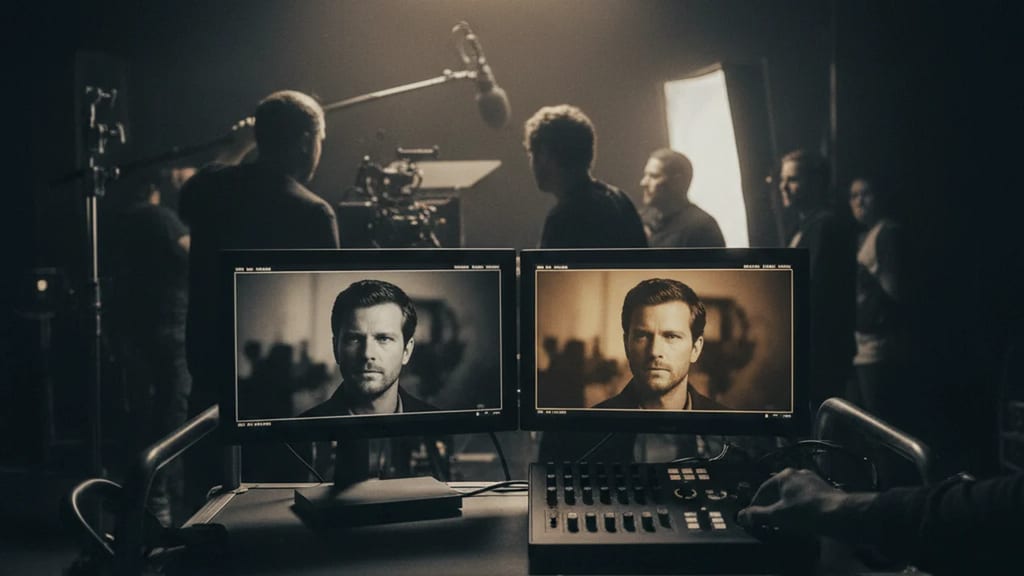
Chemical tinting of black-and-white film stock via dye baths or filters to evoke mood—amber for daylight, blue for night scenes.

Technical Details

In chemical tinting, the developed silver image is bleached in bleaching solutions (usually potassium ferricyanide) and then tinted in color baths. Standard concentrations are 10-50g of dye per liter of water at temperatures of 18-20°C. Optical tinting is achieved through gelatin or glass filters with transmission values between 400-700nm wavelength. Common tinting colors are amber, blue (cyan), sepia, and pink, with sepia tinting achieving a lightfastness of over 100 years through sulfur compounds.

History & Development

The first documented film tinting was performed by Georges Méliès in 1902 in "Le Voyage dans la Lune" through manual coloring of individual frames. Pathé developed the industrial stencil process Pathécolor in 1906. From 1910, chemical tinting established itself as the standard, with Agfa-Ansco as a leading manufacturer of tinting chemicals. Sound film from 1927 limited tinting, as optical sound tracks caused distorted sound reproduction. Digital Cinema Packages (DCP) enabled precise digital tinting with 12-bit color depth from 2005 onwards.

Practical Use in Film

Classic applications: Amber tinting for daylight ("Nosferatu", 1922), blue tinting for night ("The Last Laugh", 1924), sepia tinting for flashbacks ("The Godfather Part II", 1974). Modern digital productions use tinting for time layers: Orange-amber for the past, blue-cyan for the present ("Traffic", 2000). DaVinci Resolve and Avid Symphony offer tinting via Color Wheels with HSL control. Render times are 2-8 hours per feature film length at 2K resolution.

Comparison & Alternatives

Tinting colors the highlights, virage colors the shadows – both processes combined result in two-strip tinting. Color grading today replaces mechanical tinting with digital color correction with precise control over luminance and chrominance. LUTs (Look-Up Tables) simulate historical tinting effects with 1024³ or 4096³ color values. For archive restorations, chemical tinting remains more authentic than digital reconstruction, as the grain structure and gradation of the original material are preserved.
From the crafts

Perspectives

Cinematographer

Ich setze digitale Tönung bereits während der Aufnahme als Preview-LUT ein, um die finale Bildwirkung zu beurteilen und meine Belichtung entsprechend anzupassen. Bei Low-Key-Szenen mit extremer Blautönung muss ich zwei Blendenstufen überbelichten, damit nach der Tönung noch ausreichend Zeichnung in den Schatten vorhanden ist. Die Waveform-Darstellung am Monitor zeigt mir bereits während des Drehs, ob die RGB-Kurven nach der geplanten Tönung noch im Broadcast-Safe-Bereich liegen.

Director

Ich verwende Tönung als emotionales Leitsystem für verschiedene Handlungsebenen - warme Amber-Töne für glückliche Erinnerungen, kalte Cyan-Töne für die harte Realität der Gegenwart. In "Memento" inspiriert entwickelte ich ein Farbkonzept, bei dem jede Zeitebene ihre eigene Tönung erhält, sodass der Zuschauer sich intuitiv orientieren kann. Die Tönung muss bereits im Drehbuch verankert sein, da sie Kostümbild und Szenenbild fundamental beeinflusst.

Producer

Digitale Tönung im DI kostet mich 800-1200 Euro pro Tag Colorist plus Technikmiete, während nachträgliche Tönungsänderungen den Zeitplan um 2-3 Tage verlängern können. Ich plane grundsätzlich 15% Buffer-Zeit für Color-Grading ein, da kreative Entscheidungen zur Tönung oft erst im Schnitt fallen. Bei internationalen Verkäufen erstelle ich zusätzliche Master ohne extreme Tönungen, da diese in manchen Märkten als störend empfunden werden und TV-Sales beeinträchtigen können.

More in the lexikon

Related terms

Test your knowledge

Quiz

1. Zu welchem Department gehört „Tönung"?

2. Wie viele verschiedene Fachperspektiven bietet dieser Eintrag?

Report an error
From the Filmfarm ecosystem

Understand visual language, budget productions, connect crew.

The Lexikon is part of the Filmfarm ecosystem — alongside budgeting (FilmBalance), an industry magazine (FilmCircus) and crew networking (FilmCall, CrewMesh). One shared vocabulary for the whole production.

FilmFarm FilmRadarComing soonFilmPulseComing soonFilmNumbersComing soonFilmCapitalComing soonFilmLabComing soonFilmBalanceComing soonFilmCircusComing soon