Technical Details
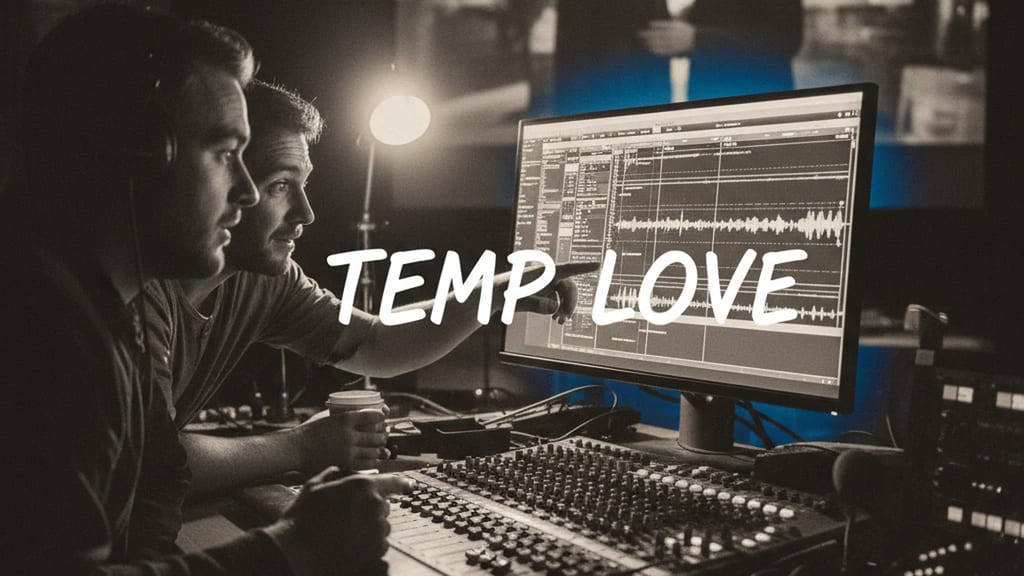
Temp tracks are typically inserted into the timeline during the rough cut phase at 48 kHz/24 bit and synced with picture and dialogue. The music pieces used are usually sourced from existing film music libraries, classical compositions, or commercial albums. In Avid Media Composer or Adobe Premiere, these are created as separate audio tracks, often with timecode markers for later reference. Temp versions are exported by default in ProRes 422 or DNxHD with the temp track burned in for screenings.
History & Development
The systematic use of temp music became established in the early 1970s when George Lucas used existing pop songs for "American Graffiti" (1973) and retained them in the final film. Steven Spielberg reinforced this practice with "Jaws" (1975) by using classical music pieces as temp tracks. The term "Temp Love" itself was first documented in 1987 by music supervisor Budd Carr. With the digitization of post-production from the 1990s onwards, the issue intensified as temp music could be used more easily and precisely.
Practical Application in Film
Classic examples of temp love can be seen in Kubrick's "2001: A Space Odyssey" (1968), where the classical pieces originally intended as placeholders replaced the commissioned original score by Alex North. In "Apocalypse Now" (1979), Coppola retained Wagner's "Ride of the Valkyries" instead of a new composition. Modern examples can be found in Christopher Nolan's films, where Hans Zimmer often has to work against established temp tracks by other composers. The typical workflow dictates that composers receive the temp version as a reference but are often instructed to "forget" this musical direction.
Comparison & Alternatives
Temp love differs from the deliberate use of existing music (source music) in that it was originally only intended as a temporary placeholder. As an alternative, studios developed "temp scores" from the 2000s onwards – royalty-free music pieces specifically composed for temp purposes. Remote collaboration tools like Frame.io now allow composers to be involved during the editing phase to avoid temp love. Some productions now use mock-ups of the planned original music as temp tracks, thereby reducing the emotional attachment to external material.