Filmlexikon.
Support
Tair-11
Camera · Terms

Tair-11

Murnau AI illustration
flow para roll take

Soviet 135mm f/2.8 telephoto lens by KMZ (1958–1992) with distinctive swirly bokeh from its 15-blade iris; based on Zeiss Sonnar design.

Technical Details

The optical design follows the 4/3 Sonnar scheme with a minimum focusing distance of 1.5 meters and a 58mm filter thread. The lens weighs 580 grams with a length of 106mm and features a 15-blade iris, responsible for its characteristic bokeh quality. Three main variants exist: the early "zebra" version with black and silver stripes, the black version from the 1970s, and the rare Pentax-K mount version. Coating was initially single, later multi-layered, significantly improving contrast and color rendition.

History & Development

KMZ introduced the Tair-11 in 1958 as a Soviet adaptation of the Zeiss Sonnar 135mm f/4, increasing the aperture to f/2.8. Production was initially for in-house Zenit cameras in M39 and later M42 mounts. In 1975, the optical formula was revised, and multi-layer coating was introduced. Production ended in 1992 with the collapse of the Soviet Union, with over 200,000 units manufactured.

Practical Use in Film

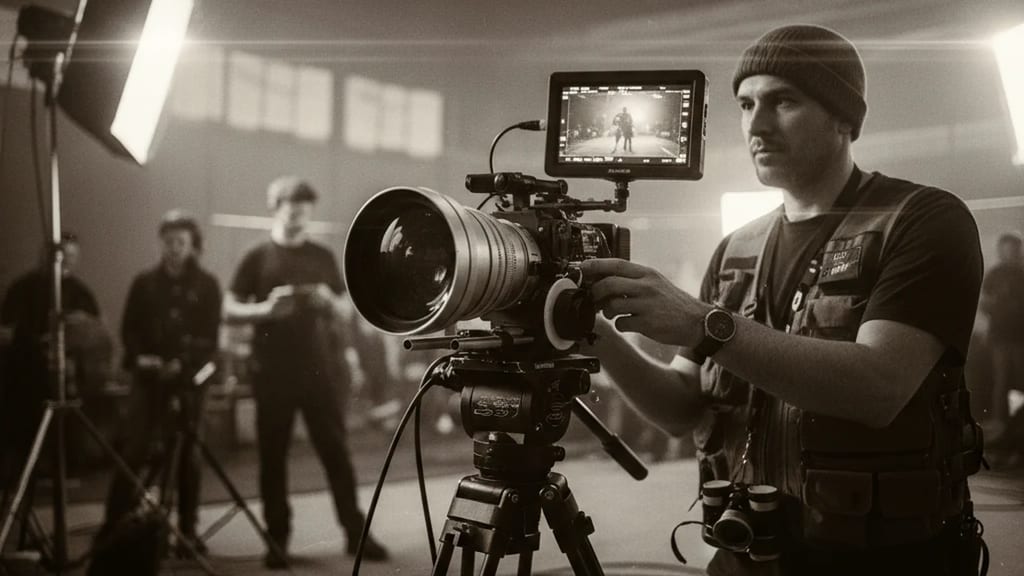
The Tair-11 was used in Eastern European productions from the 1960s to the 1980s due to its low cost. Modern cinematographers appreciate it for narrative scenes that deliberately require a soft, dreamlike visual aesthetic – its distinctive swirly bokeh enhances emotional moments and flashbacks. At wide apertures, strong chromatic aberrations occur, which can be used as a stylistic device. Manual focusing requires precise follow-focus equipment but rewards with an organic, analog feel.

Comparison & Alternatives

Compared to modern 135mm lenses, the Tair-11 exhibits significantly less sharpness and contrast but excels with its characterful rendering. The related Jupiter-37A offers similar characteristics at 135mm f/3.5, but with a less pronounced bokeh effect. The Helios-40-2 (85mm f/1.5) produces comparable swirly bokeh at a shorter focal length. For professional productions, Canon CN-E or Zeiss CP.3 offer technically superior but characterless alternatives without the specific vintage aesthetic of Soviet optics.
From the crafts

Perspectives

Cinematographer

Ich setze das Tair-11 gezielt für emotionale Nahaufnahmen ein, wo das swirly Bokeh die Aufmerksamkeit auf das Gesicht lenkt und unwichtige Hintergrundelemente in kreisförmige Unschärfe auflöst. Bei f/2.8 muss ich mit der begrenzten Schärfentiefe arbeiten und sehr präzise fokussieren, aber der organische Look rechtfertigt den Mehraufwand gegenüber sterilen modernen Objektiven.

Director

Das charakteristische Bokeh des Tair-11 nutze ich für Rückblenden oder Traumsequenzen, wo die ringförmigen Unschärfekreise eine surreale, nostalgische Stimmung erzeugen. Die weiche Bildqualität unterstützt verletzliche Charaktermomente - besonders in Kombination mit warmer Beleuchtung entstehen intime Szenen, die moderne Objektive nicht erreichen können.

Producer

Das Tair-11 kostet auf dem Gebrauchtmarkt zwischen 150-400 Euro und bietet einzigartige Bildästhetik zum Bruchteil moderner Cine-Objektive. Allerdings erfordert die manuelle Bedienung erfahrene Kameraleute und längere Setupzeiten, was bei knappen Drehplänen problematisch wird - der Look rechtfertigt aber oft die zusätzlichen 10-15% Drehzeit für entsprechende Szenen.

More in the lexikon

Related terms

Test your knowledge

Quiz

1. Zu welchem Department gehört „Tair-11"?

2. Wie viele verschiedene Fachperspektiven bietet dieser Eintrag?

Report an error
From the Filmfarm ecosystem

Understand visual language, budget productions, connect crew.

The Lexikon is part of the Filmfarm ecosystem — alongside budgeting (FilmBalance), an industry magazine (FilmCircus) and crew networking (FilmCall, CrewMesh). One shared vocabulary for the whole production.

FilmFarm FilmRadarComing soonFilmPulseComing soonFilmNumbersComing soonFilmCapitalComing soonFilmLabComing soonFilmBalanceComing soonFilmCircusComing soon