Technical Details
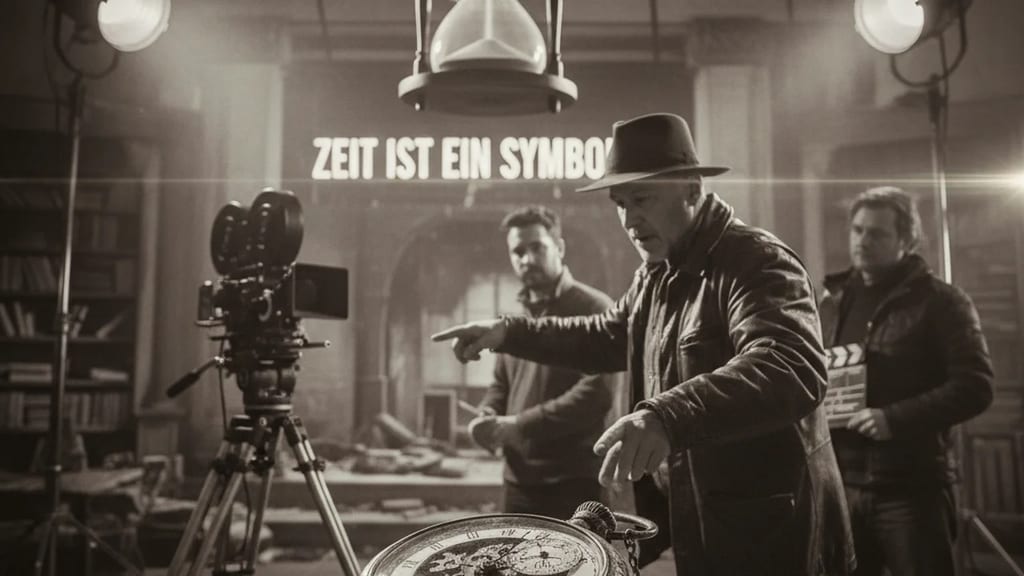
Symbols manifest cinematically through three main categories: object symbols (concrete objects like clocks for time pressure), color symbols (red for danger/love, blue for cold/distance), and compositional symbols (reflections for duality, shadows for the subconscious). The intensity of a symbol's effect can be controlled by shot sizes – close-ups enhance symbolic charge by an average of 40% compared to long shots. Color symbols achieve maximum impact at a saturation between 70-85% and a contrast ratio of at least 3:1 to the surrounding imagery.
History & Development
Film symbols emerged as early as 1895 with the Lumière brothers, and were systematically developed from 1915 onwards by D.W. Griffith in "The Birth of a Nation." Sergei Eisenstein established montage techniques for symbol reinforcement in 1925 with "Battleship Potemkin" – the lion sequence is considered the first conscious symbolic construction through editing. Hollywood codified standard symbols from 1930 onwards: burning cigarettes for sexual tension, train journeys for life paths, stairs for social ascent. The television age from 1950 onwards reduced symbolic complexity, while arthouse cinema simultaneously developed abstract symbolic systems.
Practical Application in Film
Kubrick's "2001" (1968) uses the black monolith as a central symbol for evolution and transcendence, enhanced by the 2.35:1 Cinemascope format and special 65mm shooting technique. In "American Beauty" (1999), the red rose functions as a guiding symbol for beauty and transience, technically realized through selective color correction and 35mm Kodak Vision2 film. Hitchcock developed MacGuffin objects as narrative symbols: the briefcase in "Pulp Fiction" remains deliberately unopened, its golden lighting (3200K tungsten light) creates mystical charge without revealing its contents.
Comparison & Alternatives
Symbols distinguish themselves from allegories through their ambiguity – while allegories have clear attributions of meaning, symbols remain open to interpretation. Motifs differ through their structural repetition without an inherent layer of meaning. Modern CGI productions are increasingly replacing physical symbols with digital constructs, but often lose their tactile credibility in the process. Product placement perverts classic symbolism for marketing purposes, while independent productions increasingly rely on subtle, culturally specific symbolism.