Filmlexikon.
Support
Synopsis
Theory · Terms

Synopsis

Murnau AI illustration
logline outline plot line

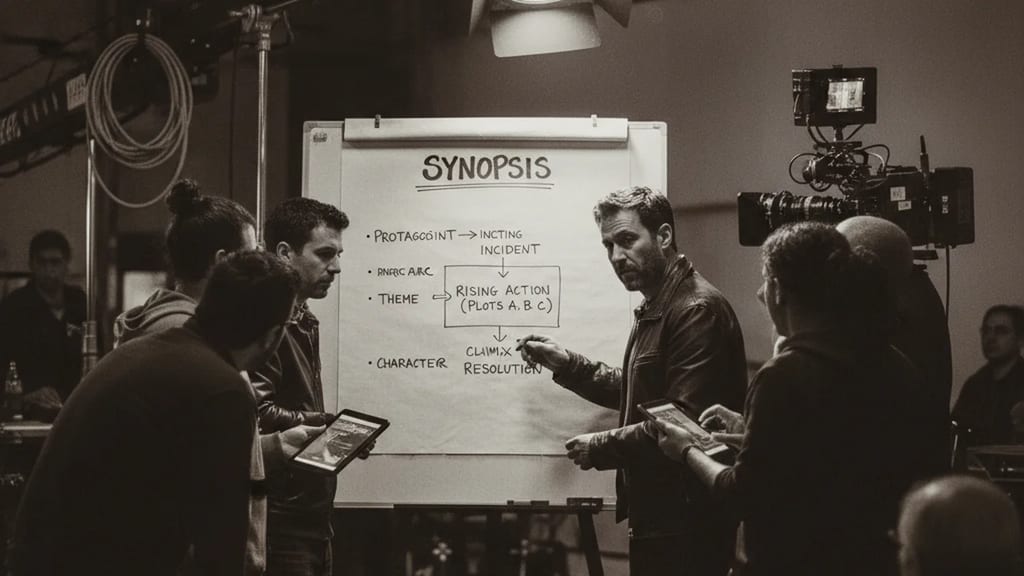
One-page plot summary for producers and investors, structured in three acts with character names in CAPS on first mention.

Technical Details

Industry standard for synopses: 1 page for short films under 30 minutes, 2 pages for feature films 90-120 minutes, 3 pages for films over 120 minutes. Formatting is in 12pt Times New Roman, single line spacing, 2.5cm margins. The synopsis is divided into three acts according to classical dramaturgy: Setup (25%), Confrontation (50%), Resolution (25%). Character names are written in all caps upon first mention.

History & Development

Synopses originated in the 1920s within the Hollywood studio system as a decision-making tool for producers. Irving Thalberg at MGM established the system of written project evaluation by synopsis readers in 1925. In the 1960s, the Writers Guild of America standardized the format. Since the 1990s, digital databases like IMDbPro have been used for synopsis archiving.

Practical Application in Film

Synopses are used for project acquisition, financing, and internal communication. Producers use them for pitch meetings with investors, directors for communication with Heads of Department. For "The Matrix" (1999), the Wachowski synopsis convinced Warner Bros. despite the unconventional concept. For sequels like "John Wick: Chapter 4," writers create separate synopses for each storyline. Casting Directors use character synopses for casting supporting roles.

Comparison & Alternatives

The synopsis differs from the treatment (5-10 pages, scene descriptions), exposé (0.5-1 page, rough overview), and logline (1-2 sentences, core conflict). The step outline divides the plot into numbered sequences, while the synopsis tells a flowing narrative. Modern alternatives include video pitches and interactive presentations, but the written synopsis remains the industry standard for contract negotiations and rights clarification.
From the crafts

Perspectives

Cinematographer

Ich lese die Synopsis, um die emotionalen Wendepunkte und Spannungsbögen zu identifizieren, die meine Kameraführung unterstützen muss. Besonders wichtig sind mir die Übergänge zwischen den Akten, da hier oft drastische Bildsprache-Wechsel erforderlich sind. Die Charakterentwicklung in der Synopsis hilft mir, die visuelle Entwicklung der Protagonisten zu planen.

Director

Die Synopsis ist mein Kompass für die emotionale Dramaturgie und hilft mir, die Gewichtung der Szenen zu justieren, wenn das Drehbuch zu detailverliebt wird. Ich nutze sie als Referenz für alle kreativen Entscheidungen und prüfe regelmäßig, ob jede Szene dem großen Bogen dient. Für die Arbeit mit Schauspielern extrahiere ich aus der Synopsis die Kernmotivation jeder Figur.

Producer

Ich kalkuliere anhand der Synopsis-Struktur die Drehzeit pro Akt und identifiziere kostenintensive Sequenzen für die Budgetplanung. Synopsis-basierte Pitch-Meetings mit Investoren sparen mir Wochen gegenüber Drehbuch-Präsentationen. Bei internationalen Co-Produktionen ist die Synopsis das erste Dokument für Förderanträge, da sie schnell übersetzbar ist.

More in the lexikon

Related terms

Test your knowledge

Quiz

1. Zu welchem Department gehört „Synopsis"?

2. Wie viele verschiedene Fachperspektiven bietet dieser Eintrag?

Report an error
From the Filmfarm ecosystem

Understand visual language, budget productions, connect crew.

The Lexikon is part of the Filmfarm ecosystem — alongside budgeting (FilmBalance), an industry magazine (FilmCircus) and crew networking (FilmCall, CrewMesh). One shared vocabulary for the whole production.

FilmFarm FilmRadarComing soonFilmPulseComing soonFilmNumbersComing soonFilmCapitalComing soonFilmLabComing soonFilmBalanceComing soonFilmCircusComing soon