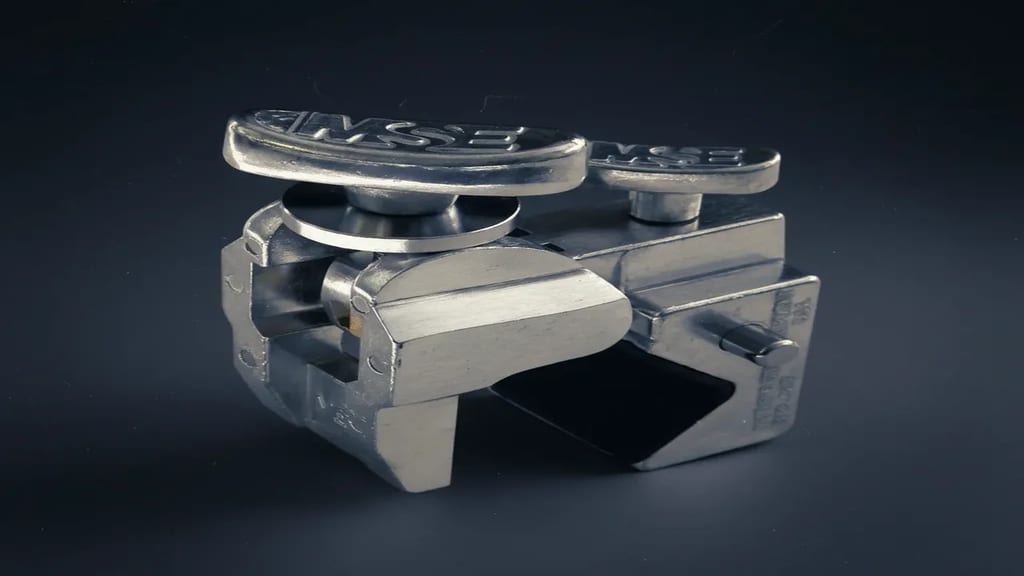
Definition
The swivel clamp is a rotatably mounted fastening device for flexible mounting of lighting equipment to tripods, pipes, or other support elements. It allows for 360° rotation around the vertical axis and typically has a clamping range of 16-48mm pipe diameter with a maximum load capacity of 5-15kg, depending on the model. The term became established in the 1960s parallel to the increasing mobility of film productions.
Technical Details
Standard swivel clamps are made of an aluminum or steel construction with hardened jaws and a precision-machined swivel bearing. The clamping force is regulated via a knurled screw with a 12-16mm thread, achieving tightening torques of 8-12 Nm. Common variants include Baby Pin mounts (16mm), Junior Pin mounts (28mm), as well as 1/4" and 3/8" threaded connections. High-quality models feature ball joints with up to 180° tilt angle and locking mechanisms against unintentional rotation.
History & Development
Mole-Richardson developed the first series-produced swivel clamps for their Tungsten spotlights in 1958, after the location production of "The Bridge on the River Kwai" (1957) had highlighted the need for more flexible mounting solutions. Matthews Studio Equipment perfected the concept in 1963 with the "Cardellini Clamp," which became an industry standard. Modern CNC-machined variants from Manfrotto and Kupo have achieved significantly higher precision and durability with reduced weight since 2010.
Practical Use in Film
Roger Deakins used hundreds of swivel clamps on "1917" (2019) for rapid repositioning of LED panels during continuous camera movements. Typical workflows include attaching Dedolights to door frames for portrait shots or mounting Kinoflo tubes to scaffolding poles for even surface illumination. The quick adjustability reduces setup times to 30-60 seconds compared to 5-10 minutes for rigid tripods.
Comparison & Alternatives
Compared to magnetic mounts, swivel clamps offer universal applicability on non-ferromagnetic surfaces, but achieve only 70% of the holding force at comparable weight. Suction cup systems allow for cleaner mounting on smooth surfaces but fail on porous materials or with temperature fluctuations exceeding 15°C. Modern quick-release clamps with cam-lever mechanisms reduce mounting time by an additional 40% but cost three times as much as conventional screw clamps.