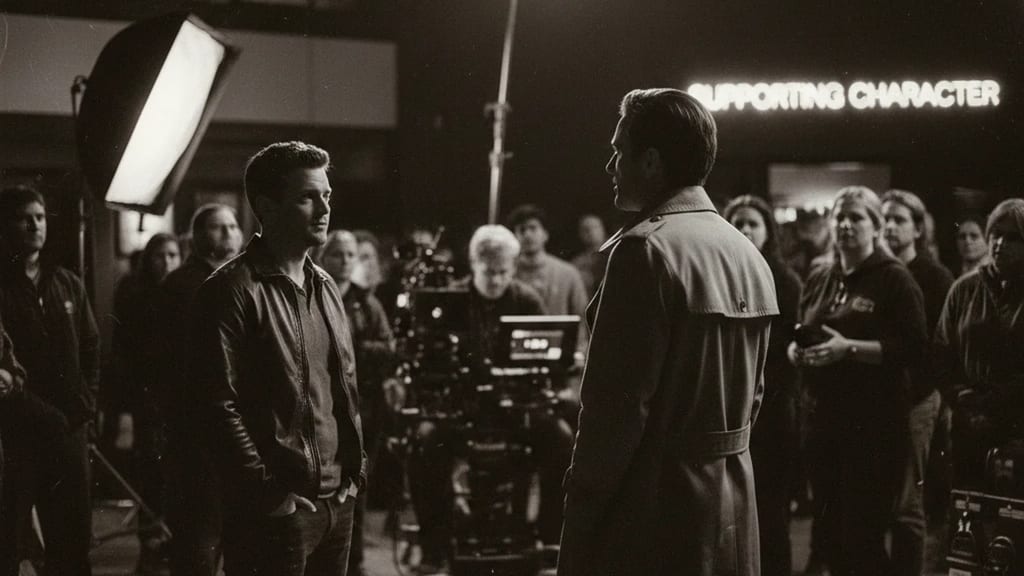
Technical Details
Supporting characters can be divided into four main categories: Confidant (a trusted friend of the protagonist), Foil (a character who contrasts with the main character), Catalyst (a trigger for plot twists), and Comic Relief (tension release through humor). In standardized screenplay formats, supporting characters typically receive 8-25% of the total dialogue, while protagonists claim 40-60%. Recurring Characters appear in at least three scenes, while Episodic Characters are limited to individual sequences. Character depth is measured by the Three-Dimensional Standard: physical appearance, social dimension, and psychological motivation.
History & Development
Aristotle first defined supporting characters as "acting persons of the second rank" in his "Poetics" in 335 BC. Shakespeare perfected the system between 1600-1610 with characters like Mercutio ("Romeo and Juliet") or the Fool ("King Lear"). The Hollywood studio system of the 1930s standardized supporting character archetypes: Sidekick, Love Interest, Mentor, and Threshold Guardian. Joseph Campbell's "Hero's Journey" (1949) scientifically systematized these archetypes. Modern ensemble films since "Nashville" (1975) have increasingly blurred the lines between main and supporting characters.
Practical Application in Film
In "Casablanca" (1942), Captain Renault functions as a Catalyst, enabling Rick's transformation. Samwise Gamgee in "The Lord of the Rings" embodies the classic Confidant type. Ensemble Casting, as in "Pulp Fiction" (1994), develops several supporting characters into co-protagonists. Character Doubling uses supporting characters as thematic reflections of the main character – for example, Harvey Dent as a Foil to Batman in "The Dark Knight" (2008). In television series, supporting characters are systematically developed into Recurring Characters to build storylines over multiple episodes.
Comparison & Alternatives
Supporting characters differ from Extras through individual characterization and dialogue share. Cameo appearances by famous personalities usually fall into this category but primarily serve marketing purposes. Ensemble pieces treat all characters equally and eliminate the concept of supporting characters. MacGuffin Characters exist solely for plot development without their own motivation. Modern Anti-Hero Narratives invert traditional hierarchies: supporting characters often embody moral clarity, while protagonists remain ambivalent.