Filmlexikon.
Support
Sidekick
Theory · Terms

Sidekick

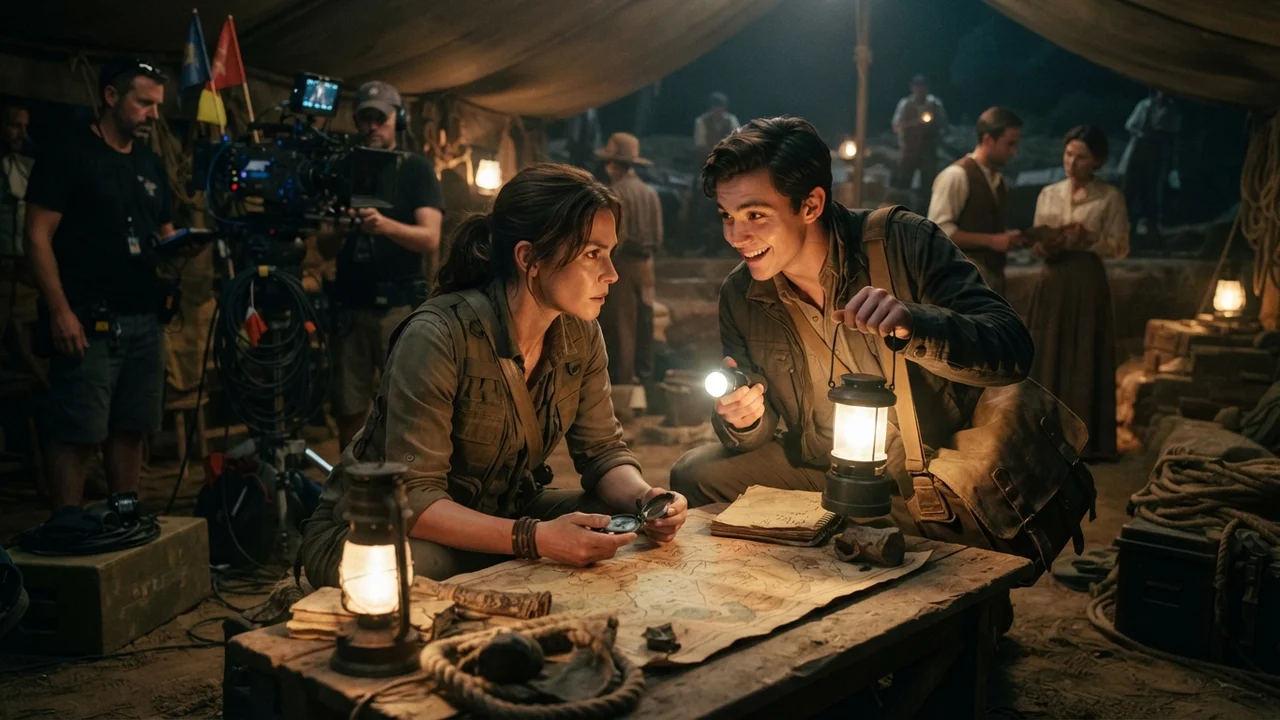
Murnau AI illustration
supporting character love interest subplot subtext

Secondary character who supports the protagonist and enhances their qualities through complementary traits, contrast, or comic relief.

Technical Details

Sidekicks are divided into four basic types: The complementary sidekick supplements the protagonist's missing skills (Watson to Holmes), the contrast sidekick emphasizes the protagonist's traits through opposition (Sancho Panza to Don Quixote), the mentor sidekick acts as an advisor (Obi-Wan to Luke), and the comic relief sidekick primarily serves to relieve tension (R2-D2/C-3PO). The optimal screen time distribution is 60-70% for the protagonist and 20-30% for the sidekick. Dialogue distributions follow similar proportions, with sidekicks often serving as cue-givers for exposition.

History & Development

The sidekick principle first systematically manifested in the Western serials of the 1930s, where figures like Gabby Hayes (Roy Rogers) or Smiley Burnette (Gene Autry) established the schema. Abbott and Costello perfected the comedy variant from 1940-1956 with precise 70/30 dialogue distributions. The buddy movie wave of the 1960s transformed the concept into more equal duos, while the blockbuster era from 1975 onwards standardized functional sidekicks like Chewbacca or Short Round.

Practical Application in Film

In "Casablanca" (1942), Captain Renault embodies the morally flexible sidekick who mirrors Rick's character development. "Pulp Fiction" (1994) deconstructs the schema through Vincent/Jules as co-protagonist sidekicks. Marvel's Cinematic Universe established the "sidekick ensemble" model from 2008 onwards, where multiple secondary characters rotate in the sidekick function. Animated films often use animal sidekicks (Sebastian in "The Little Mermaid," Timon/Pumbaa in "The Lion King") for audience expansion.

Comparison & Alternatives

Sidekicks differ from deuteragonists through their functional subordination and from ensembles through their individual bond with the protagonist. Love interests can assume sidekick functions but are primarily defined by romantic subplot structures. Modern series increasingly favor ensemble constructions over classic sidekick hierarchies, as they allow for more flexible character rotations and create broader demographic identification.

From the crafts

Perspectives

Cinematographer

Ich rahme Sidekicks bewusst in Zweier-Einstellungen, um die Machthierarchie durch Bildkomposition zu verstärken – der Protagonist erhält die dominante Bildseite oder größere Tiefenschärfe. Bei Dialogszenen nutze ich Over-Shoulder-Shots vom Sidekick auf den Protagonisten, um die unterstützende Funktion visuell zu manifestieren.

Director

Ich verwende Sidekicks als narrative Katalysatoren – sie stellen die Fragen, die das Publikum beschäftigen, und zwingen den Protagonisten zur Artikulation seiner Motivationen. Die 70/30-Dialogregel durchbreche ich gezielt in Wendepunkten, wo der Sidekick temporär die Führung übernimmt und Charakterentwicklung vorantreibt.

Producer

Ich kalkuliere für Sidekick-Rollen 40-60% des Protagonist-Honorars und plane 15-20% zusätzliche Drehtage für Duo-Szenen ein. Star-Sidekicks können das Marketing-Budget um 25% reduzieren, da sie eigenständige Fanbase mitbringen, erhöhen aber Versicherungskosten um durchschnittlich 18.000 Euro pro Drehtag.

More in the lexikon

Related terms

Test your knowledge

Quiz

1. Zu welchem Department gehört „Sidekick"?

2. Wie viele verschiedene Fachperspektiven bietet dieser Eintrag?

Report an error
From the Filmfarm ecosystem

Understand visual language, budget productions, connect crew.

The Lexikon is part of the Filmfarm ecosystem — alongside budgeting (FilmBalance), an industry magazine (FilmCircus) and crew networking (FilmCall, CrewMesh). One shared vocabulary for the whole production.

FilmFarm FilmRadarComing soonFilmPulseComing soonFilmNumbersComing soonFilmCapitalComing soonFilmLabComing soonFilmBalanceComing soonFilmCircusComing soon