Filmlexikon.
Support
Super Takumar 50
Camera · Terms

Super Takumar 50

Murnau AI illustration
flow para roll super takumar take

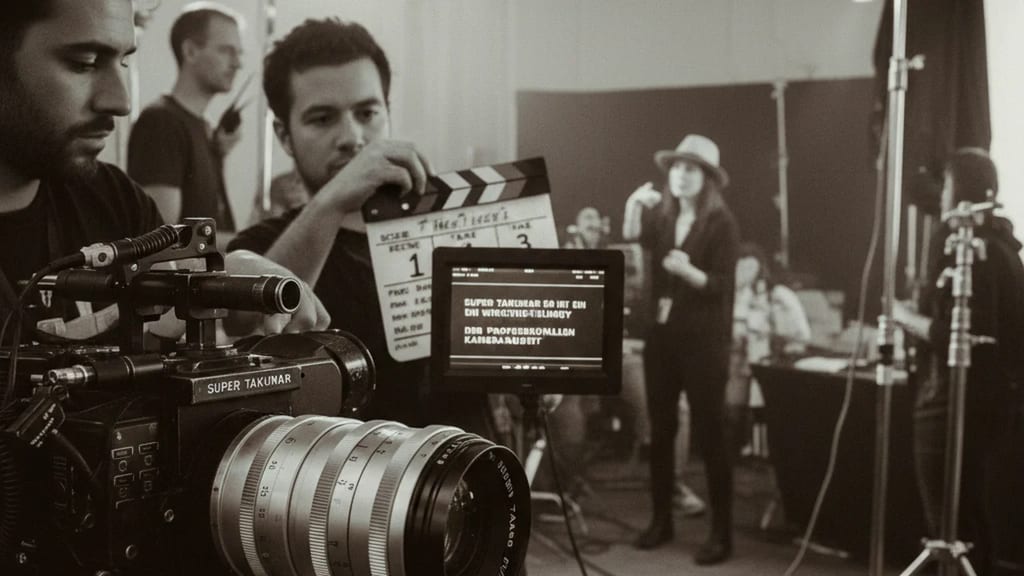
Pentax 50mm f/1.4 lens renowned for organic bokeh and warm skin tones from thorium glass elements.

Technical Details

The optical construction consists of 7 elements in 6 groups with a focal length of 50mm and a field of view of 46°. The filter diameter is 49mm, and the aperture blades are adjustable in 8 steps. The lens uses a modified Gauss construction with thorium glass in the front elements, which is responsible for the characteristic slightly yellowish tint of older copies. The coating was done with Pentax's proprietary Super-Multi-Coating technology. Three main variants exist: the early version with a zebra stripe design, the black version from 1968, and a rare Atomic version with radioactive thorium glass.

History & Development

Introduced in 1964 as the flagship lens for Pentax's Spotmatic series, the Super Takumar 50 revolutionized portrait photography with its extreme aperture for its time. In 1968, the housing was changed to black anodized. Production ended in 1971 with the introduction of the K-mount and was replaced by the SMC Pentax 50mm f/1.4. Approximately 1.2 million units were produced in total.

Practical Use in Film

Cinematographers appreciate the Super Takumar 50 for its organic bokeh characteristics and the smooth transition between sharpness and blur at wide apertures. Stanley Kubrick used modified Takumar lenses for candlelight scenes in "Barry Lyndon" (1975). Modern independent productions like Spike Jonze's "Her" (2013) integrated vintage Takumar lenses for warm skin tones. Manual focus requires experienced focus pullers but offers precise tactile control. At f/1.4, the lens exhibits slight vignetting and corner softness; optimal sharpness is achieved from f/2.8.

Comparison & Alternatives

Unlike modern 50mm lenses, the Super Takumar is characterized by lower contrast and warmer color rendition. The contemporary Canon FD 50mm f/1.4 offers comparable aperture with a slightly more neutral color palette. Modern alternatives like the Sigma 50mm Art f/1.4 achieve higher resolution but lose the characteristic "vintage" feel. For digital productions with Super35 sensors, the focal length corresponds to approximately a 75mm full-frame equivalent.

From the crafts

Perspectives

Cinematographer

Ich verwende das Super Takumar 50 für Porträts mit natürlichem Bokeh – bei f/1.4 erhalte ich cremige Hintergrundunschärfe, muss aber mit leichter Vignettierung rechnen. Der manuelle Fokusring bietet präzises haptisches Feedback, erfordert jedoch einen erfahrenen Focus Puller für kritische Schärfeverlagerungen.

Director

Das warme, organische Rendering des Super Takumar transportiert emotionale Intimität perfekt – besonders für Charakterstudien nutze ich die weiche Schärfezeichnung bei offener Blende. Die leichte Kontrastschwäche erzeugt einen nostalgischen Look, der moderne digitale Ästhetik durchbricht.

Producer

Vintage Super Takumar kosten 80-150 Euro, benötigen jedoch M42-Adapter für moderne Kameras und erfahrene Kamerateams wegen manueller Bedienung. Der Zeitaufwand für Schärfe-Einstellungen steigt um etwa 20%, dafür entfallen teure Objektivmieten für vergleichbare Cinema-Optiken.

More in the lexikon

Related terms

Test your knowledge

Quiz

1. Was beschreibt „Super Takumar 50" am besten?

2. Zu welchem Department gehört „Super Takumar 50"?

3. Wie viele verschiedene Fachperspektiven bietet dieser Eintrag?

Report an error
From the Filmfarm ecosystem

Understand visual language, budget productions, connect crew.

The Lexikon is part of the Filmfarm ecosystem — alongside budgeting (FilmBalance), an industry magazine (FilmCircus) and crew networking (FilmCall, CrewMesh). One shared vocabulary for the whole production.

FilmFarm FilmRadarComing soonFilmPulseComing soonFilmNumbersComing soonFilmCapitalComing soonFilmLabComing soonFilmBalanceComing soonFilmCircusComing soon