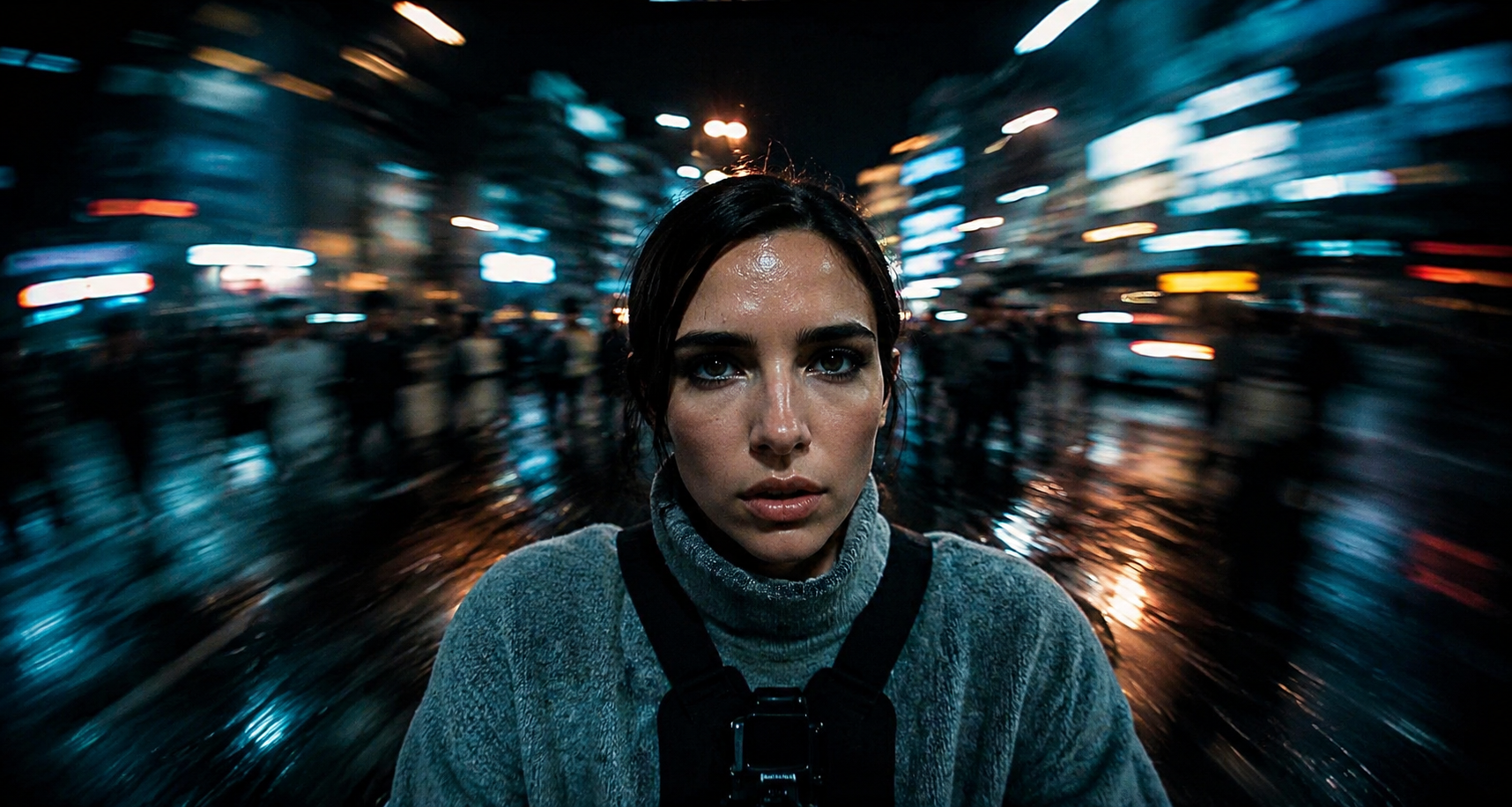
A body-mounted camera rig pointed back at the actor: the performer stays locked in frame while the background lurches and sways around them.
The SnorriCam is a rig that is attached to the performer's body — the camera hangs on a mount in front of them and points back at their face. This reverses the usual logic of a moving shot: the camera doesn't follow the actor, but the world moves behind them. The head remains stabilized, while the background tilts, jerks, and blurs with every step. The rig is named after the Snorri brothers, who developed and popularized it.
Effect and Use
The effect is unmistakably subjective without being a POV: we look at the character but experience their disorientation. Therefore, the SnorriCam is almost always used when a character loses control — intoxication, panic, pursuit, exhaustion. The technique became known through films like Requiem for a Dream, among others. Used sparingly, the effect works; as a constant state, it quickly becomes tiresome.
On Set
The performer wears the rig themselves, usually via a vest or harness with an outrigger. The weight is at the front and pulls — the lighter the camera, the longer the actor can endure and the more natural their gait remains. Focus is set to the fixed distance from the face and remains there; this is one of the few shots where the focus puller can take a break. Lighting is the real work: the character turns through changing environments, so the face must either be guided out of the rig or the locations must be lit accordingly.
- Choose a wide-angle lens — it keeps the face sharp in the frame and enhances the background's tumbling effect.
- Rehearse with the complete rig before the shooting day: weight distribution and strap pressure determine whether the performer can walk naturally.
- Use it briefly. Twenty seconds of SnorriCam tell more than two minutes.
Related terms
Quiz
1. Was beschreibt „SnorriCam" am besten?
2. Zu welchem Department gehört „SnorriCam"?