Filmlexikon.
Support
Shutter Speed
Camera · Technique

Shutter Speed

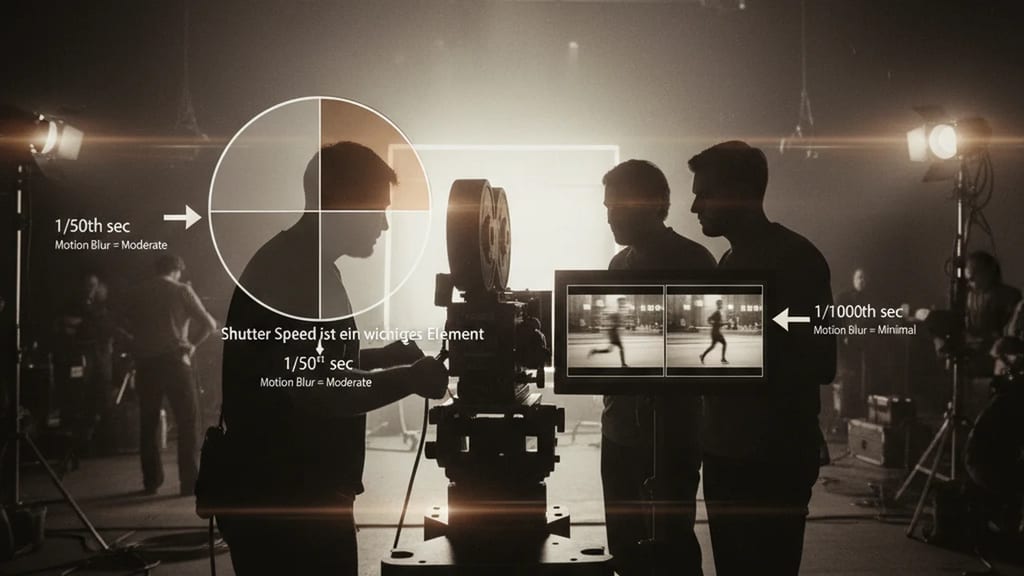
Murnau AI illustration
flow para roll speed take

Duration the camera sensor or film is exposed to light. The 180-degree shutter rule sets shutter speed to 1/48 second at 24fps for natural motion blur.

Technical Details

Modern cinema cameras operate with shutter speeds between 1/24 and 1/2000 second. The RED Weapon 8K offers shutter angles from 1° to 360°, and the ARRI Alexa 35 from 5.76° to 356.4°. A shutter angle of 90° at 24fps results in a shutter speed of 1/96 second. Sony Venice cameras utilize electronic global shutters with precise 1/8000-second intervals. The mechanical rotary shutter of classic 35mm cameras like the ARRI 435 has a standard semicircular aperture, which established the 180° rule with one rotation per frame.

History & Development

The mechanical shutter emerged in 1895 with the first cinema cameras from the Lumière brothers. In 1920, the 180° shutter angle became standardized as an optimal compromise between natural motion blur and sufficient exposure. Mitchell cameras introduced variable shutter angles in 1928. The digital revolution brought electronic shutters in 2007 with the RED One, enabling more flexible settings without mechanical limitations. Since 2019, global shutter sensors have set new standards with rolling-shutter-free recording.

Practical Application in Film

Steven Spielberg's "Saving Private Ryan" (1998) used 45° shutter angles for the harsh, stroboscopic combat scenes on Omaha Beach. "Gladiator" (2000) switched between 172° for fluid dialogue and 90° for choppy fight sequences. Zack Snyder systematically employs 270° settings for his characteristic, slow-motion-like aesthetic. For high-speed shooting, DoPs reduce the shutter speed to 1/1000 second to achieve sharp individual frames in slow-motion sequences. Night shots often require 360° shutter angles for maximum light capture.

Comparison & Alternatives

Shutter speed differs from frame rate – the latter determines the number of images per second, while the former dictates the exposure duration of each individual frame. The motion blur shutter creates artificial motion blur in post-production but does not replace the natural shutter speed aesthetic. Variable ND filters offer an alternative to shutter speed adjustment with constant exposure time. Electronic shutters are increasingly replacing mechanical systems, with global shutter solving the rolling shutter problem but incurring higher production costs.

From the crafts

Perspectives

Cinematographer

Ich nutze kurze Verschlusszeiten bei 1/200s für knackig-scharfe Actionszenen, wo jede Bewegung eingefroren werden soll, und verlängere auf 270° für traumartige Sequenzen mit weicher Bewegungsunschärfe. Bei LED-Beleuchtung muss ich die Verschlusszeit exakt auf die Flicker-Frequenz abstimmen, sonst entstehen störende Streifenmuster im Bild. Variable Verschlusszeiten innerhalb einer Szene setze ich gezielt als Stilmittel ein, um emotionale Übergänge zu visualisieren.

Director

Ich verwende extreme Verschlusszeiten als narratives Werkzeug – kurze 1/500s für dissoziative Momente, in denen Charaktere die Kontrolle verlieren, und lange 360°-Einstellungen für verträumte Erinnerungssequenzen. Die Verschlusszeit-Dramaturgie folgt der emotionalen Kurve meiner Protagonisten: Je größer die innere Anspannung, desto kürzer die Verschlusszeit. Dadurch entsteht eine unbewusste Nervosität beim Zuschauer, die die psychologische Ebene unterstützt.

Producer

Extreme Verschlusszeit-Einstellungen kosten mich zusätzliche Beleuchtungspower und längere Setup-Zeiten – ein 45°-Verschlusswinkel erfordert das Vierfache an Licht gegenüber 180°. Digital Intermediate muss bei variablen Verschlusszeiten komplexere Grading-Prozesse einkalkulieren, was die Postproduktionskosten um 15-20% erhöht. Ich plane für Verschlusszeit-intensive Drehtage immer Backup-Equipment ein, da mechanische Shutter-Systeme störungsanfälliger sind als Standard-Einstellungen.

More in the lexikon

Related terms

Test your knowledge

Quiz

1. Was beschreibt „Verschlusszeit" am besten?

2. Zu welchem Department gehört „Verschlusszeit"?

3. Wie viele verschiedene Fachperspektiven bietet dieser Eintrag?

Report an error
From the Filmfarm ecosystem

Understand visual language, budget productions, connect crew.

The Lexikon is part of the Filmfarm ecosystem — alongside budgeting (FilmBalance), an industry magazine (FilmCircus) and crew networking (FilmCall, CrewMesh). One shared vocabulary for the whole production.

FilmFarm FilmRadarComing soonFilmPulseComing soonFilmNumbersComing soonFilmCapitalComing soonFilmLabComing soonFilmBalanceComing soonFilmCircusComing soon