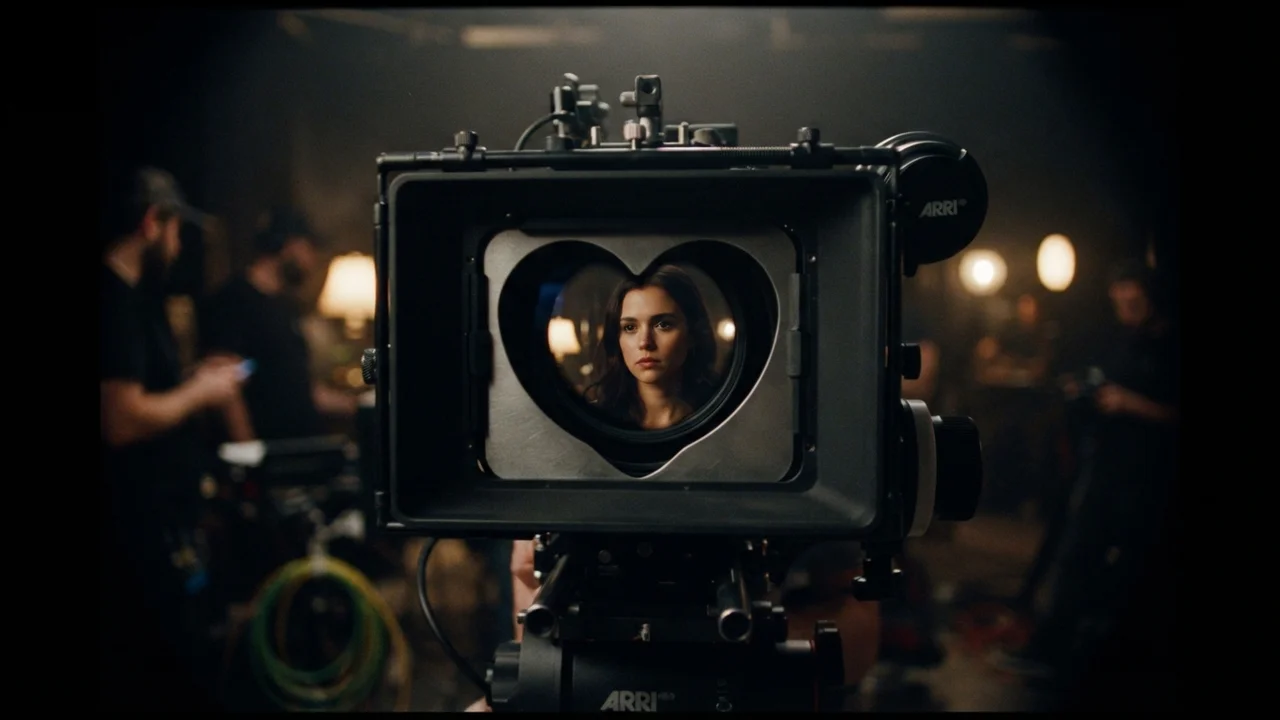
Technical Details
Shapes are typically used in matte box systems in front of lenses with filter diameters ranging from 77mm to 138mm. The standard thickness is 2-4mm for professional versions made of anodized aluminum or matte black plastic. Digital shapes are created using programmable LCD panels with a resolution of 1920x1080 pixels, which are continuously dimmable and allow for animated transitions. Classic variants include iris shapes (circular), keyhole shapes, heart shapes, and custom shapes according to individual specifications. The optical effect is achieved by shading the edge areas when the aperture is fully open.
History & Development
D.W. Griffith first systematically used iris apertures for dramaturgical image design in "The Birth of a Nation" in 1915. The silent film era of the 1920s established shapes as a standard tool – Fritz Lang's "Metropolis" (1927) employed over 200 different mask effects. With the advent of sound film, they largely disappeared, as microphones complicated complex camera movements. The 1970s saw a renaissance through filmmakers like Brian De Palma, who used modern iris effects in "Carrie" (1976). Since 2010, digital shapes have enabled precise real-time control and seamless post-production integration.
Practical Application in Film
Classic applications can be found in Hitchcock's "Vertigo" (1958) for the famous keyhole sequence or Chaplin's "Modern Times" (1936) with numerous circle iris effects. Modern productions like "The Grand Budapest Hotel" (2014) use shapes for nostalgic stylistic devices and transitions between time periods. The workflow requires precise pre-planning, as post-production corrections are costly. Advantages lie in immediate visual control on set and the organic optical quality compared to digital effects. Disadvantages include limited flexibility and increased time expenditure for setup and lighting.
Comparison & Alternatives
Shapes differ from vignetting by their sharp contours and geometric forms, while vignettes create soft transitions. Modern CGI masking offers unlimited shape variety and post-production adjustments, but does not achieve the natural optical depth of physical shapes. Split screens use similar principles but divide the image into multiple equal areas instead of creating a single focal point. Digital compositing software like Nuke or After Effects can simulate shapes, but the organic light scattering of physical apertures remains unsurpassed in demanding cinematographic work.