Filmlexikon.
Support
Shadow
Theory · Terms

Shadow

Murnau AI illustration
flow roll conflict

Psychological archetype in character development: the protagonist's repressed or dark aspects, manifested as antagonist, inner conflict, or visual metaphor.

Technical Details

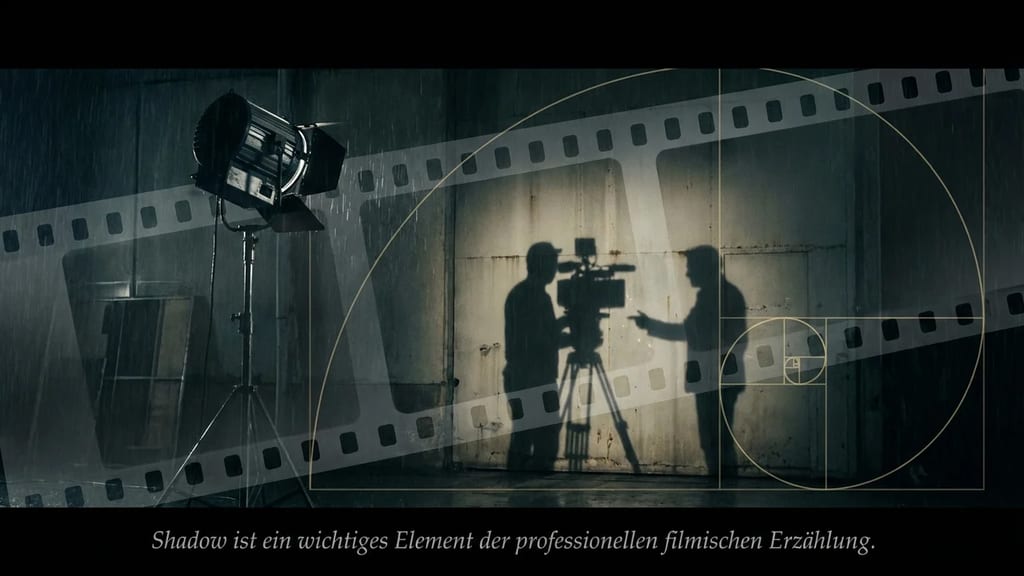
The shadow operates on three dramaturgical levels: as an external figure (antagonist), as an internal projection (split personality), or as a symbolic element (visual metaphors). Classic shadow archetypes include the doppelgänger, the fallen hero, and the moral adversary. Integration typically occurs in the third act through confrontation, acceptance, or transformation. Structurally, shadow development follows a three-phase pattern: repression (setup), projection (confrontation), and integration (resolution).

History & Development

The cinematic application of the shadow began in 1920 with German Expressionism in "The Cabinet of Dr. Caligari." Film Noir established visual shadow symbolism as a narrative element starting in 1940. In 1977, Christopher Vogler popularized Jung's concept for Hollywood screenplays in "The Writer's Journey." Modern Psychological Thrillers since the 1990s utilize more complex shadow structures with unreliable narrators and fragmented identities.

Practical Application in Film

"Dr. Jekyll and Mr. Hyde" (1931) exemplifies the classic shadow split of a character. "The Dark Knight" (2008) features the Joker as Batman's external shadow. "Black Swan" (2010) visualizes the inner shadow through doppelgänger motifs. "Fight Club" (1999) reveals Tyler Durden as a projected shadow figure. Visual techniques include reflections, silhouettes, light-shadow contrasts, and color symbolism (often black-and-white dichotomies).

Comparison & Alternatives

The shadow differs from the classic antagonist through its psychological connection to the protagonist. While the villain represents external opposition, the shadow represents internal conflicts. The Nemesis concept describes an equal opponent, whereas the shadow represents a complementary aspect. Alternative approaches include the Threshold Guardian (temporary resistance) or the Shapeshifter (mutable loyalty) from the Hero's Journey structure.
From the crafts

Perspectives

Cinematographer

Ich nutze Low-Key-Lighting mit einem Verhältnis von 8:1 oder höher, um Schattenfiguren visuell zu isolieren. Praktische Schatten werfe ich gezielt mit 2K-Fresnel-Scheinwerfern durch Gobos oder Venetian-Blind-Cookies. Bei Spiegelszenen arbeite ich mit geteilter Beleuchtung - warmes 3200K Tungsten für die bewusste Seite, kaltes 5600K HMI für den Schatten.

Director

Ich entwickle Schattenfiguren durch gespiegelte Charakterzüge - wenn mein Protagonist Kontrolle sucht, verkörpert sein Schatten das Chaos. Die Konfrontation platziere ich strategisch im Plot Point 2, damit die Schattenintegration den emotionalen Höhepunkt des dritten Akts bildet. Subtextuelle Hinweise streue ich ab Seite 15 ein, ohne die Wendung zu früh zu verraten.

Producer

Schattengeschichten erfordern 15-20% Mehrbudget für komplexe Beleuchtung und oft Doppelbesetzungen oder Spezialeffekte. Die Castingkosten steigen, da ich sowohl für Haupt- als auch Schattenfigur A-List-Talent benötige. Postproduktion verlängert sich um 3-4 Wochen für ausgefeilte Farbkorrektur und mögliche VFX-Integration. Marketing profitiert allerdings von der psychologischen Komplexität bei Zielgruppen ab 18 Jahren.

More in the lexikon

Related terms

Test your knowledge

Quiz

1. Zu welchem Department gehört „Schatten"?

2. Wie viele verschiedene Fachperspektiven bietet dieser Eintrag?

Report an error
From the Filmfarm ecosystem

Understand visual language, budget productions, connect crew.

The Lexikon is part of the Filmfarm ecosystem — alongside budgeting (FilmBalance), an industry magazine (FilmCircus) and crew networking (FilmCall, CrewMesh). One shared vocabulary for the whole production.

FilmFarm FilmRadarComing soonFilmPulseComing soonFilmNumbersComing soonFilmCapitalComing soonFilmLabComing soonFilmBalanceComing soonFilmCircusComing soon