Technical Details
Samyang cinema lenses consistently use 0.8-module gears with a 77mm front diameter and uniform 85mm focus throw. The XEEN series includes nine focal lengths from 14mm to 135mm, all with T1.5 aperture and 200° focus rotation. The VDSLR range offers 14 focal lengths between 8mm fisheye and 135mm telephoto, optimized for Super35 and full-frame sensors. Modern series like VDSLR MK2 integrate electronic contacts for metadata transmission on Canon EF and Sony E-mounts.
History & Development
Samyang was founded by Jeong Yong-won in 1972 in Masan, South Korea, initially as an OEM supplier for Pentax and other manufacturers. In 2008, the company first launched lenses under its own name, followed by the VDSLR series, specifically optimized for video, starting in 2011. In 2015, the XEEN line established Samyang in the high-end cinema segment, and in 2019, the compact V-AF series expanded the portfolio with autofocus capabilities for mirrorless cameras.
Practical Use in Film
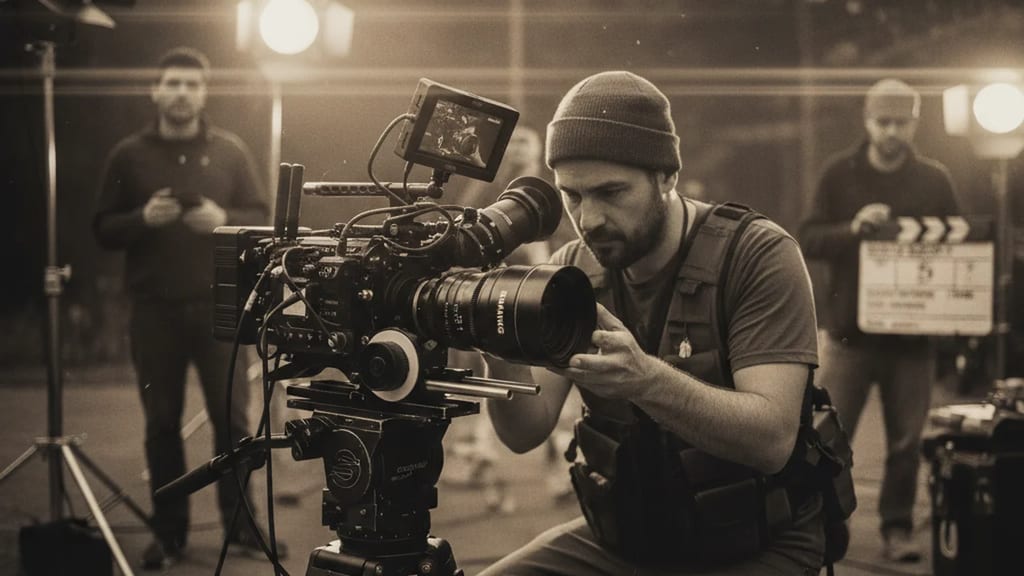
DoPs appreciate Samyang lenses for their consistent color rendition and minimal focus breathing effects during focus shifts. The 35mm T1.5 XEEN was used in "The Handmaid's Tale" (2017-2022) for close-ups, and the 85mm T1.5 in "Mindhunter" (2017-2019) for interrogation scenes. Focus pullers benefit from the linear focus characteristic with even resistance across the entire adjustment range. The robust all-metal housings withstand temperatures from -20°C to +60°C without loss of accuracy.
Comparison & Alternatives
Compared to Zeiss CP.3 or Canon CN-E, Samyang offers significantly lower prices with comparable optical quality, but lacks internal focusing and weather sealing. Cooke S4/i lenses produce warmer skin tones, while Samyang renders more neutrally. For budget productions, Samyang competes with Rokinon (rebranding of the same lenses) and Sigma Cine, but surpasses both in mechanical precision and build quality.