Filmlexikon.
Support
Plot
Theory · Terms

Plot

Murnau AI illustration
three act structure inciting incident midpoint climax imax lut resolution

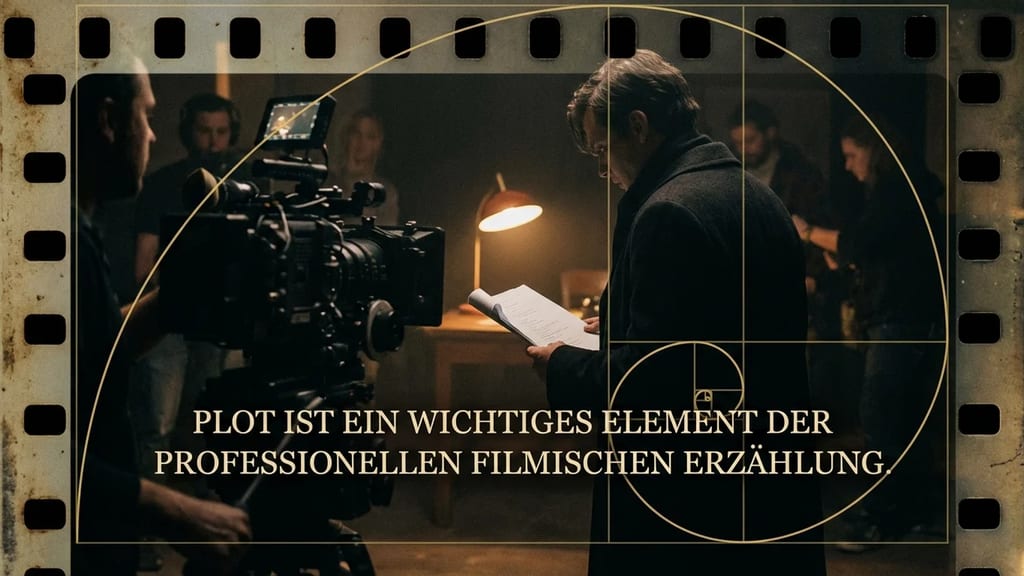
Plot is a technique of professional narrative filmmaking.

Technical Details

The classic three-act structure divides the plot into setup (25%), confrontation (50%), and resolution (25%), with plot points typically occurring at minutes 17-20 and 80-90 of a 120-minute film. Modern screenplays utilize Dan Harmon's Story Circle five-act structure or the nine-act model for series formats. Plot density is measured in "beats per page" – professional screenplays contain an average of 2-3 dramatic turning points per page.

History & Development

Aristotle first defined the three unities of plot, time, and place in his "Poetics" in 335 BC. Georges Polti cataloged the "36 Dramatic Situations" as plot foundations in 1895. In 1949, Joseph Campbell established the hero's journey as a universal plot pattern with "The Hero with a Thousand Faces." Syd Field revolutionized modern three-act theory for Hollywood in 1979 with "Screenplay."

Practical Application in Film

CASABLANCA (1942) exemplifies classic linear plot progression with clear turning points at minute 17 (Laszlo's arrival) and minute 83 (Rick's decision). PULP FICTION (1994) deconstructs chronological plot through an anachronistic narrative structure in three chapters. GROUNDHOG DAY (1993) uses a circular plot with 34 depicted repetitions of the same day. Parallel editing connects simultaneous plot threads, as seen in Griffith's crosscutting in INTOLERANCE (1916) between four time periods.

Comparison & Alternatives

Plot differs from story in its concrete cinematic execution – while story refers to the underlying narrative material, plot structures its dramatic presentation. Fabula describes the chronologically reconstructible sequence of events, while Syuzhet refers to their artistic arrangement in the film. Non-linear narrative forms such as anthology films (MAGNOLIA, SHORT CUTS) or puzzle films (MEMENTO, PRIMER) expand classic plot concepts through fragmented or retrograde structures.
From the crafts

Perspectives

Cinematographer

Ich plane meine Einstellungsgrößen nach dem Handlungsbogen – Totalen für die Exposition, zunehmend intimere Einstellungen bei steigender Spannung, extreme Close-ups für emotionale Höhepunkte. Die dramaturgischen Wendepunkte erfordern oft Perspektivwechsel oder Kamerabewegungen, die ich bereits im Storyboard mit den Handlungsbeats synchronisiere.

Director

Ich entwickle die visuelle Handschrift parallel zur Handlungsstruktur – jeder Akt bekommt seine eigene Farbpalette und Schnittrhythmus. Bei komplexen Handlungsverläufen arbeite ich mit Motivketten und visuellen Leitmotiven, um dem Zuschauer Orientierung zu geben, ohne die narrative Spannung zu zerstören.

Producer

Ich kalkuliere 15% der Drehzeit für Handlungsänderungen während der Produktion ein, da komplexe Plots oft Nachdrehs erfordern. Lineare Handlungen sind um 20-30% kostengünstiger zu drehen als Non-lineare, da weniger Continuity-Personal und Schnittzeit benötigt wird – ein entscheidender Faktor bei Budgetverhandlungen.

More in the lexikon

Related terms

Test your knowledge

Quiz

1. Was beschreibt „Handlung" am besten?

2. Zu welchem Department gehört „Handlung"?

3. Wie viele verschiedene Fachperspektiven bietet dieser Eintrag?

Report an error
From the Filmfarm ecosystem

Understand visual language, budget productions, connect crew.

The Lexikon is part of the Filmfarm ecosystem — alongside budgeting (FilmBalance), an industry magazine (FilmCircus) and crew networking (FilmCall, CrewMesh). One shared vocabulary for the whole production.

FilmFarm FilmRadarComing soonFilmPulseComing soonFilmNumbersComing soonFilmCapitalComing soonFilmLabComing soonFilmBalanceComing soonFilmCircusComing soon