Filmlexikon.
Support
Picture Up
Production · Terms

Picture Up

Murnau AI illustration
pic production principal photography shooting production pitching picture car production strip

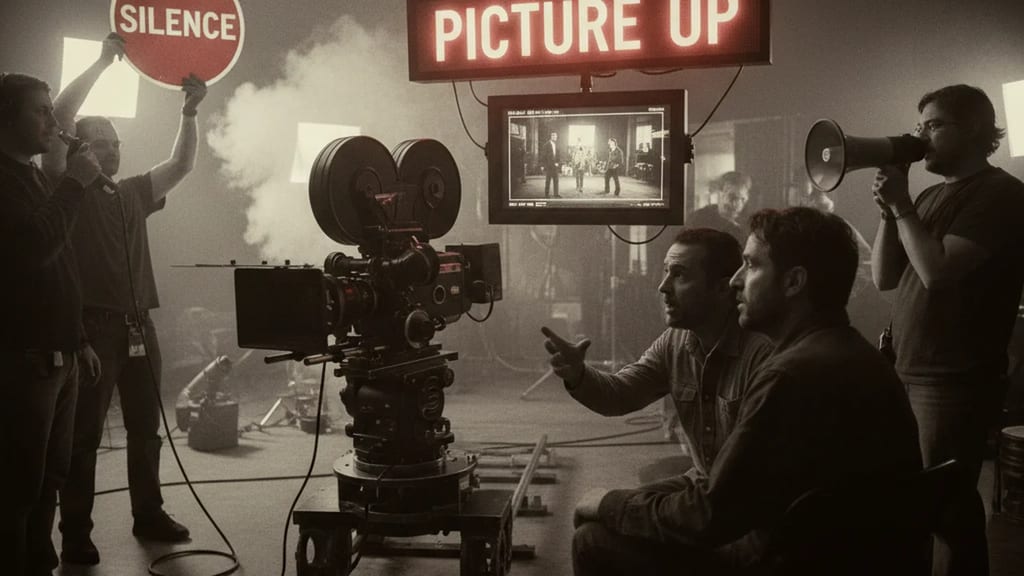
Command to begin filming once the camera reaches target speed. Film cameras require 0.8–1.2 seconds of run-up; digital cameras only 0.15 seconds.

Technical Details

For film cameras like the Arriflex 35-III, the ramp-up to the correct frame rate of 24 fps takes approximately 0.8 to 1.2 seconds. Digital cinema cameras like the RED V-Raptor reach their target frame rate within 0.15 seconds. The timecode begins with the first fully exposed frame, not the start command. The sound recordist and camera assistant document the exact start time for synchronization in post-production. In multi-camera setups, all cameras must start in sync within 2 frames (83 milliseconds at 24p).

History & Development

The term established itself in the 1920s with the introduction of motor-driven film cameras that required a ramp-up time. Early hand-crank cameras started immediately, but modern systems for the first time required precise timing communication between the director and the camera department. With the introduction of the clapperboard in 1929, "Picture Up" became the standardized announcement before the first clap. Digital cinema from 1999 onwards significantly reduced ramp-up times, but the workflow term remained.

Practical Application in Film

In action sequences in "Mad Max: Fury Road" (2015), cinematographer John Seale coordinated up to eight cameras with precise "Picture Up" timing for explosive stunts. Documentary filmmakers often use rolling record modes, where "Picture Up" marks the point for usable material, not the actual recording start. For Steadicam shots, the camera usually starts 3-5 seconds before the actual action to optimize stabilization and image composition. Timelapse productions define "Picture Up" as the first frame of a programmed sequence, often with minutes of lead time.

Comparison & Alternatives

"Picture Up" differs from "Recording" (continuous recording) and "Speed" (camera reaches target frame rate). "Slate" marks the synchronization point, not the recording start. Modern proxy workflows use "Backup Recording," where low-res material runs concurrently before "Picture Up." Pre-roll functions of digital systems record retroactively 2-8 seconds before the start command, making the classic ramp-up workflow obsolete.
From the crafts

Perspectives

Cinematographer

Ich koordiniere "Bild startet" mit meinem Focus-Puller über Funk-Headsets, besonders bei komplexen Zoom-Fahrten wo die Schärfe exakt zum ersten Frame stimmen muss. Bei Available-Light-Szenen starte ich oft 2-3 Sekunden früher, um Belichtungsanpassungen der Kamera vor der eigentlichen Action abzuschließen. Meine RED Komodo braucht 0,2 Sekunden bis zur stabilen Farbtemperatur – das kalkuliere ich bei spontanen Dokumentar-Situationen mit ein.

Director

Ich nutze bewusst die Sekunde nach "Bild startet" für authentische Schauspieler-Reaktionen, bevor sie in die geplante Performance wechseln. Bei emotionalen Nahaufnahmen lasse ich oft 10 Sekunden vor meinem "Action" starten, um natürliche Gesichtsregungen einzufangen. Diese Pre-Roll-Momente haben mir schon mehrfach die besten Takes geliefert, besonders bei Kindern oder non-professionellen Darstellern.

Producer

"Bild startet" kostet bei 35mm-Produktion etwa 4,50€ pro Sekunde Rohmaterial – jede Sekunde Vorlauf summiert sich bei 80 Drehtagen erheblich. Ich budgetiere 15% Extra-Rohfilm für Anlaufverluste und frühe Starts. Bei digitalen Produktionen spare ich diese Kosten, investiere aber in größere Speicherkapazitäten da Regisseure zu längeren Pre-Rolls neigen – durchschnittlich 300% mehr Rohmaterial als bei Film-Zeiten.

More in the lexikon

Related terms

Test your knowledge

Quiz

1. Was beschreibt „Bild startet" am besten?

2. Zu welchem Department gehört „Bild startet"?

3. Wie viele verschiedene Fachperspektiven bietet dieser Eintrag?

Report an error
From the Filmfarm ecosystem

Understand visual language, budget productions, connect crew.

The Lexikon is part of the Filmfarm ecosystem — alongside budgeting (FilmBalance), an industry magazine (FilmCircus) and crew networking (FilmCall, CrewMesh). One shared vocabulary for the whole production.

FilmFarm FilmRadarComing soonFilmPulseComing soonFilmNumbersComing soonFilmCapitalComing soonFilmLabComing soonFilmBalanceComing soonFilmCircusComing soon