Technical Details
Standard PAR lamps are manufactured in defined sizes: PAR16 (50mm diameter), PAR20 (63mm), PAR30 (95mm), PAR36 (114mm), PAR46 (146mm), PAR56 (178mm), and PAR64 (203mm). The number indicates the diameter in eighths of an inch. PAR64 lamps typically produce 500W or 1000W at a 3200K color temperature. The integrated aluminum reflector creates four beam angles depending on the version: Very Narrow Spot (6°), Narrow Spot (12°), Medium Flood (25°), or Wide Flood (40°). LED PAR variants operate with a 150-300W power consumption at comparable luminous efficacy.
History & Development
General Electric developed the first PAR lamp for automotive headlights in 1961. The film industry adapted the technology from 1965 onwards, initially for major productions in Hollywood studios. The breakthrough came in 1973 with the introduction of the PAR64 standard, which quickly established itself as a workhorse standard. In the 1980s, the first dimmable versions with electronic ballasts emerged. LED PAR spotlights came onto the market in 2008 and have dominated new acquisitions in film productions since 2015.
Practical Use in Film
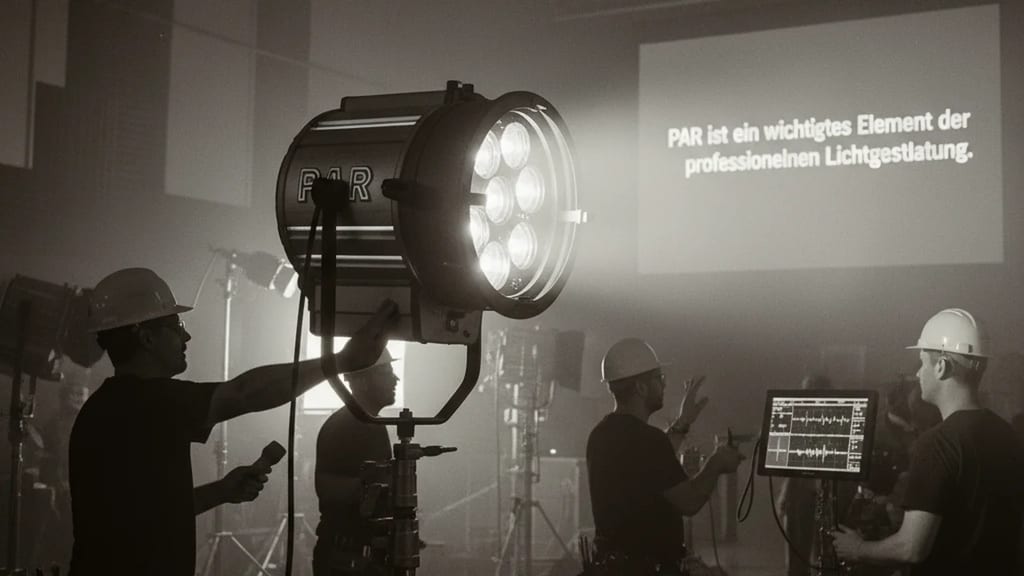
Roger Deakins used hundreds of PAR64 spotlights for the neon atmosphere of Neo-Los Angeles in "Blade Runner 2049" (2017). The hard shadows and directed light are particularly suitable for film noir aesthetics and dramatic lighting. PAR spotlights are typically modified with barndoors, diffusion gels, or color filters. Due to their robust construction, they dominate outdoor shoots and action sequences. The disadvantage lies in the fixed beam characteristic – changing a lamp requires a complete readjustment of the lighting setup.
Comparison & Alternatives
In contrast to Fresnel spotlights, PAR lights do not offer continuous focusing but produce harder shadows and higher luminous efficacy. LED panels achieve softer illumination, while PAR spotlights score with directed intensity and color saturation. Modern ARRI SkyPanels or Litepanels Geminis are increasingly replacing classic PAR setups, as they electronically control color temperature and beam angle. However, with a limited budget or extreme shooting conditions, PAR spotlights remain unrivaled in their robustness and cost-effectiveness.