Filmlexikon.
Support
Oval Aperture
Camera · Terms

Oval Aperture

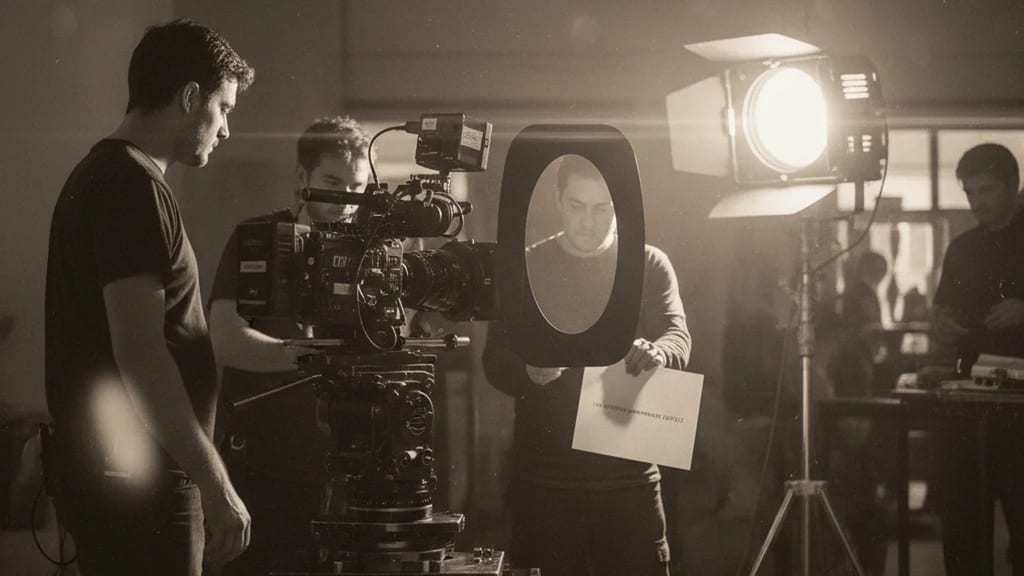
Murnau AI illustration
aperture flow para roll take

Elliptical iris aperture placed 10–15 cm before the lens, producing a soft-edged oval vignette. Standard 35 mm sizes: 18×13 mm to 24×18 mm.

Technical Details

Standard sizes for 35mm film range from 18x13mm (narrow oval) to 24x18mm (wide oval). The aperture is made of blackened metal or matte board with a precisely cut elliptical opening. The transition area (feathering) between the transparent and black area typically measures 0.5-2mm, depending on the desired degree of softness. Modern variants are realized as matte box inserts or as digital masks in post-production. Positioning is 10-15cm in front of the lens for optimal edge softness.

History & Development

First documented in 1903 in G.A. Smith's "Mary Jane's Mishap," the oval aperture experienced its heyday between 1910-1925. D.W. Griffith established it as a narrative stylistic device in "The Birth of a Nation" (1915) for close-ups and emotional climaxes. The technique almost completely disappeared with the advent of sound film, as the standardized formats of studio production did not allow for experimental masking. It experienced a renaissance in the 1970s with filmmakers like Hal Ashby ("Harold and Maude," 1971) and later with Wong Kar-wai ("In the Mood for Love," 2000).

Practical Use in Film

Classic application for portraits, key scenes, and memory sequences. In Buster Keaton's "Sherlock Jr." (1924), the oval aperture isolates the protagonist from his surroundings and enhances the dream sequence atmosphere. Modern productions use it sparingly: "The Grand Budapest Hotel" (2014) uses oval masks for nostalgic flashbacks. The light loss is 1-2 f-stops; the depth of field changes due to the reduced effective focal length. Digitally, the effect can be realized losslessly in DaVinci Resolve or Avid.

Comparison & Alternatives

Unlike the iris aperture with its circular opening, the oval shape emphasizes horizontal or vertical image composition. Soft mattes create similar effects without a fixed geometric shape. Modern alternatives include digital masks with animatable parameters or special anamorphic bokeh filters. Variable oval apertures with mechanical size adjustment exist for live productions but are rarely available.

From the crafts

Perspectives

Cinematographer

Die ovale Blende zwingt mich zur Neukomposition, da 30-40% des Sensorbereichs verloren gehen und ich die Bildwichtigkeit auf das elliptische Zentrum konzentrieren muss. Der Lichtverlust von 1-2 Stops erfordert entsprechende Belichtungsanpassung, während der weiche Randübergang bei falscher Positionierung unscharf wird. Digital arbeite ich lieber mit Vollformat und maske in der Post, um mehr Kontrolle über Größe und Position zu behalten.

Director

Ovale Blenden schaffen sofort eine nostalgische, intime Atmosphäre und lenken die Aufmerksamkeit zwingend auf das Bildzentrum – perfekt für emotionale Close-ups oder Erinnerungssequenzen. Sie funktionieren als visueller Zeitsprung und erzeugen Distanz zum Geschehen, als würde man durch ein Schlüsselloch oder alte Fotografien blicken. Sparsam eingesetzt verstärken sie dramatische Wendepunkte, überstrapaziert wirken sie schnell manieriert.

Producer

Praktische ovale Blenden kosten 150-300€ pro Größe, der Zeitaufwand für Setup und Neukomposition verlängert die Drehtage um 15-20%. Digital ist kostenneutraler, verschiebt aber Arbeitszeit in die Postproduktion und erfordert entsprechende Colorist-Expertise. Bei Period-Pieces oder Arthouse-Produktionen rechtfertigt der stilistische Gewinn die Mehrkosten, bei Mainstream-Produktionen ist das Budget meist besser in andere Bereiche investiert.

More in the lexikon

Related terms

Test your knowledge

Quiz

1. Was beschreibt „Ovale Blende" am besten?

2. Zu welchem Department gehört „Ovale Blende"?

3. Wie viele verschiedene Fachperspektiven bietet dieser Eintrag?

Report an error
From the Filmfarm ecosystem

Understand visual language, budget productions, connect crew.

The Lexikon is part of the Filmfarm ecosystem — alongside budgeting (FilmBalance), an industry magazine (FilmCircus) and crew networking (FilmCall, CrewMesh). One shared vocabulary for the whole production.

FilmFarm FilmRadarComing soonFilmPulseComing soonFilmNumbersComing soonFilmCapitalComing soonFilmLabComing soonFilmBalanceComing soonFilmCircusComing soon