Filmlexikon.
Support
Nook Light
Lighting · Terms

Nook Light

Murnau AI illustration
color temperature flow roll take

Compact LED accent light for tight spaces—vehicle interiors, behind set dressing. 80–120 lm/W, 2–8h battery runtime, often app-controlled.

Technical Details

Modern Nook Lights utilize high-quality LED chips, achieving a luminous efficacy of 80-120 lumens per watt. Power is supplied via Sony NP-F batteries or integrated lithium-ion batteries, offering 2-8 hours of runtime at full power. Light distribution is achieved through a beam angle of 60-120 degrees, depending on the model with or without a diffuser. High-end variants offer DMX control, green/magenta correction (±30 points), and stepless dimming from 0-100%. Waterproof versions achieve an IP65 rating for outdoor shoots.

History & Development

The first Nook Lights emerged in 2014 as an evolution of classic Dedolight systems by companies like Quasar Science and Astera. The breakthrough came in 2016 with the introduction of RGBW variants, which enabled full-color spectrums in a compact form factor for the first time. In 2019, Aputure revolutionized the market with the MC series, featuring integrated smartphone control and pixel mapping functions. Current developments focus on even more compact designs and expanded wireless functionalities.

Practical Application in Film

Nook Lights primarily serve as accent lighting in vehicle interiors, cabinets, or behind props. In "Blade Runner 2049" (2017), Roger Deakins used such lights for subtle dashboard illumination. Typical workflows involve hiding them behind monitors for screen glow effects or placing them on shelves for indirect fill light. Their low heat output allows direct contact with sensitive materials. Disadvantages include limited light output and battery life for multi-hour takes.

Comparison & Alternatives

Nook Lights differ from traditional handheld spotlights due to their compact form factor and from LED panels by their pinpoint light characteristics. Tubes offer linear light distribution, while Nook Lights create targeted spot lighting. For larger areas, classic Kino Flo systems remain superior. Modern alternatives like the Aputure MC or Astera AX1 expand the spectrum with app control and advanced color functions. In budget productions, they often replace expensive Dedolights for simple accent lighting.
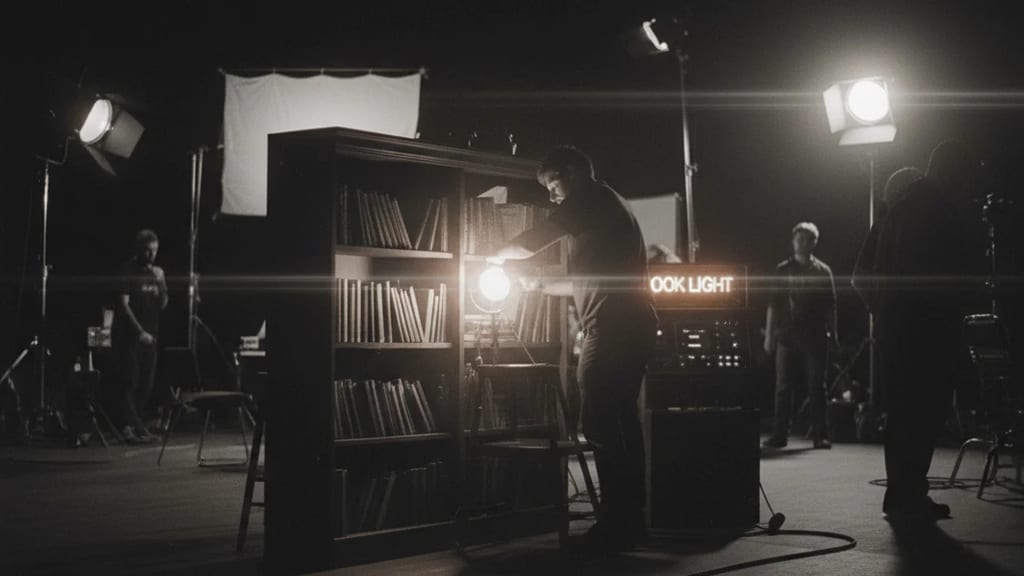
From the crafts

Perspectives

Cinematographer

Ich setze Nook Lights gezielt für praktische Lichtquellen ein, die im Bild sichtbar sein dürfen – etwa als Monitor-Backlight oder in Vitrinen. Die präzise Farbtemperatur-Kontrolle ermöglicht mir perfekte Matches zu bestehenden Lichtquellen, und die kompakte Bauform erlaubt Positionierungen, die mit normalen Scheinwerfern unmöglich wären. Bei Makroaufnahmen oder extremen Close-ups kann ich sie direkt neben der Linse platzieren, ohne ins Bild zu geraten.

Director

Diese winzigen Lichtquellen geben mir narrative Flexibilität bei der Gestaltung von Atmosphäre in intimen Szenen. Ich kann subtile Farbwechsel programmieren, die emotionale Wendepunkte unterstreichen, oder sie als diegetische Lichtquellen in futuristischen Settings verwenden. Besonders in Thriller-Szenen nutze ich sie für unheimliche Unterleuchtung aus Schubladen oder Schränken, die klassische Scheinwerfer nie erreichen würden.

Producer

Mit Anschaffungskosten von 200-800 Euro pro Unit sind Nook Lights kostengünstige Ergänzungen zum Licht-Equipment, die teure Rigging-Zeit sparen. Ein Drehtag wird effizienter, weil keine Kabel verlegt werden müssen und der Aufbau in Sekunden erfolgt. Bei Guerilla-Drehs oder Location-Scouts ohne Stromanschluss bieten sie unschätzbare Flexibilität, und das geringe Gewicht reduziert Transportkosten erheblich.

More in the lexikon

Related terms

Test your knowledge

Quiz

1. Zu welchem Department gehört „Nook Light"?

2. Wie viele verschiedene Fachperspektiven bietet dieser Eintrag?

Report an error
From the Filmfarm ecosystem

Understand visual language, budget productions, connect crew.

The Lexikon is part of the Filmfarm ecosystem — alongside budgeting (FilmBalance), an industry magazine (FilmCircus) and crew networking (FilmCall, CrewMesh). One shared vocabulary for the whole production.

FilmFarm FilmRadarComing soonFilmPulseComing soonFilmNumbersComing soonFilmCapitalComing soonFilmLabComing soonFilmBalanceComing soonFilmCircusComing soon