Definition & Origins
Mumblecore was an indie film revolution of the 2000s, characterized by ultra-low budgets, improvised dialogue, and a focus on the everyday experiences of young adults. The word "mumblecore" was initially a critics' term, somewhat pejorative in intent – the dialogue was often unclear, the narratives sloppy, the images imperfect. But filmmakers embraced the term and made it the flag of a movement.
Mumblecore emerged from the democratization of digital cameras – the DV revolution enabled filmmakers with minimal resources to make genuine feature films. Simultaneously, disillusionment grew with the indie film establishment (Sundance, established indie filmmakers), which seemed like a new establishment itself. Mumblecore was a rebellion against that.
Visual Features & Stylistic Techniques
Improvised Dialogue: Mumblecore films often employ improvised or semi-improvised dialogue. The actors (often real friends of the director) speak naturally, stumble, repeat themselves. This creates authentic conversational dynamics, not polished screenplay dialogue.
Minimal Narrative Arc: Mumblecore films often lack a clear story arc. They are episodic, quotidian – people meet, talk, nothing dramatic happens. This reflects real experience rather than narrative construction.
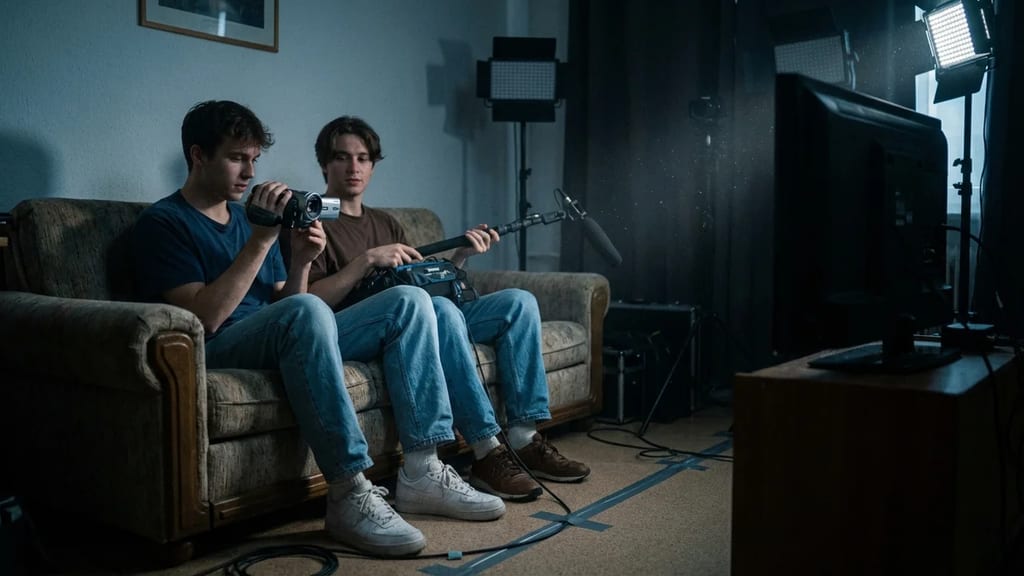
Ultra-Low Budgets: Mumblecore films were often made with budgets under $10,000, sometimes just a few hundred dollars. This is visible in the aesthetic – simple locations (apartments, streets), minimal crew (often just the director and one other person with a camera), minimalist production.
Digital Video Aesthetic: Mumblecore utilized early digital cameras – Canon GL2, Sony Mini DV cameras. The images are grainy, colors unbalanced, focus soft. This was not an aesthetic ideal but practical necessity, yet became a visual marker of the movement.
Documentary Look: Without a lighting crew and complex lighting setups, mumblecore films have a documentary appearance. Natural lighting, handheld camera, unpolished locations create a truth-telling aesthetic.
Non-Professional Acting: Mumblecore films often employed non-actors or amateur actors. The performances are not "actorly" but behave like real people.
Historical Context
Mumblecore emerged from several factors:
- Digital Revolution: In the mid-2000s, digital cameras became cheap and accessible. A used Canon GL2 cost $500–1000. This enabled ultra-DIY filmmaking.
- Internet & Distribution: The internet enabled new distribution channels – YouTube, Vimeo, private websites. Filmmakers could show their films without traditional distribution.
- Indie Burnout: The established indie scene (Sundance, established indie filmmakers) was criticized as elitist and conservative. Mumblecore was a more radical alternative.
- Generational Experience: Mumblecore filmmakers (born 1970–1985) were a generation of young adults experiencing the late 1990s and early 2000s – the internet boom-and-bust, uncertainty, underemployment, the prolongation of adolescence into one's twenties.
- DIY Culture: Punk rock, DIY ethics, and bottom-up cultural production were mumblecore philosophy. Art-making should not depend on institutions.
Key Figures & Filmmakers
Joe Swanberg (1981–) – The central mumblecore filmmaker. His films "Hannah Takes the Stairs" (2007), "Nights and Weekends" (2008), and later "Drinking Buddies" (2013) define the mumblecore aesthetic. Swanberg is a prolific filmmaker who made over 10 mumblecore films in a short time.
Greta Gerwig (1983–) – A central mumblecore actress and later filmmaker. She appeared in many mumblecore films (including "Hannah Takes the Stairs," "Nights and Weekends") and later made her own films, combining mumblecore principles with a female perspective.
Andrew Bujalski (1977–) – An early mumblecore filmmaker whose "Funny Ha Ha" (2005) is often cited as the first mumblecore manifesto. His films depict embarrassment and social discomfort through improvised dialogue.
Ari Aster – A later mumblecore filmmaker whose films like "Hereditary" (2018) and "Midsommar" (2019) combine mumblecore principles with horror.
Lynn Shelton (1965–2020) – An experimental filmmaker who combined mumblecore techniques with feminine sensibility. Her films explore intimacy and relationships.
Key Films & Masterworks
Funny Ha Ha (2005, Andrew Bujalski) – Often called the first mumblecore film. A film about Marnie, an unemployed college graduate in New York. The film is ultra-simple – Marnie hangs out with friends, goes on dates, nothing dramatic happens. The film was shot on a tiny camera, with the filmmaker's friends as actors, improvised dialogue. The minimal narrative arc is the point.
Hannah Takes the Stairs (2007, Joe Swanberg) – A semi-autobiographical film about Hannah, a young adult in New York and later Chicago. The film uses completely improvised dialogue (actors received only scene descriptions, not a script). The result is disturbingly authentic – the confrontations, sexual insecurities, ambivalences between people are presented unvarnished.
Nights and Weekends (2008, Joe Swanberg & Greta Gerwig) – Co-directed by Swanberg and his former actress/romantic partner Gerwig, about a long-distance relationship. The film is extraordinarily intimate – handheld camera follows the characters with genuine care. The sexuality is explicit and unselfconscious.
LOL (2006, Joe Swanberg) – A film about digital love – two people chat online and don't know that the other person is the other. The film combines mumblecore principles (improvised dialogue, minimal narrative) with meta-reflection on digital culture.
Beeswax (2009, Andrew Bujalski) – A film about two sisters, one of them in a wheelchair. The film is boring and quotidian in the best way – it concerns family, business, daily frictions. No dramatic tension, just genuine human complexity.
Jeepers Creepers (2006, Lynn Shelton) – A film about a woman flirting with an older man. The film displays vulnerability and sexual embarrassment without sentimentality.
Technical Aspects & Cinematic Innovation
Mumblecore production was radically minimal:
- Canon GL2 or Sony Mini-DV cameras – low-cost digital cameras
- Minimal crew – often just the director and one other person
- Natural lighting – no lighting design, just windows and ambient light
- Improvisation – minimal script, actors improvise
- Real locations – apartments, streets, cafes, no rented sets
- Non-professional casting – friends of the filmmaker, real people
Influence & Legacy
Mumblecore had paradoxical impacts:
- Indie Renaissance: Mumblecore proved that genuine artistic feature films were possible with minimal means. This inspired a new generation of ultra-low-budget filmmakers.
- Improvisation Legitimacy: Mumblecore legitimized improvisation as a valid cinematic tool. Later filmmakers like Ari Aster and the Safdie brothers employed improvisation.
- Digital Legitimation: Mumblecore showed that digital video aesthetics were artistically valid. The graininess and imperfection became not flaws but artistic statement.
- Authenticity Standard: Mumblecore set new standards for authenticity in acting. Later films had to achieve this authenticity, or they seemed false.
- Generational Voice: Mumblecore gave a generation (Millennials) an artistic voice. The films became documents of their experience – underemployment, uncertainty, digital culture, relationship confusion.
Comparison & Contextualization
vs. Classical Indie Cinema: While classical indie cinema (Sundance aesthetic) still wanted to be "cinematic," mumblecore radicalized DIY principles to extreme consequences.
vs. Dogme 95: Both are rule-based movements, but Dogme 95 was theoretical and regulation-oriented, while mumblecore was practical and low-cost-oriented.
vs. Nouvelle Vague: While the Nouvelle Vague sought artistic control through auteur theory, mumblecore sought artistic freedom through financial independence.
End of the Movement & Legacy
Mumblecore as a coherent movement ended in the mid-2010s. Several reasons:
- Commercialization: Early mumblecore filmmakers (Swanberg, Gerwig) became commercialized – larger budgets, Netflix deals, mainstream success. This betrayed the original DIY ethic.
- Stylistic Exhaustion: The mumblecore aesthetic became worn out. The improvisations became mannered, the minimal narratives repetitive.
- Generational Shift: New young filmmakers emerged with different perspectives and technologies (smartphones, new cameras).
But the legacy remains alive – contemporary indie filmmakers still work in mumblecore traditions, prioritizing low budgets, improvisation, and authenticity.