Technical Details
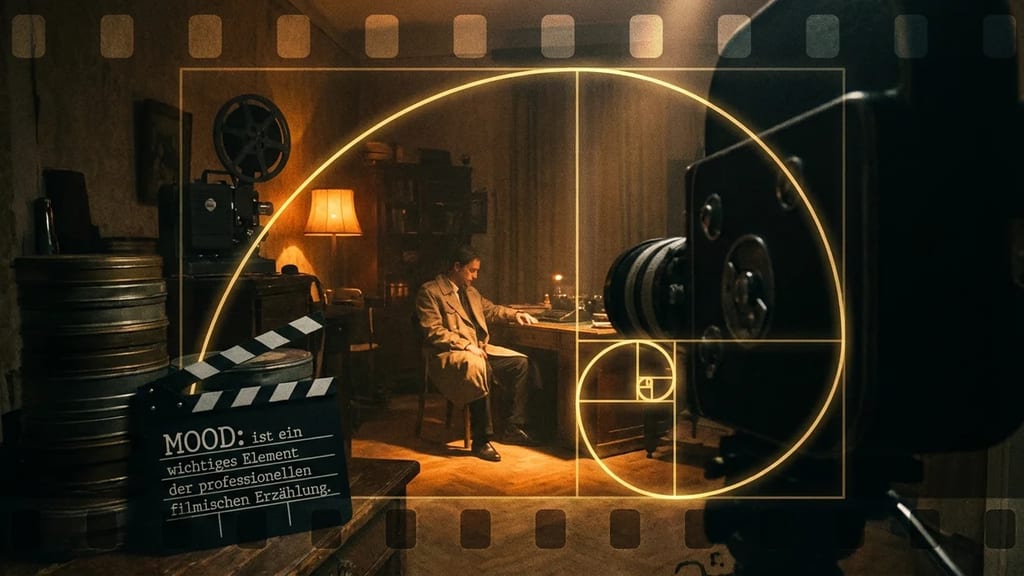
Mood is created through measurable parameters: light temperature (2700K-6500K Kelvin), contrast ratio (typically 100:1 to 1000:1), color saturation (0-100% Chroma), editing frequency (0.5-8 cuts per minute), and audio frequency spectrum. The combination of low-key lighting (under 30% average brightness), desaturated colors (under 40% Chroma), and a slow editing rhythm (under 2 cuts/minute) creates dark moods. Bright, warm moods are achieved through high-key lighting (over 70% average brightness), saturated warm hues, and accelerated montage.
History & Development
In 1927, Fritz Lang first systematically codified mood creation through architectural lighting in "Metropolis." Val Lewton perfected low-budget mood generation through shadow play and sound design at RKO between 1942-1946. Vilmos Zsigmond revolutionized color mood in 1971 with "McCabe & Mrs. Miller" through pre-flashing the negative material. Digital color correction since 1993 (Da Vinci Systems) has enabled precise mood manipulation in post-production.
Practical Application in Film
In "Blade Runner" (1982), Ridley Scott created a dystopian mood through 2700K lighting and cyan-orange contrasts. Emmanuel Lubezki used exclusively natural light at 5600K in "The Revenant" (2015) for naturalistic harshness. Horror productions rely on infrasound below 20Hz and discontinuous lighting with flicker frequencies between 8-12Hz for mood manipulation. Mood development begins in the storyboard, is validated through lighting tests, and is fixed in Look-Up Tables (LUTs) for the entire production.
Comparison & Alternatives
Mood differs from genre through its emotional specificity – a thriller can have a dark or bright mood. Atmosphere describes the milieu, while mood describes the emotion. Modern alternatives to classic mood creation include HDR grading (10,000+ Nits), volumetric lighting via LED walls, and AI-assisted mood analysis by machine learning algorithms that measure viewer reactions in real-time.