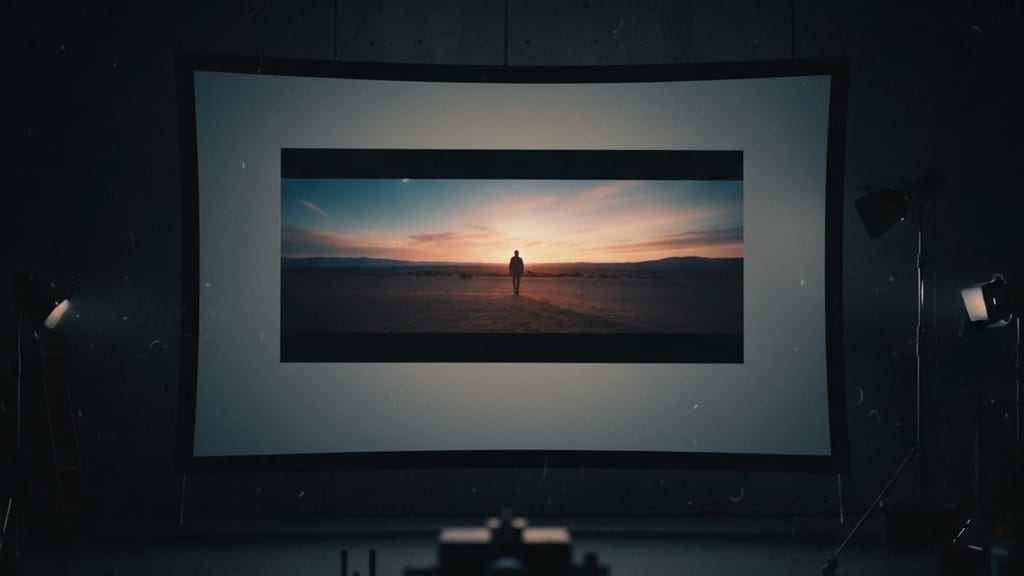
Black bars top and bottom when displaying ultra-wide aspect ratio on standard screens—cinematic feel but less image real estate. Standard for 2.39:1 on 16:9.
Black bars at the top and bottom – that's the first visible consequence when you put a cinematic aspect ratio like 2.39:1 onto a 16:9 monitor without squashing the aspect ratio. This is called letterboxing, and it's a constant compromise between aesthetic demands and practical screen utilization.
In practice, letterboxing occurs where the production format and the output format don't match. You shoot in 2.39:1 because it looks cinematic and the cinema demands it. Then comes the HD version for streaming or TV – and the viewer sits in front of their 16:9 screen. Without letterboxing, you would either crop the sides (Pan & Scan – a disaster for your composition) or distort the image. Letterboxing is the lesser of two evils: accept the black bars, preserve the image composition.
The interesting thing is: for a long time, letterboxing was a stigma. TV viewers in the 90s complained that they weren't using the "whole screen." Studios panicked. Today, the perception has shifted – letterbox has become a visual signal for "real cinematic material." Streaming services use this consciously. A Netflix original with black bars immediately signals to the viewer: this is intended to be cinematic, not just some standard series.
Technically, when mastering, you have to decide: is letterboxing the norm for this distribution, or is a native 16:9 version required? In the latter case, you would actually need Pan & Scan, or you would shoot parts of the material specifically in 16:9. On set itself, you notice little of this – your composition is based on the shooting format. It becomes relevant in the edit: you ensure that important elements are within the safe area so that nothing critical is lost during the letterbox conversion. And with the DCP – digital cinema package – letterboxing is irrelevant; you deliver native 2.39:1. It only becomes a question for home video and streaming.
Letterboxing creates intimacy through focus – the edges are cropped, and attention is concentrated. Some DoPs consciously use this for certain scenes, even if the material is fundamentally 16:9. A technical problem becomes an aesthetic resource.
Related terms
Quiz
1. Zu welchem Department gehört „Letterbox-Format"?