Technical Details
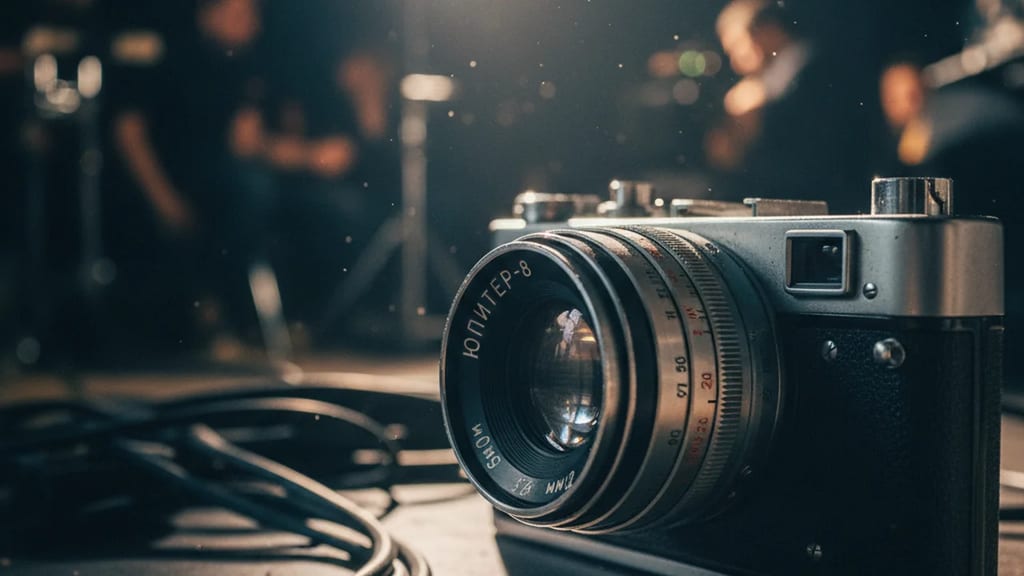
The Jupiter-8 features a focal length of 50mm with a maximum aperture of f/2 to f/16. The minimum focusing distance is 1 meter, and the filter thread measures 40.5mm. Weighing 230g and with a length of 53mm, it is compactly dimensioned. It was manufactured exclusively with an M39 screw mount (Leica mount) and later also for Soviet cameras like Zorki and FED. The optical quality reaches its maximum at apertures of f/4-f/5.6, while slight corner softness occurs at wide-open aperture. Various production sites (KMZ Arsenal, LZOS) produced minimal variations in coating and mechanical execution.
History & Development
Production began in 1951 at KMZ (Krasnogorsk Mechanical Works) as a replica of the Zeiss Sonnar 50mm f/2. Soviet reparations policy after World War II enabled the transfer of German optical technology. Several million units were produced until 1994, making it one of the most produced lenses worldwide. Later versions received improved multi-coating and more precise mechanics. Production ended with the collapse of the Soviet Union; well-preserved examples are now sought-after vintage lenses.
Practical Use in Film
In Soviet film production, the Jupiter-8 was standard for 35mm still cameras in documentaries and low-budget productions. Modern filmmakers appreciate its characteristic look with soft edge rendering and warm color reproduction for vintage aesthetics. With adapters, it can be used on digital cameras like RED, ARRI Alexa, or Sony FX series. The smooth focus transition is suitable for portraits and romantic scenes, while the moderate sharpness at wide-open aperture creates atmospheric shots. Numerous independent productions use it for an authentic analog look.
Comparison & Alternatives
Compared to the original Zeiss Sonnar, the Jupiter-8 offers 90% of the optical performance at a fraction of the cost. Modern alternatives such as the Leica Summicron 50mm f/2 or Zeiss Planar 50mm f/2 are technically superior but significantly more expensive. Today, the Jupiter-8 competes with other vintage lenses like the Canon 50mm f/1.4 LTM or Voigtländer Color-Skopar. For sterile digital productions, modern lenses are chosen; for a characteristic vintage look, the Jupiter-8 remains the first choice.