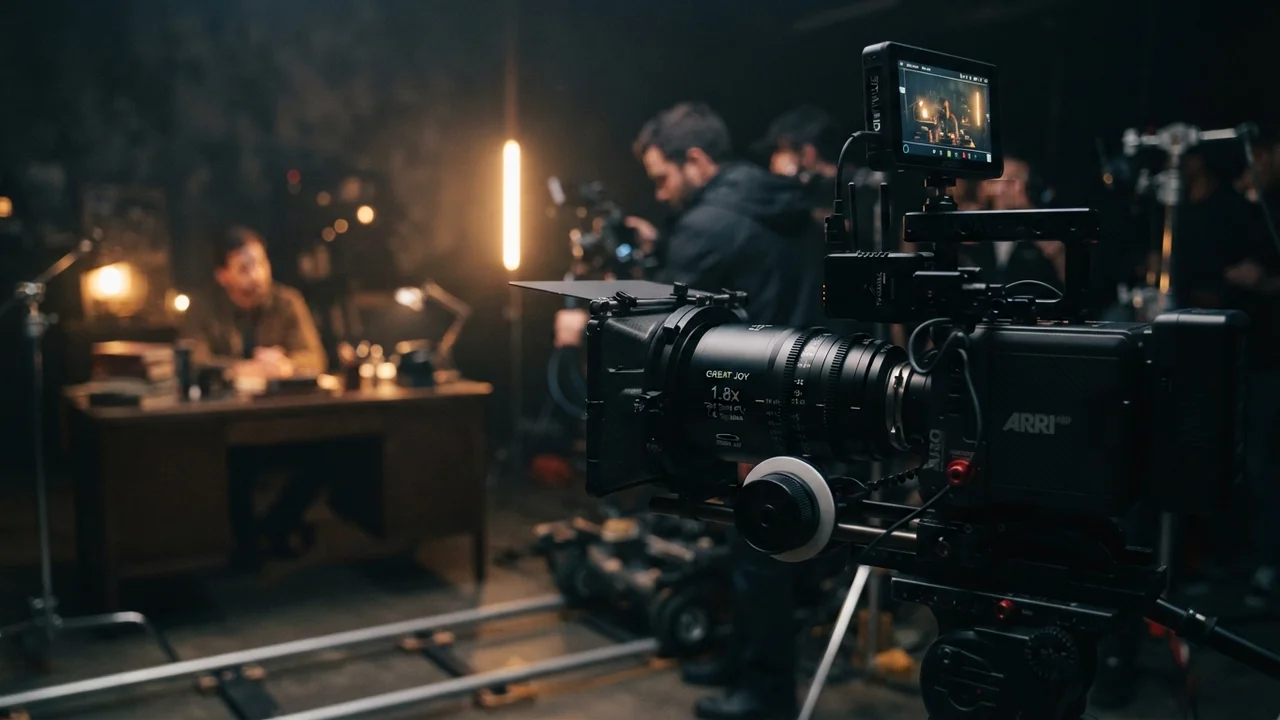
The Great Joy Look
The Great Joy 1.8x Anamorphics create a modern, clean anamorphic look with practical advantages:
The 1.8x Squeeze Factor:
The image is compressed horizontally by a factor of 1.8, resulting in a wider widescreen aspect ratio of approximately 2.50:1 to 2.70:1 – a compromise between dramatic width and practical usability.
Characteristic Visual Effects:
- Defined, oval bokeh shapes in out-of-focus areas (neat and recognizable)
- Characteristic horizontal lens flares when shooting into light sources
- Wide, modern widescreen aspect ratio with cinematic impact
- Minimal chromatic aberration and color fringing
- Low vignetting (light fall-off at the corners) – less than with budget adapters
- Modern optical coatings (Multi-Coated)
Psychological and Emotional Impact:
The look is modern, clean, and professional. The 1.8x compression is a middle ground between dramatic width and practical usability. The cost-to-optical-quality ratio is evident in direct comparisons with more expensive Western competitors.
Technical Details
The adapter weighs 680g and features an 82mm front thread as well as variable rear threads from 67mm to 82mm for different base lenses. The minimum focus distance is shifted back by approximately 30cm, and the maximum aperture is reduced by one stop. The optical system consists of four glass groups with multi-coating and produces a characteristic horizontal image compression of 1:1.8. The adapter works optimally with lenses between 35mm and 85mm focal length on full-frame sensors.
History & Development
Great Joy developed the 1.8x adapter in 2019 as a cost-effective alternative to traditional 2x anamorphic systems. The Chinese company targeted the prosumer market and indie productions that wanted to achieve an anamorphic visual style without the budget for Hawk, Cooke, or Zeiss Anamorphics. A revised version with improved coating and reduced flaring followed in 2021. The 1.8x factor established itself as a compromise between standard 16:9 and extreme 2.39:1 CinemaScope formats.
Practical Use in Film
The adapter is particularly suitable for landscape shots and establishing shots, where the expanded aspect ratio conveys spatial breadth. Documentaries use the system for cinematic enhancement on a limited budget. For portraits, it creates the typical oval bokeh balls, while night shots exhibit horizontal lens flares from light sources. The workflow requires de-squeezing in post-production, with common editing software like DaVinci Resolve offering presets for 1.8x material.
Comparison & Alternatives
Unlike true anamorphic lenses, the optical quality remains dependent on the base lens used, which can lead to variations in image performance and sharpness. Compared to 2x anamorphics like the Kowa Bell & Howell adapters, the 1.8x factor produces more moderate distortions and more practical aspect ratios for modern cinema screens. SLR Magic offers a less extreme alternative with the Anamorphot 1.33x, while Moment developed a 1.55x adapter for smartphone applications. Professional productions typically opt for native anamorphic lenses from Panavision or ARRI for consistent optical characteristics.