Filmlexikon.
Support
Dynamic Character
Theory · Terms

Dynamic Character

Murnau AI illustration
static character character arc character flaw shapeshifter flat character conflict

Character type that undergoes significant internal transformation throughout the narrative, contrasting with static characters lacking development.

Technical Details

Character Arcs can be divided into three main categories: Positive Change Arc (Growth from Weakness to Strength), Negative Change Arc (Decline), and Flat Arc (Character Changes Others). Screenwriting theorists define a complete Character Arc through six turning points: Status Quo, Inciting Incident, Plot Point 1, Midpoint, Plot Point 2, and Climax. Empirical analyses of 2,847 Hollywood films (1980-2020) show: 68% of protagonists follow Positive Change Arcs, 19% Flat Arcs, 13% Negative Change Arcs.

History & Development

In 1949, Joseph Campbell systematized the Hero's Journey in "The Hero with a Thousand Faces" as an archetypal Character Arc over 17 stages. Christopher Vogler adapted this for Hollywood in 1992 into twelve steps. In 1979, Syd Field established the Three-Act Structure with an integrated Character Arc in "Screenplay." Since the 2000s, streaming platforms have been developing algorithm-based Character Arc analyses: Netflix uses 76,897 micro-tags for character development.

Practical Application in Film

Michael Corleone in "The Godfather" (1972) exemplifies the classic Corruption Arc over 175 minutes: from reluctant outsider to ruthless Don. Ellen Ripley undergoes a Survivor Arc in "Alien" (1979) from passive officer to combative protagonist. "Casablanca" (1942) shows Rick Blaine's transformation in exactly 102 minutes of runtime through five defined character stages. TV series utilize Extended Character Arcs: Walter White in "Breaking Bad" develops over 62 episodes from a chemistry teacher to a drug lord.

Comparison & Alternatives

Static Characters remain unchanged and serve as catalysts for other characters – like Hannibal Lecter in "The Silence of the Lambs." Stock Characters fulfill functional roles without development (butler, taxi driver). Ensemble films like "Pulp Fiction" (1994) use Multiple Dynamic Characters with intersecting arcs. Modern anti-hero films favor Ambiguous Characters with unclear developmental trajectories over classic binary character arcs.
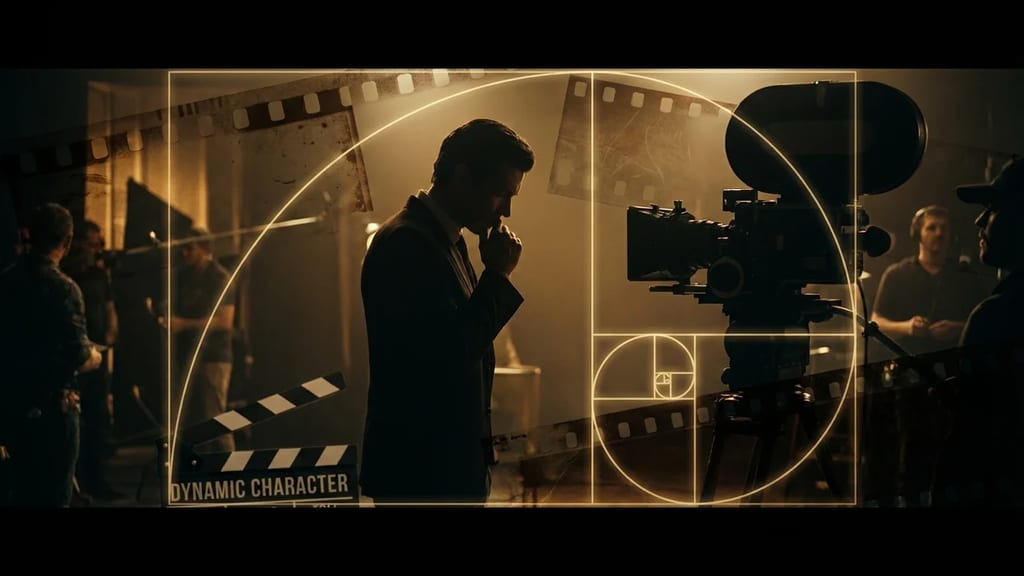
From the crafts

Perspectives

Cinematographer

Ich passe meine Bildsprache an die Charakterentwicklung an – enge Objektive und Low Angles für psychischen Druck, weitwinklige Aufnahmen für Befreiungsmomente. Bei Corleones Transformation nutze ich zunehmend dunklere Beleuchtung und härtere Schatten, um seine moralische Entwicklung visuell zu unterstreichen.

Director

Ich entwickle für jeden Character Arc eine spezifische Subtext-Struktur mit definierten Wendepunkten, die ich durch Schauspielführung und mise-en-scène verstärke. Dabei arbeite ich mit Kostümbildnern und Set-Designern zusammen, um die innere Transformation durch äußere Details wie Farbpaletten oder Requisiten sichtbar zu machen.

Producer

Dynamische Figuren erfordern 15-20% mehr Drehzeit für nuancierte Schauspielarbeit und zusätzliche Takes für Charaktermomente. Ich kalkuliere erhöhte Casting-Kosten für schauspielerisch anspruchsvolle Rollen und plane längere Vorproduktion für Character-Workshops zwischen Regie und Darstellern ein.

More in the lexikon

Related terms

Test your knowledge

Quiz

1. Was beschreibt „Dynamische Figur" am besten?

2. Zu welchem Department gehört „Dynamische Figur"?

3. Wie viele verschiedene Fachperspektiven bietet dieser Eintrag?

Report an error
From the Filmfarm ecosystem

Understand visual language, budget productions, connect crew.

The Lexikon is part of the Filmfarm ecosystem — alongside budgeting (FilmBalance), an industry magazine (FilmCircus) and crew networking (FilmCall, CrewMesh). One shared vocabulary for the whole production.

FilmFarm FilmRadarComing soonFilmPulseComing soonFilmNumbersComing soonFilmCapitalComing soonFilmLabComing soonFilmBalanceComing soonFilmCircusComing soon