Filmlexikon.
Support
Diopter Adapter
Camera · Equipment

Diopter Adapter

Murnau AI illustration
adapter diopter flow para roll take

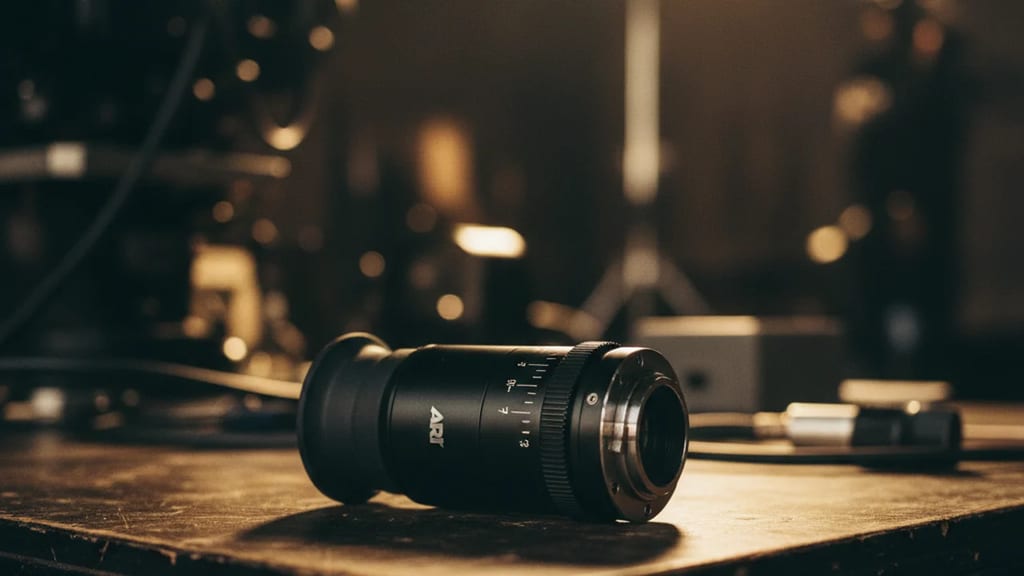
Close-up lens adapter with plano-convex or bi-convex element in threaded mount; reduces minimum focus distance by 25–30% (+1 diopter) to 1:2 magnification (+4 diopter).

Technical Details

Diopter adapters consist of a plano-convex or bi-convex lens in a screw mount with standard filter threads (52mm, 58mm, 67mm, 77mm, 82mm). A +1 diopter lens shortens the minimum focusing distance by approximately 25-30%, while a +4 lens allows for magnification ratios of up to 1:2. High-quality versions use achromatic doublets to reduce chromatic aberrations. Sets typically include +1, +2, and +4 diopter strengths, which can be used individually or in combination (+1+2 = +3 diopter).

History & Development

The first photographic close-up lenses emerged in the 1920s for portrait photography. Leitz introduced the "Focar" system for Leica lenses in 1932, followed by Zeiss in 1936 with their "Proxar" close-up lenses. In film production, diopter adapters became established from the 1950s onwards as a cost-effective alternative to expensive macro lenses. Tiffen and Schneider-Kreuznach shaped the market from the 1960s with professional achromatic systems.

Practical Use in Film

Cinematographers use diopter adapters for close-up shots of props, documents, or facial features without changing lenses. In "Blade Runner" (1982), the famous close-ups of photographs were achieved with +4 diopter adapters. In documentaries, they enable quick macro shots without additional equipment. The adapter remains mounted for the entire scene, meaning only the near focus range is available – infinity focus is lost.

Comparison & Alternatives

Unlike true macro lenses, diopter adapters reduce optical quality, especially at the image edges. Split-field diopters divide the field of view, allowing simultaneous sharpness at different distances. Modern alternatives include extension tubes or bellows for interchangeable lenses. For the highest image quality, productions today use specialized macro lenses with 1:1 or 2:1 magnification ratios, while diopter adapters retain their relevance for quick documentary or low-budget productions.
From the crafts

Perspectives

Cinematographer

Ich verwende Nahlinsen-Adapter hauptsächlich für spontane Detailaufnahmen, wenn kein Makroobjektiv verfügbar ist - die +2er Stärke bietet den besten Kompromiss zwischen Vergrößerung und Bildqualität. Bei kritischen Shots achte ich auf Randunschärfe und arbeite mit geschlossener Blende, um die optischen Schwächen zu minimieren.

Director

Nahlinsen-Adapter helfen mir, intime Momente zu verstärken - ein Träne, eine zitternde Hand oder ein wichtiges Dokument rücken visuell in den Fokus der Erzählung. Die begrenzte Schärfentiefe isoliert das Detail vom Hintergrund und lenkt die Aufmerksamkeit des Publikums gezielt auf narrative Schlüsselelemente.

Producer

Ein komplettes Nahlinsen-Set kostet 200-500 Euro versus 3.000-8.000 Euro für ein Makroobjektiv - bei Dokumentarfilmen oder kleineren Produktionen eine wirtschaftliche Alternative. Der Zeitgewinn durch den Verzicht auf Objektivwechsel rechtfertigt die geringfügigen Qualitätseinbußen, besonders bei schnellen Drehplänen.

More in the lexikon

Related terms

Test your knowledge

Quiz

1. Was beschreibt „Nahlinsen-Adapter" am besten?

2. Zu welchem Department gehört „Nahlinsen-Adapter"?

3. Wie viele verschiedene Fachperspektiven bietet dieser Eintrag?

Report an error
From the Filmfarm ecosystem

Understand visual language, budget productions, connect crew.

The Lexikon is part of the Filmfarm ecosystem — alongside budgeting (FilmBalance), an industry magazine (FilmCircus) and crew networking (FilmCall, CrewMesh). One shared vocabulary for the whole production.

FilmFarm FilmRadarComing soonFilmPulseComing soonFilmNumbersComing soonFilmCapitalComing soonFilmLabComing soonFilmBalanceComing soonFilmCircusComing soon