Technical Details
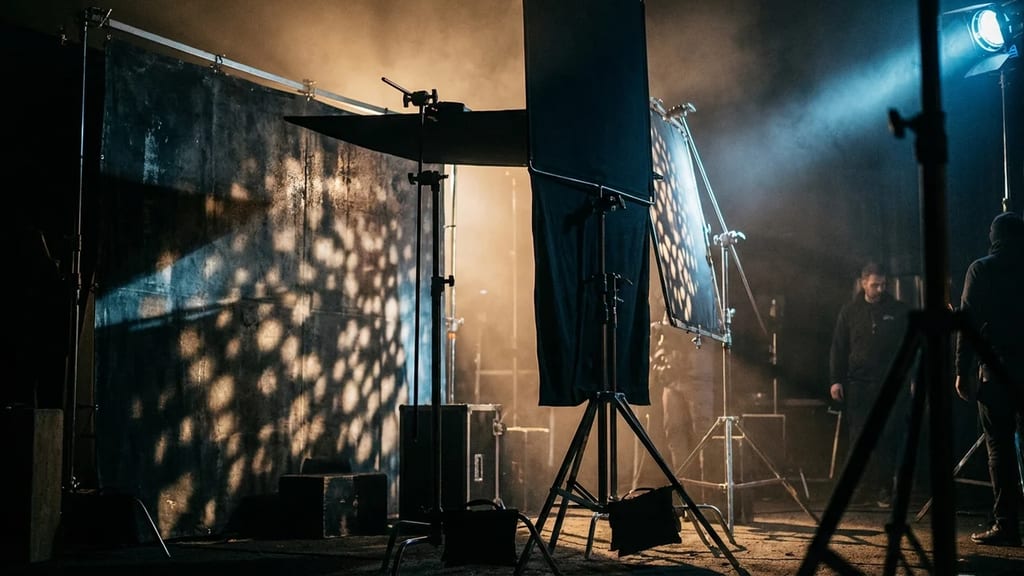
Dappled light is created by gobo projectors with organic patterns or by natural light modifiers. Standard gobos for dappled light have apertures between 2-8mm in diameter with 0.1mm material thickness. Since 2018, LED panels with programmable segments have been producing digital dappled effects with 256 brightness levels per segment. The projection distance is typically 1.5-4 meters for optimal edge diffusion. Fresnel lenses with 150-300mm focal length enhance the effect through controlled light scattering.
History & Development
The systematic use of dappled light began in 1920 with the German Expressionists, who created shadow play with perforated cardboard masks. In 1935, the company Mole-Richardson developed the first commercial dappled light gobo made of aluminum. Cinematographer Gregg Toland perfected the technique in 1941 for "Citizen Kane" using self-made leaf-pattern gobos. The introduction of the ARRI M-series in 1982 standardized gobo mounts to 100mm in diameter. Digital LED systems like the SkyPanel series have enabled programmable dappled effects without mechanical gobos since 2015.
Practical Application in Film
In "Apocalypse Now" (1979), Vittorio Storaro used dappled light through real foliage for 60% of the jungle scenes. Roger Deakins created a forest atmosphere in "1917" (2018) with 12 ARRI SkyPanel S360-Cs, programmed for organic light patterns. The effect simulates natural sunlight through treetops or window blinds. Typical application: Romantic scenes gain warmth through a 4:1 contrast ratio, while thrillers create tension with 8:1 contrast ratios. Setup requires 15-30 minutes per setup, as precise positioning is crucial for believable light direction.
Comparison & Alternatives
Dappled light differs from hard light through soft transitions between light and dark. Soft light creates even illumination without patterning. Venetian blind effects create parallel stripes instead of organic spots. Modern alternatives include LED walls with 2.6mm pixel pitch for photorealistic background projection. Since 2020, hologram projectors have been creating three-dimensional light patterns, but require 40% higher energy costs. For exterior shots, 6x6 meter diffusers with cutout patterns often replace complex gobo setups.