Filmlexikon.
Support
Cup Block
Lighting · Terms

Cup Block

Murnau AI illustration
color temperature flow roll take

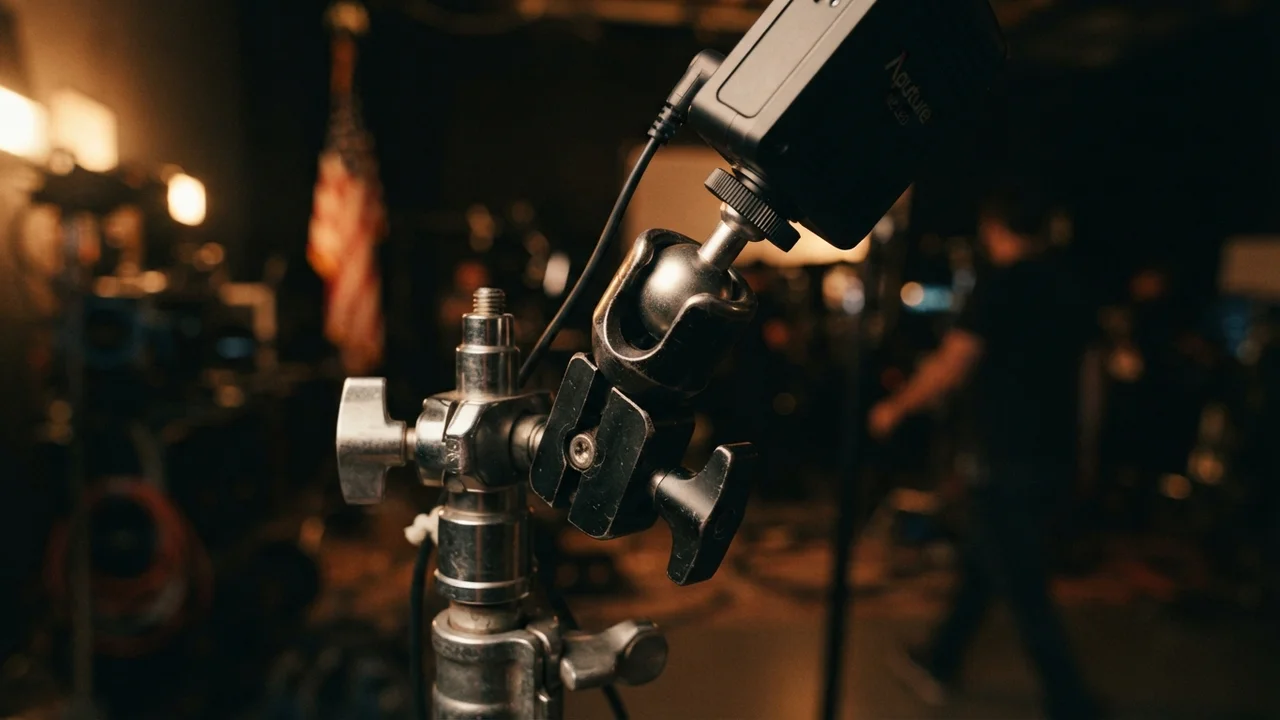
Adapter fitting to mount lights on C-stand arms; accepts 16mm stud and provides 16mm receiver pin for light fixtures, allowing 360° rotation around the pin axis.

Technical Details

Standard Cup Blocks have a 16mm (5/8") bore for the lighting fixture spud and a 16mm receiver spud for C-stand arms. The locking screw (usually M8 or M10) generates a tightening torque of 15-20 Nm. High-quality aluminum models weigh between 150-300g and are designed for loads up to 15kg. Variants include Junior Cup Blocks with a 13mm (1/2") receiver for smaller fixtures, Double Cup Blocks with two receivers for multiple mounting, and Baby Cup Blocks with a 16mm to 13mm reduction.

History & Development

The Cup Block evolved in the 1940s alongside the standardization of tripod threads in Hollywood. Matthews Studio Equipment introduced the first standardized Cup Block with a 5/8" receiver in 1952, which became the industry standard. In the 1980s, reinforced aluminum alloys were used, reducing weight by 40%. Modern CNC-machined Cup Blocks since the 2000s offer tolerances of ±0.05mm and improved surface hardening.

Practical Use in Film

Cup Blocks enable precise positioning of cinema fluorescents, LED panels, and tungsten fixtures on C-stand booms. In "Blade Runner 2049" (2017), cinematographer Roger Deakins used Cup Blocks to mount ARRI SkyPanels on 40" booms for complex lighting setups. The typical workflow involves inserting the fixture spud, aligning the desired position, and tightening with 15-20 Nm torque. Cup Blocks reduce vibrations and prevent heavy fixtures from rotating during transport.

Comparison & Alternatives

Unlike Grip Heads, Cup Blocks do not offer a tilt function, only rotational movement around the spud axis. Magic Arms with integrated ball joints replace Cup Blocks for complex positioning requirements, but weigh 500-800g more. Modern quick-release systems, such as ARRI Skypanel mounts, integrate Cup Block functions directly into the fixture design. Cup Blocks remain standard for classic tungsten and HMI fixtures, while LED systems increasingly rely on proprietary quick-release mounts.
From the crafts

Perspectives

Cinematographer

Ich verwende Cup Blocks täglich für die exakte Positionierung meiner Kinos und LEDs – die 5/8"-Standardaufnahme gibt mir die Sicherheit, dass jede Leuchte bombenfest sitzt. Besonders bei langen Brennweiten merke ich sofort, wenn ein Cup Block nicht richtig festgezogen ist, da selbst kleinste Vibrationen das Lichtbild wandern lassen. Die schnelle 360°-Drehung um die Achse ermöglicht mir präzise Feinabstimmungen der Lichtrichtung ohne den ganzen C-Stand zu verstellen.

Director

Cup Blocks sind für mich unsichtbare Helfer, die es ermöglichen, Licht millimetergenau zu setzen und während der Aufnahme konstant zu halten. Wenn ich eine bestimmte Lichtstimmung entwickle, muss ich darauf vertrauen können, dass die Leuchten zwischen den Takes exakt in derselben Position bleiben. Die Stabilität der Cup Blocks gibt mir die Freiheit, auch bei dynamischen Kamerabewegungen oder in beengten Sets präzise Lichtakzente zu setzen, ohne ständig nachjustieren zu müssen.

Producer

Cup Blocks kosten 25-80 Euro pro Stück, aber die Investition amortisiert sich durch gesparte Setupzeiten und vermiedene Equipment-Schäden. Ein lockerer Cup Block kann eine 3.000-Euro-LED-Leuchte beschädigen oder Drehzeiten durch Nachjustierungen verlängern – das kostet schnell mehr als die gesamte Cup Block-Ausstattung. Ich plane standardmäßig einen Cup Block pro Leuchte plus 20% Reserve, da diese Kleinteile gerne "wandern" und bei Verlust sofort den gesamten Lichtaufbau blockieren können.

More in the lexikon

Related terms

Test your knowledge

Quiz

1. Zu welchem Department gehört „Cup Block"?

2. Wie viele verschiedene Fachperspektiven bietet dieser Eintrag?

Report an error
From the Filmfarm ecosystem

Understand visual language, budget productions, connect crew.

The Lexikon is part of the Filmfarm ecosystem — alongside budgeting (FilmBalance), an industry magazine (FilmCircus) and crew networking (FilmCall, CrewMesh). One shared vocabulary for the whole production.

FilmFarm FilmRadarComing soonFilmPulseComing soonFilmNumbersComing soonFilmCapitalComing soonFilmLabComing soonFilmBalanceComing soonFilmCircusComing soon