Technical Details
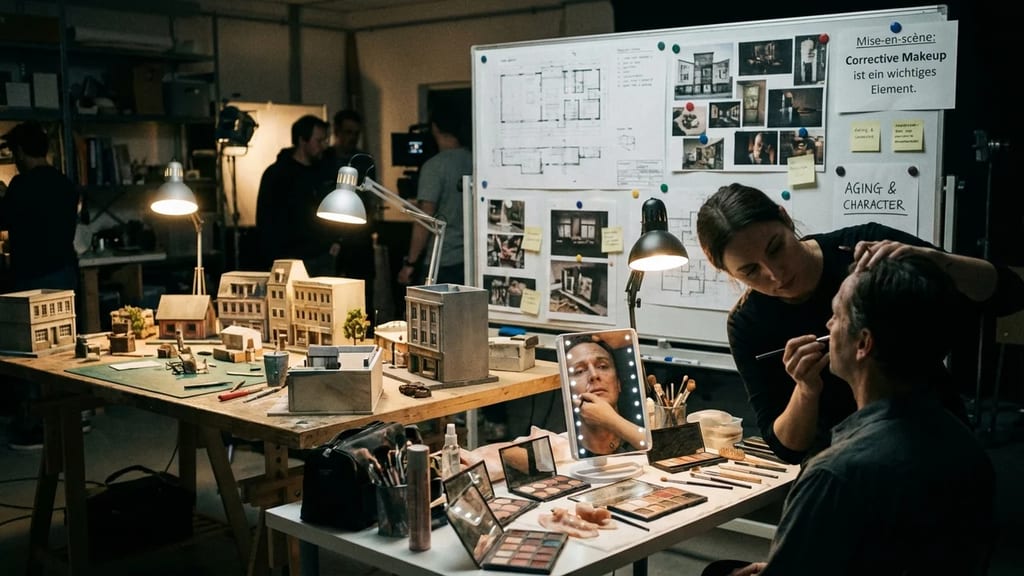
Corrective makeup uses color-correcting concealers in six basic colors: green neutralizes redness (rosacea, scars), orange/peach conceals bluish under-eye circles on fair skin types, violet eliminates sallowness, yellow corrects purplish discoloration, pink revitalizes dull skin, and mint reduces general redness. The products are applied in layers 0.5-2mm thick and set with translucent powder. HD cameras require silicone-based formulations (Dimethicone, Cyclopentasiloxane) as they remain invisible under 4K resolution. Color matching is done via the Munsell color system with precise determination of the skin tone's hue, value, and chroma.
History & Development
Corrective makeup originated in 1914 with Max Factor's first greasepaint specifically for film cameras, as theatrical makeup appeared unnatural under the new arc lights. In 1938, Factor developed the first color-correcting system with defined complementary colors for Technicolor productions. Revlon introduced waterproof formulations in 1952 for CinemaScope close-ups. The breakthrough came in 1987 with Laura Mercier's Secret Camouflage, a two-part system of base and concealer shades. Since 2010, HD-optimized formulas with light-reflecting particles (Titanium Dioxide, Zinc Oxide) have dominated for 8K cameras.
Practical Application in Film
In "The Grand Budapest Hotel" (2014), makeup artist Frances Hannon used green concealers to neutralize Ralph Fiennes' natural facial redness and create the pale hotel manager look. "Mad Max: Fury Road" (2015) required orange corrections under the eyes of all actors to compensate for the blue reflections of the desert lighting. The workflow begins 45 minutes before shooting starts: skin cleansing, color-correcting applied sparingly, foundation application, setting with HD powder. Advantage: Natural appearance with minimal effort. Disadvantage: Sweat resistance limited to 4-6 hours of shooting time.
Comparison & Alternatives
Corrective makeup differs from character makeup by maintaining the actor's identity and from beauty makeup by its exclusively technical objective. Digital makeup replacement via VFX costs €15,000-€25,000 per face/shooting day, while corrective makeup costs €200-€400. Modern LED panel lighting with variable color temperature (3200K-5600K) reduces the need for correction by approximately 40%. Airbrush systems (0.2mm spray radius) replace traditional sponges for close-ups. In 8K productions, CGI-enhanced makeup is increasingly used: real-time correction via machine learning during recording.