Cinematographer
Aus DoP-Perspektive ist dieses Element essentiell für die visuelle Gestaltung. Es ermöglicht mir die gewünschte Farbstimmung und das ästhetische Bild konsistent umzusetzen.
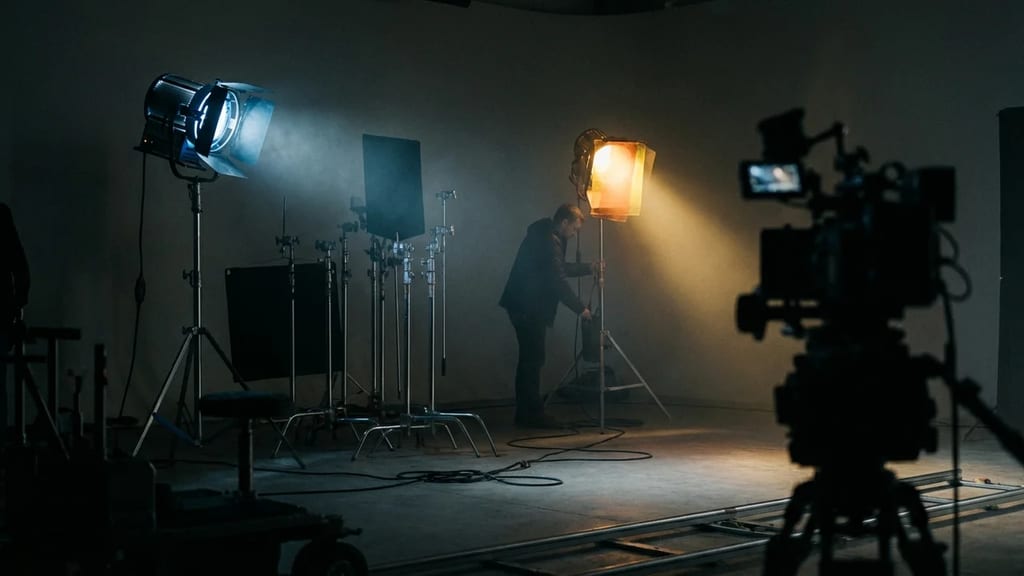
CTS (Color Temperature Straw) is a yellowish-amber correction gel for warming light—a more yellow variant of CTO.
Color Temperature Straw (CTS) is a conversion or correction filter (light gel) for luminaires in film, TV, and stage productions. It lowers the color temperature of a light source, imparting a warm character to the light. CTS is closely related to the more familiar CTO (Color Temperature Orange) family: both are used to warm up light, but CTS has a more yellow and less red hue. Manufacturers like Rosco describe the Straw series as calibrated to the same correction and transmission values as CTO, but with a yellowish-amber tint.
The filter is stretched in front of the light source (frame, clamps, filter sleeve) and is made on a heat-resistant base material. It is offered in several density levels, from Full to Eighth, allowing the intensity of the warming effect to be controlled.
CTS, like CTO/CTB, is available in four standard densities. The following table lists the codes for the two most common manufacturers, along with the Mired Shift value according to Lee Filters.
| Density | Lee Filters | Rosco Cinegel | Mired-Shift (Lee) |
|---|---|---|---|
| Full CTS | 441 | 3441 | +160 |
| Half (1/2) CTS | 442 | 3442 | +81 |
| Quarter (1/4) CTS | 443 | 3443 | +42 |
| Eighth (1/8) CTS | 444 | 3444 | +20 |
A positive Mired Shift indicates a reduction in color temperature (warming). Example values: According to manufacturer specifications, Half CTS converts approximately 6500 K to about 4300 K, and Quarter CTS converts approximately 6500 K to about 5100 K. As with all correction filters, the filter absorbs light. Lee Filters specifies transmission or density for the filters: for Full CTS, approximately 62% transmission (density about 0.21), which roughly corresponds to a loss of about 2/3 to 3/4 of a stop; Half CTS has about 71–74% transmission, meaning about half a stop.
Typical applications:
The practical difference from CTO lies in the color tone: CTS appears more yellow and less red/orange than CTO. The choice between these two families is often an aesthetic decision by the camera department. CTS, like CTO, is the warming counterpart to CTB (Color Temperature Blue), which cools the light.
Aus DoP-Perspektive ist dieses Element essentiell für die visuelle Gestaltung. Es ermöglicht mir die gewünschte Farbstimmung und das ästhetische Bild konsistent umzusetzen.
Diese professionelle Lösung erhöht die Produktionseffizienz und reduziert Post-Production-Anforderungen. Sie ermöglicht flexible, schnelle Anpassungen während des Drehs.
Als Gaffer ist dies ein unverzichtbares Werkzeug meines täglichen Handwerkszeugs. Es ermöglicht mir professionelle Lichtkontrolle und schnelle Anpassungen auf Set, was Zeit spart und Qualität sichert.
1. Zu welchem Department gehört „Farbtemperatur Stroh"?
2. Wie viele verschiedene Fachperspektiven bietet dieser Eintrag?
The Lexikon is part of the Filmfarm ecosystem — alongside budgeting (FilmBalance), an industry magazine (FilmCircus) and crew networking (FilmCall, CrewMesh). One shared vocabulary for the whole production.