Technical Details
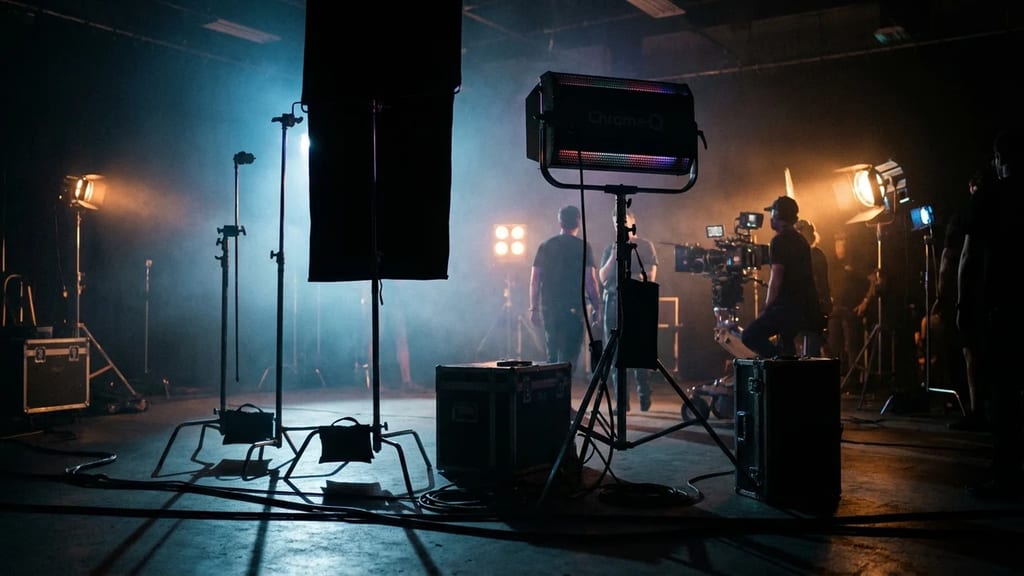
Current Chroma-Q systems utilize high-performance LEDs ranging from 10-50 watts per color channel, achieving a Color Rendering Index (CRI) of up to 95. The Color Force series, for instance, offers 12-bit color resolution with over 16 million color combinations. The units support DMX-512, RDM (Remote Device Management), and Art-Net protocols. Typical models like the Color Force 72 produce 7,200 lumens with a power consumption of 350 watts and operate with color temperatures from 2,700K to 10,000K. The Studio Force series, designed for broadcast applications, provides flicker-free light from 400Hz for high-speed cameras.
History & Development
Chroma-Q began in 1987 with conventional theater technology and transitioned to LED technology in 2004. In 2006, the company launched its first Color Force fixtures for film and television. In 2012, Chroma-Q was acquired by the French Ayrton Group. The introduction of the Space Force series in 2018 marked the move to battery-powered, wireless LED panels with app control.
Practical Application in Film
Chroma-Q fixtures are used in major productions such as "Game of Thrones" (Color Force 72 for night scenes), "The Crown" (Studio Force for interior shots), and Marvel films. The precise color control allows for seamless transitions between different times of day without filter changes. For "Blade Runner 2049," Color Force arrays were employed to create the characteristic neon atmosphere. The low-noise cooling makes them ideal for dialogue-intensive scenes.
Comparison & Alternatives
Chroma-Q competes with ARRI SkyPanel, Kino Flo FreeStyle, and Aputure systems. While ARRI panels offer larger light surfaces, Chroma-Q excels with more precise color calibration and more robust housings for exterior shoots. Compared to Kino Flo, Chroma-Q provides higher light output but less diffuse illumination. The Color Force series is suitable for specific accent lighting, whereas SkyPanels are preferred for broad base illumination.