Cinematographer
Aus DoP-Perspektive ist dieses Element essentiell für die visuelle Gestaltung. Es ermöglicht mir die gewünschte Farbstimmung und das ästhetische Bild konsistent umzusetzen.
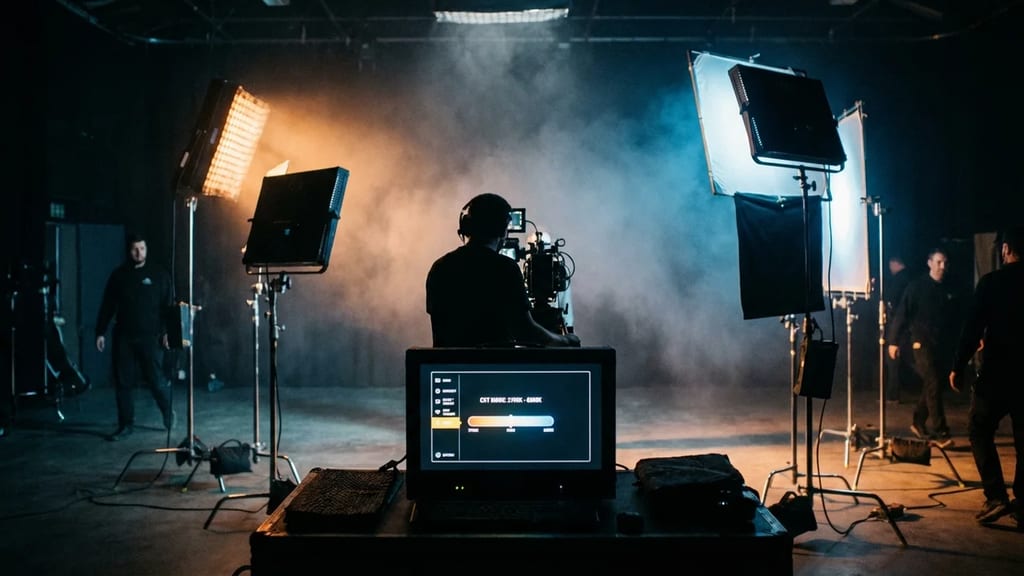
Operating mode of modern LED film lights that produces white light only, adjustable via color temperature (in Kelvin) and typically green/magenta shift control.
The CCT Mode (Correlated Color Temperature Mode) is one of the fundamental operating modes for color-tunable LED lights in film and TV. In this mode, the fixture operates exclusively with white light and can be continuously adjusted along the color temperature axis from warm (tungsten-like, low Kelvin values) to cool (daylight-like, high Kelvin values). It is therefore in contrast to HSI Mode (Hue, Saturation, Intensity), in which the same fixture produces saturated colors.
The CCT Mode is the mode in which an RGBWW fixture is most frequently operated in everyday use, as most set situations require clean, tunable white light – for example, to match daylight coming through a window or existing practical lights.
To ensure white light remains color-accurate across a wide Kelvin range, many fixtures use an RGBWW configuration: in addition to red, green, and blue LEDs, two separate white emitters are installed – one tuned to artificial light (tungsten) and one to daylight. When adjusting the color temperature, the control electronics mix these sources, resulting in better color rendition than pure RGB mixing.
Two parameters are typically adjustable in CCT Mode:
The usable Kelvin range and functionality vary depending on the model and manufacturer. Two common examples:
| Fixture | CCT Range | Step Size / Tint |
|---|---|---|
| Aputure MC (RGBWW) | 3200K–6500K | 100K steps |
| Astera Titan Tube | 1750K–20000K | Green/Magenta 0–100% in 1% increments |
The values show the range: smaller on-camera lights often only cover the classic bi-color range (approx. 3200–6500K), while high-end tubes reach significantly further into extreme warm and cool light.
In CCT Mode, lights are matched to the existing lighting mood without the need to use physical conversion gels (CTO/CTB) or tint gels. Via DMX or apps, the color temperature and tint of multiple lights can be set centrally and reproducibly, which helps with larger setups and when restoring a look after shooting interruptions. The separately controllable green/magenta shift also reduces correction effort in post-production when working against mixed light or fluorescent sources.
Aus DoP-Perspektive ist dieses Element essentiell für die visuelle Gestaltung. Es ermöglicht mir die gewünschte Farbstimmung und das ästhetische Bild konsistent umzusetzen.
Diese professionelle Lösung erhöht die Produktionseffizienz und reduziert Post-Production-Anforderungen. Sie ermöglicht flexible, schnelle Anpassungen während des Drehs.
Als Gaffer ist dies ein unverzichtbares Werkzeug meines täglichen Handwerkszeugs. Es ermöglicht mir professionelle Lichtkontrolle und schnelle Anpassungen auf Set, was Zeit spart und Qualität sichert.
1. Zu welchem Department gehört „CCT-Modus"?
2. Wie viele verschiedene Fachperspektiven bietet dieser Eintrag?
The Lexikon is part of the Filmfarm ecosystem — alongside budgeting (FilmBalance), an industry magazine (FilmCircus) and crew networking (FilmCall, CrewMesh). One shared vocabulary for the whole production.