Filmlexikon.
Support
Anamorphic Clamp
Camera · Technique

Anamorphic Clamp

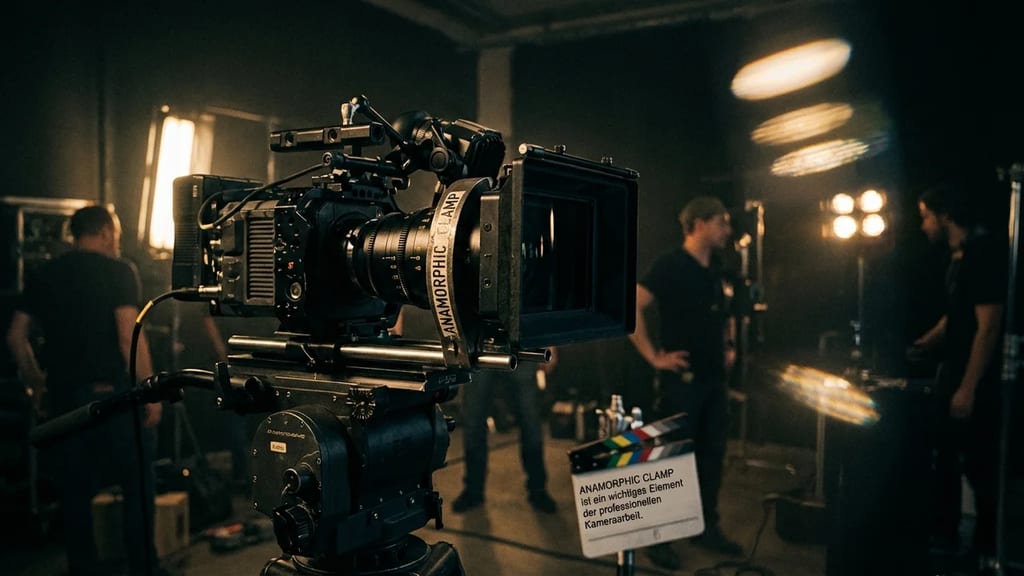
Murnau AI illustration
ironglass anamorphic anamorphic anamorphic squeeze anamorphic mode anamorphic 2x cineovision anamorphic

Precision clamp for securing anamorphic adapters to lenses; 15–25 Nm clamping force with ±0.02 mm tolerance.

Technical Details

Standard anamorphic clamps operate with a clamping force of 15-25 Nm and feature precision-milled contact surfaces with tolerances of ±0.02mm. The construction consists of anodized aluminum or stainless steel with integrated O-rings for sealing. High-quality clamps such as the Panavision series or ARRI/Zeiss variants possess additional micrometer adjustments for pitch and yaw corrections of ±2 degrees. The total weight ranges between 450-800g depending on the diameter (95mm, 104mm, 114mm, 136mm standard sizes).

History & Development

Panavision developed the first professional anamorphic clamps in 1954 for their CinemaScope system, after early installations with makeshift mounts led to optical problems. Zeiss followed in 1961 with their own designs for the European markets. The breakthrough came in 1976 with ARRI's modular Master series, which allowed for various lens diameters without adapter rings. Modern CNC-milled clamps since the 1990s achieve significantly higher precision than the original castings.

Practical Application in Film

Ridley Scott used specially modified Hawk clamps for extreme wide-angle anamorphic combinations in "Gladiator" (2000). Christopher Nolan prefers Panavision C-Series clamps with a 136mm diameter for his IMAX sequences with heavy Ultra Vista lenses. The workflow requires daily calibration of the optical axes using a collimator and regular cleaning of the clamping surfaces. Disadvantages include the additional weight of 0.5-1kg on the lens and increased setup times of 3-5 minutes per lens change.

Comparison & Alternatives

In contrast to permanent screw connections, clamps allow for quick lens changes without tools. Magnetic mounts like the RED Magnetic Mount do not achieve the required rigidity for heavy anamorphic constructions. Modern alternatives include integrated anamorphic lenses such as the ARRI Signature Primes or Atlas Orion series, which do not require separate clamps. Hybrid systems with bayonet mounts offer a compromise between speed and precision but do not achieve the optical quality of classic clamping systems.

From the crafts

Perspectives

Cinematographer

Als DoP achte ich bei Anamorphot-Klemmen auf absolut spielfreie Verbindungen - schon 0,1mm Versatz ruiniert mir die Schärfe in den Bildecken. Die tägliche Kollimator-Kontrolle ist Pflicht, besonders bei Temperaturwechseln zwischen Studio und Außendreh. Bei Handheld-Sequenzen verwende ich verstärkte Klemmen, da das zusätzliche Gewicht von 800g am Objektivende die Balance komplett verändert.

Director

Für mich bedeuten Anamorphot-Klemmen die Möglichkeit, verschiedene optische Charakteristika innerhalb einer Szene zu kombinieren - vom klassischen Panavision-Look bis zu modernen Hawk-Verzerrungen. Der Objektivwechsel dauert zwar 5 Minuten länger, aber diese Flexibilität bei der visuellen Erzählung ist entscheidend. Besonders bei emotionalen Wendepunkten kann ich so zwischen verschiedenen Bokeh-Qualitäten wechseln.

Producer

Anamorphot-Klemmen bedeuten 15-20% längere Setupzeiten und damit höhere Tagessätze für die Kamera-Crew. Das Equipment kostet 8.000-15.000€ pro Set, Versicherung ist aufgrund der präzisen Mechanik 30% teurer als Standard-Objektive. Dafür spare ich mir den Kauf kompletter anamorphotischer Objektivserien und kann flexibel zwischen verschiedenen Herstellern wechseln - ein wichtiger Budgetvorteil bei kleineren Produktionen.

More in the lexikon

Related terms

Test your knowledge

Quiz

1. Was beschreibt „Anamorphot-Klemme" am besten?

2. Zu welchem Department gehört „Anamorphot-Klemme"?

3. Wie viele verschiedene Fachperspektiven bietet dieser Eintrag?

Report an error
From the Filmfarm ecosystem

Understand visual language, budget productions, connect crew.

The Lexikon is part of the Filmfarm ecosystem — alongside budgeting (FilmBalance), an industry magazine (FilmCircus) and crew networking (FilmCall, CrewMesh). One shared vocabulary for the whole production.

FilmFarm FilmRadarComing soonFilmPulseComing soonFilmNumbersComing soonFilmCapitalComing soonFilmLabComing soonFilmBalanceComing soonFilmCircusComing soon