Technical Details
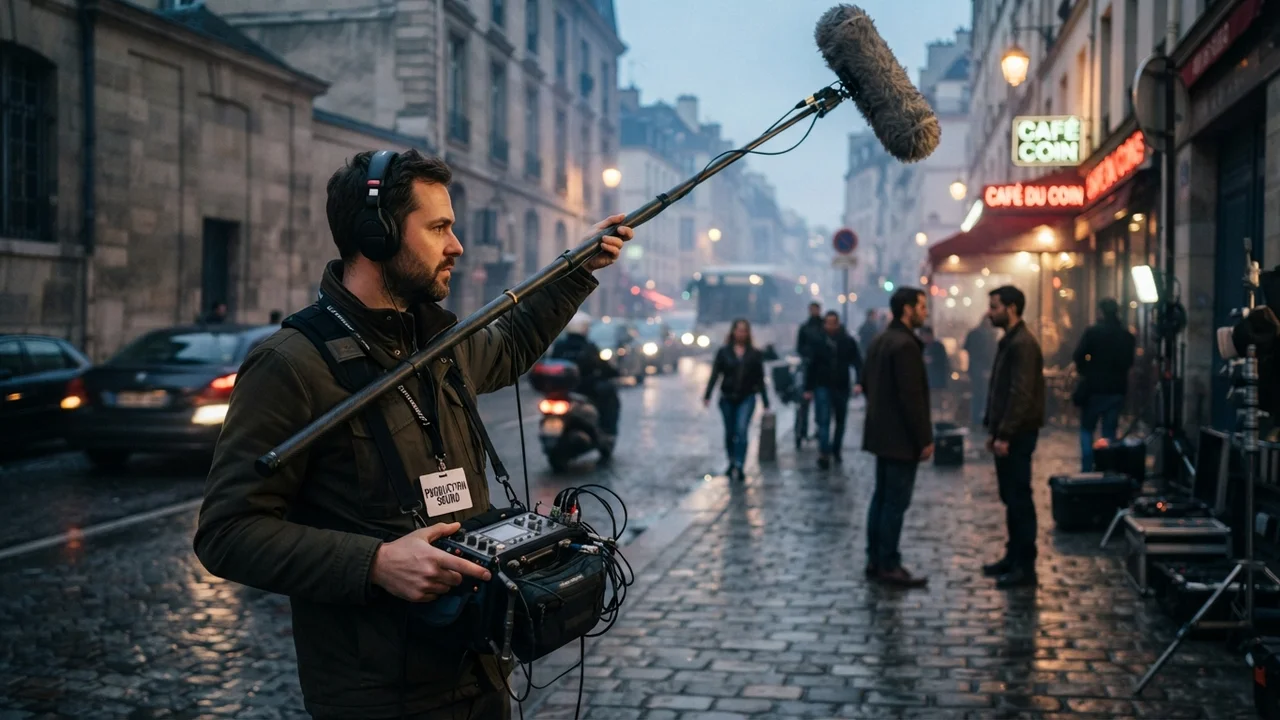
Standard ambience recordings are captured at a minimum of 60 seconds at 48 kHz/24 bit to allow for seamless loops. The frequency range extends from 20 Hz to 15 kHz, with lower frequencies (20-200 Hz) responsible for room size and upper frequencies (2-8 kHz) for material character. A distinction is made between room tone (interiors), exterior ambience (natural environments), and specific ambiances such as traffic, industrial facilities, or crowds. Modern recording techniques use shotgun microphones or stereo configurations, while Ambisonic microphones are employed for surround productions.
History & Development
The first conscious ambience recordings emerged in 1927 at Warner Bros. for "The Jazz Singer" when technicians realized that complete silence sounded unnatural. RCA developed systematic recording procedures for background noise in 1935. The breakthrough came in 1977 with Walter Murch's work on "Apocalypse Now," where he layered over 300 different ambiances. Since the 1990s, digital workstations have enabled complex editing and seamless integration of ambience libraries.
Practical Use in Film
In "Mulholland Drive" (2001), David Lynch uses artificially amplified 50 Hz hums to create subliminal threat. Christopher Nolan layered up to eight ambience tracks simultaneously in "Dunkirk" (2017) – from the sound of the sea to aircraft noise. The typical workflow begins with on-set recording ("room tone"), followed by targeted ambience recording and editing in post-production. Modern productions often use convolution reverb to acoustically marry dialogue and ambience.
Comparison & Alternatives
Ambience differs from sound effects through its continuity and from music through its lack of melodic structure. While Foley covers punctual sounds, ambience fills the entire acoustic space. Alternatives include synthetic ambiances generated through granular synthesis or AI-generated ambiances, which have been available since 2020. Standard libraries are used in low-budget productions, while blockbuster productions usually record their own ambiances.