Filmlexikon.
Support
Vertigo Effect
Camera · Terms

Vertigo Effect

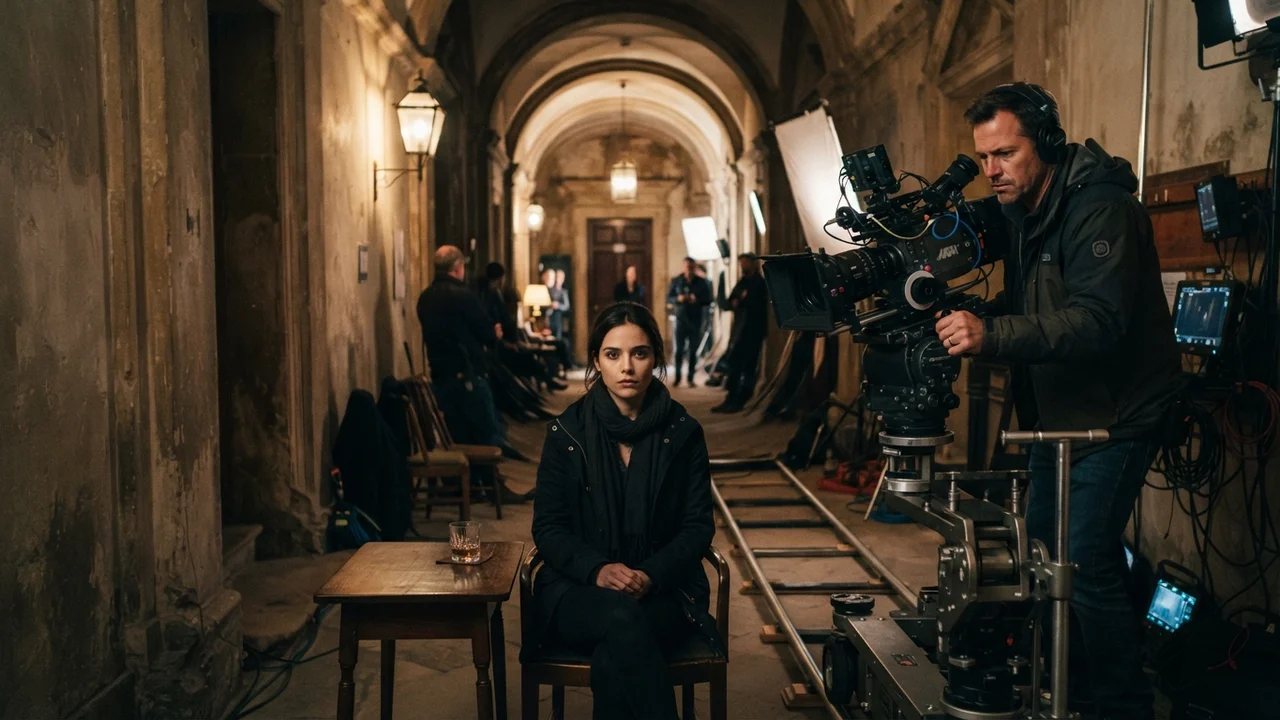
Murnau AI illustration
flow para roll take

Camera dolly backward while zooming forward (or vice versa)—subject size remains constant while background distorts dramatically. Also called dolly zoom or zolly.

Technical Details

Execution requires precise coordination between camera movement and focal length change. When approaching, for example, 3 meters, the focal length must be reduced from 50mm to 25mm to maintain constant subject size. The speed of the dolly movement typically ranges between 0.3-1.2 m/s, while modern zoom lenses with motor follow focus systems enable focal length changes from 24-70mm in 2-4 seconds. Cinema lenses with a constant aperture (T2.8 throughout) are preferred as they minimize exposure fluctuations.

History & Development

Cinematographer Irmin Roberts developed the effect in 1958 for Hitchcock's "Vertigo" through experiments at Paramount Studios. The first documented application was in the church tower sequence, where Roberts combined a 6-meter dolly move with a zoom from 50mm to 25mm. Technical improvements by Panavision in the 1970s allowed for smoother executions. Since the 2000s, computer-controlled motion control systems allow for millimeter-precise repeatability, while digital post-production can also create the effect retrospectively.

Practical Use in Film

Steven Spielberg perfected the technique in "Jaws" (1975) for Roy Scheider's shock moment on the beach. Martin Scorsese used the effect in "Goodfellas" (1990) during Henry Hill's paranoia scene in the restaurant. Execution requires teamwork between the dolly grip, focus puller, and cinematographer, with timing charts created with frame-accurate markings. Modern Digital Intermediate workflows allow for corrections of up to ±15% of the original focal length change.

Comparison & Alternatives

The Vertigo effect differs from a simple zoom by maintaining constant subject size and from a dolly shot by changing the focal length. Push-in shots create similar intensity without perspective distortion. Modern alternatives include programmable zoom/focus systems like the Preston FIZ system or digital simulation through Focal Length Morphing in DaVinci Resolve. Steadicam-Vertigo combinations expand freedom of movement but require practice for smooth execution.

From the crafts

Perspectives

Cinematographer

Ich kalibriere vorab die exakten Distanz- und Brennweiten-Verhältnisse und erstelle Frame-Charts für meinen Focus Puller. Die größte Herausforderung liegt in der präzisen Koordination mit dem Dolly Grip – selbst minimale Timing-Abweichungen zerstören den Effekt. Bei digitalen Kameras kontrolliere ich zusätzlich die Schärfentiefe-Veränderungen, da sich durch die Brennweitenänderung auch die Bokeh-Charakteristik dramatisch verschiebt.

Director

Ich setze den Vertigo-Effekt gezielt für psychologische Wendepunkte ein, wo die Figur eine Erkenntnis oder einen Schock erlebt. Der Effekt funktioniert am stärksten bei statischen Charakteren in einem sich verändernden Raum – er visualisiert innere Zustände extern. Timing ist entscheidend: Ich beginne den Effekt meist 2-3 Sekunden vor dem dramatischen Höhepunkt und lasse ihn über den emotionalen Beat hinaus weiterlaufen.

Producer

Der Vertigo-Effekt benötigt mindestens 45-90 Minuten Setup-Zeit pro Take und erfordert ein erfahrenes Kamera-Team mit Motion-Control-Equipment. Ich kalkuliere 3-5 Takes für eine perfekte Ausführung, was bei Tagessätzen von 800€ für Spezial-Equipment zusätzliche Kosten bedeutet. Digital erzeugte Vertigo-Effekte in der Post kosten etwa 2.000-4.000€ pro Shot, sind aber zeitlich flexibler und bei komplexen Locations oft die wirtschaftlichere Alternative.

More in the lexikon

Related terms

Test your knowledge

Quiz

1. Zu welchem Department gehört „Vertigo-Effekt"?

2. Wie viele verschiedene Fachperspektiven bietet dieser Eintrag?

Report an error
From the Filmfarm ecosystem

Understand visual language, budget productions, connect crew.

The Lexikon is part of the Filmfarm ecosystem — alongside budgeting (FilmBalance), an industry magazine (FilmCircus) and crew networking (FilmCall, CrewMesh). One shared vocabulary for the whole production.

FilmFarm FilmRadarComing soonFilmPulseComing soonFilmNumbersComing soonFilmCapitalComing soonFilmLabComing soonFilmBalanceComing soonFilmCircusComing soon