Cinematographer
Ich kalibriere meine Belichtungsmessung ausschliesslich nach T-Stops, da sie mir die exakte Lichtmenge garantieren, die tatsaechlich den Sensor erreicht.
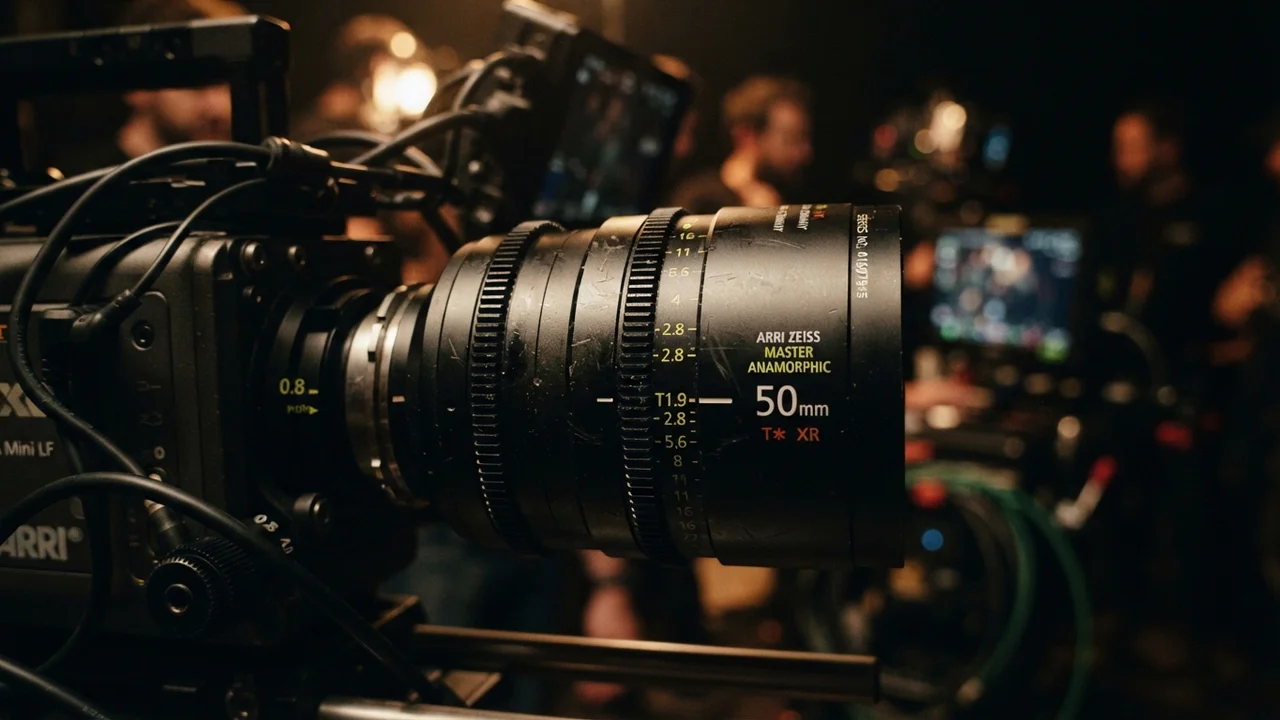
Measure of the actual light transmission of a lens accounting for all optical losses. More precise than F-stop for film production.
The T-stop is the actual light transmission ratio of a lens under real-world conditions. Unlike the F-stop, which is a geometric calculation, the T-stop measures the exact amount of light that the lens actually transmits to the sensor or film.
T-stops are measured photometrically using calibrated light sensors under standardized conditions:
| Aspect | F-Stop | T-Stop |
|---|---|---|
| Calculation | Geometric (Focal length/Diameter) | Photometrically measured |
| Accuracy | Theoretical | Practical |
| Glass Losses | Not considered | Fully considered |
| Usage | Photography | Film production |
| Lens Marking | Standard photo lenses | Cinema lenses |
A lens with f/2.0 might actually be T/2.3 if glass elements and coatings absorb 15% of the light. When changing lenses within a scene, T-stops guarantee identical exposure without additional testing.
Ich kalibriere meine Belichtungsmessung ausschliesslich nach T-Stops, da sie mir die exakte Lichtmenge garantieren, die tatsaechlich den Sensor erreicht.
Die Konsistenz von T-Stops ermoeglicht mir praezise visuelle Kontinuitaet zwischen verschiedenen Kamerasetups derselben Szene.
T-Stop-kalibrierte Objektive kosten 40 Prozent mehr, reduzieren aber Drehzeit durch wegfallende Belichtungstests um 15 Minuten pro Setup.
1. Was beschreibt „T-Stop / T-Blende" am besten?
2. Zu welchem Department gehört „T-Stop / T-Blende"?
3. Wie viele verschiedene Fachperspektiven bietet dieser Eintrag?
The Lexikon is part of the Filmfarm ecosystem — alongside budgeting (FilmBalance), an industry magazine (FilmCircus) and crew networking (FilmCall, CrewMesh). One shared vocabulary for the whole production.