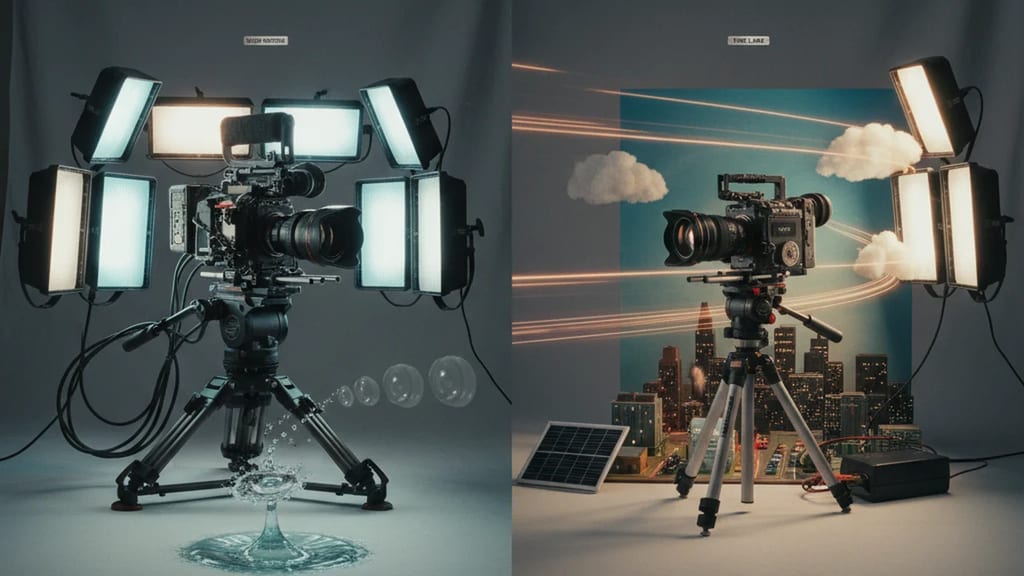
Slow-mo: higher frame rate shot, normal playback—dramatizes action. Time-lapse: underexposed intervals, normal speed—compresses long processes (clouds, traffic).
You need two handles to manipulate time: either you shoot faster, or you skip frames. Both effects are only created in projection — the camera itself does only half the work.
Slow Motion works like this: You set the camera to 120, 240, or even higher fps — depending on available storage and desired effect — and shoot one second of normal action. On set, you see movement happening in real-time. In the edit, you then play back the material at 24 or 25 fps. The result: that one second now lasts four or ten seconds — depending on the multiplier. The action becomes glassy, dramatic, sometimes even hysterical. You notice immediately: slow motion needs light. At 240 fps, you have to open up the aperture or add spots, otherwise the image will be underexposed. And motion blur disappears — each frame is razor-sharp, which makes some effects unnaturalistic.
Time Lapse is the opposite in principle, but thought of in reverse: You shoot at normal frame rate (24 fps), but keep the camera still and then take longer pauses between frames. One minute of real-time becomes one second of film. This is classic stop-motion thinking — expose each frame individually, move object, next frame. Clouds race across the sky in three seconds. Traffic becomes an abstract structure. The optical effect: movement loses fluidity, appears jerky, mechanical. This is intentional and can be very poetic.
In practice, you blend both worlds. An action film uses slow motion for the crucial shootout — four seconds from half a second. And a nature shot shows over two minutes how the sun would set if the film were played at ten times speed. The technical hurdle: slow motion costs light and storage, time lapse costs time and patience. And both require correct synchronization with editing and sound — a shot in slow motion to a normal bang is unbelievable. If you use slow motion, the sound must also be stretched, otherwise it looks like a mistake.
The dramatic core of both techniques: they break down human perception of time. Slow motion stretches seconds apart, creating sublimity or grace. Time lapse compresses hours into moments — showing processes that are otherwise invisible. Both are not ingredients, both are narrative devices.
Related terms
Quiz
1. Zu welchem Department gehört „Zeitlupe / Zeitraffer"?