Filmlexikon.
Support
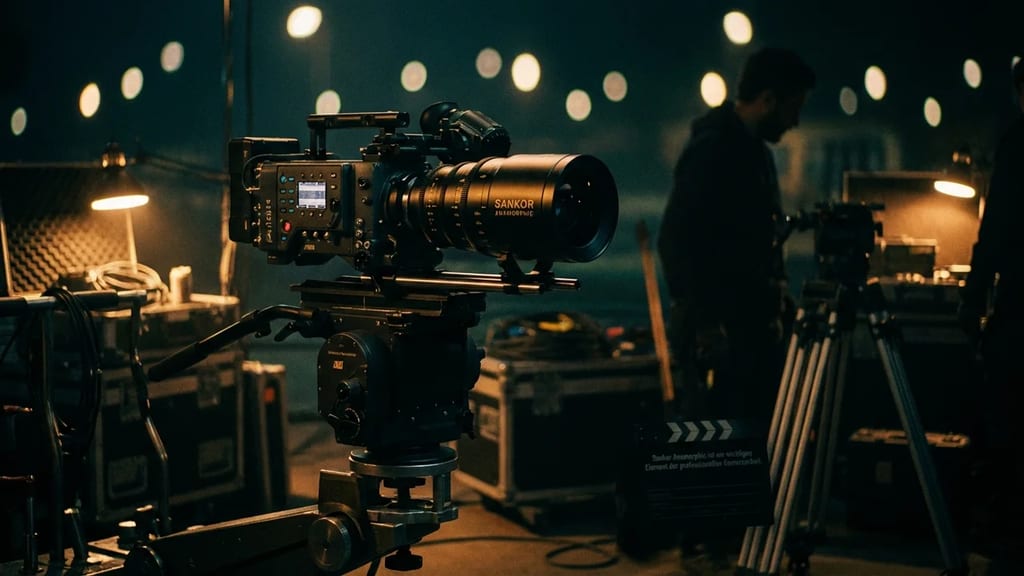
Sankor Anamorphic
Camera · Technique

Sankor Anamorphic

Murnau AI illustration
sankor 16d sankor 16c anamorphic

Soviet anamorphic adapter lenses by LOMO with 2:1 compression, producing distinctive oval bokeh and blue horizontal flares.

Technical Details

Sankor lenses operate with a horizontal compression of 2:1 while maintaining unchanged vertical imaging. Typical focal length ranges for the base lenses are between 35mm and 135mm. The front attachment lenses consist of a cylindrical lens system with an asymmetric design, creating characteristic optical properties: oval bokeh circles, horizontal lens flares, and slight distortions at the image edges. The minimum focusing distance is usually 1.5 to 2 meters due to the additional optical elements. Filter threads vary between 58mm and 77mm depending on the model.

History & Development

LOMO developed the first Sankor Anamorphics in 1962 for Soviet cinema as a cost-effective alternative to expensive French Hypergonar or American Panavision systems. Production continued until the late 1980s, with various versions created for 16mm and 35mm film. After the collapse of the Soviet Union, larger quantities entered the global market. Since 2010, the lenses have experienced a renaissance among independent filmmakers and are being adapted for digital productions.

Practical Use in Film

Sankor Anamorphics are primarily used in low-budget productions aiming to utilize the Cinemascope format. The characteristic blue horizontal flares and oval bokeh lend images a vintage 1970s look. Modern adapters allow their use on digital cameras like RED, Blackmagic, or Sony. The workflow requires a 2:1 desqueeze function in the monitor or post-production. The limited close focusing necessitates additional diopter lenses for close-ups.

Comparison & Alternatives

Compared to modern anamorphic lenses from Cooke, Zeiss, or Arri, Sankor lenses offer significantly less optical precision but a distinctive character. The image quality does not reach the professional standards of current anamorphics, but they cost only a fraction. Alternatives include modern budget anamorphics like the SLR Magic Anamorphot series or Moment attachments for smartphones. For productions with the highest quality demands, Panavision, Cooke, or Zeiss systems remain the first choice.
From the crafts

Perspectives

Cinematographer

Ich nutze Sankor-Anamorphe gezielt für den unverwechselbaren Retro-Look mit den charakteristischen blauen Flares und ovalen Bokeh-Kreisen. Die begrenzte Schärfentiefe und Naheinstellung von 1,5 Metern erfordern präzise Planung der Kamerabewegungen und oft zusätzliche Diopter-Linsen für Close-ups. Der 2:1-Desqueeze im Monitor ist essentiell für präzises Fokussieren und Kadrieren.

Director

Ich setze Sankor-Linsen ein, wenn die Geschichte einen nostalgischen 70er-Jahre-Look verlangt oder bewusst Lo-Fi-Ästhetik transportieren soll. Die horizontalen Lens Flares und leichten Verzerrungen verstärken emotionale Szenen und schaffen eine intime, handgemachte Atmosphäre. Für moderne, cleane Looks sind sie ungeeignet, aber für Indie-Projekte mit begrenztem Budget bieten sie echtes Cinemascope-Feeling.

Producer

Sankor-Anamorphe kosten 200-800 Euro statt 15.000+ für moderne Anamorphics und machen Cinemascope-Produktionen auch für Mikro-Budgets zugänglich. Der Zeitaufwand steigt durch komplexere Beleuchtung wegen der begrenzten Lichtstärke und zusätzliche Testaufnahmen für die optischen Eigenarten. Für Streaming-Content oder Festivalfilme amortisieren sich die Anschaffungskosten bereits nach wenigen Drehtagen.

More in the lexikon

Related terms

Test your knowledge

Quiz

1. Zu welchem Department gehört „Sankor Anamorphot"?

2. Wie viele verschiedene Fachperspektiven bietet dieser Eintrag?

Report an error
From the Filmfarm ecosystem

Understand visual language, budget productions, connect crew.

The Lexikon is part of the Filmfarm ecosystem — alongside budgeting (FilmBalance), an industry magazine (FilmCircus) and crew networking (FilmCall, CrewMesh). One shared vocabulary for the whole production.

FilmFarm FilmRadarComing soonFilmPulseComing soonFilmNumbersComing soonFilmCapitalComing soonFilmLabComing soonFilmBalanceComing soonFilmCircusComing soon