Overview
Real-Time Rendering refers to the generation of computer-generated images that are calculated and displayed immediately as the scene changes. In contrast to classic Pre-Rendering (Offline Rendering), where individual frames are calculated in advance over hours on a render farm, images in Real-Time Rendering are created interactively and can be changed live.
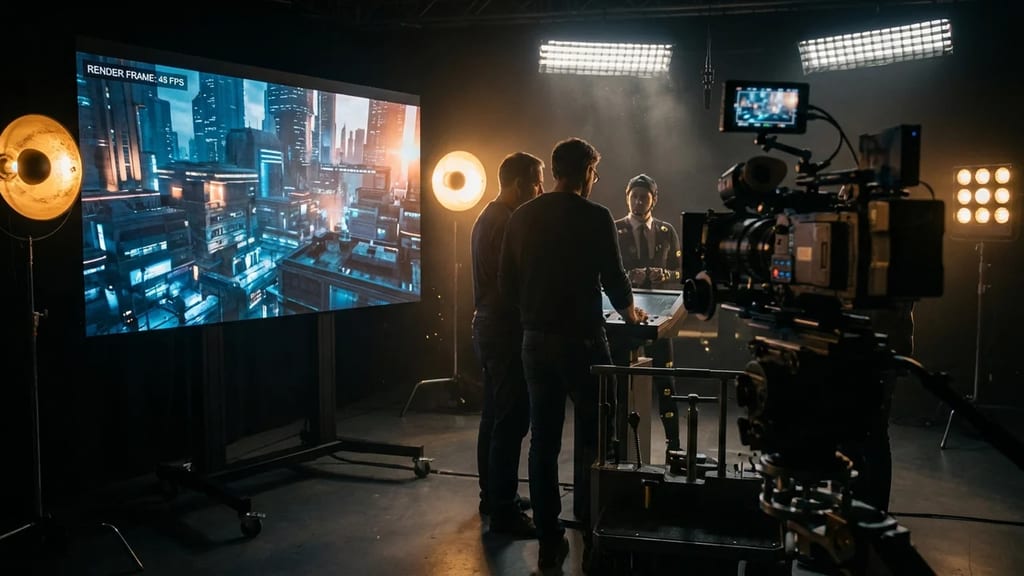
On set, Real-Time Rendering is not a standalone device but the technical foundation of Virtual Production and especially In-Camera VFX (ICVFX): a game engine calculates the digital environment in real-time and plays it out on an LED wall or LED volume surrounding the actors and the physical set. The content is filmed directly by the camera instead of being composited later via greenscreen.
Principle of Operation
The image is calculated by a GPU (Graphics Processing Unit) instead of a CPU render farm. Common engines include Unreal Engine (Epic Games) and Unity. To ensure the perspective on the LED wall matches camera movement, the camera's position and lens are captured by a camera tracking system and fed back to the engine; the rendered view (frustum) follows the camera in real-time.
For the camera, render pipeline, and LED processors to work together without image tearing, all components must be synchronized to a common studio clock via Genlock and timecode. A crucial requirement is low latency, so that the displayed environment follows camera movement without delay.
Distinction: Real-Time vs. Pre-Rendering
| Feature | Real-Time Rendering | Pre-Rendering (Offline) |
|---|
| Calculation | immediate, interactive (GPU) | in advance, non-interactive (render farm) |
| Scene Adjustment | possible live on set | only by re-rendering |
| Priority | speed / interactivity | maximum image quality |
| Typical Use | Virtual Production, ICVFX, Previs | final VFX shots, classic CGI |
On-Set Application
- LED Volume / ICVFX: The LED walls display the real-time rendered environment and simultaneously provide realistic ambient light and reflections on actors, costumes, and props.
- Live Adjustment: Time of day, weather, lighting mood, or set elements can be changed directly during shooting without needing to re-render.
- Previsualization: Real-Time Rendering is also used for previs/techvis and virtual camera exploration before physical shooting begins.
Note: Specific latency and frame rate requirements depend on the studio setup, the hardware used, and the shooting frame rate and should be evaluated on a project-specific basis.