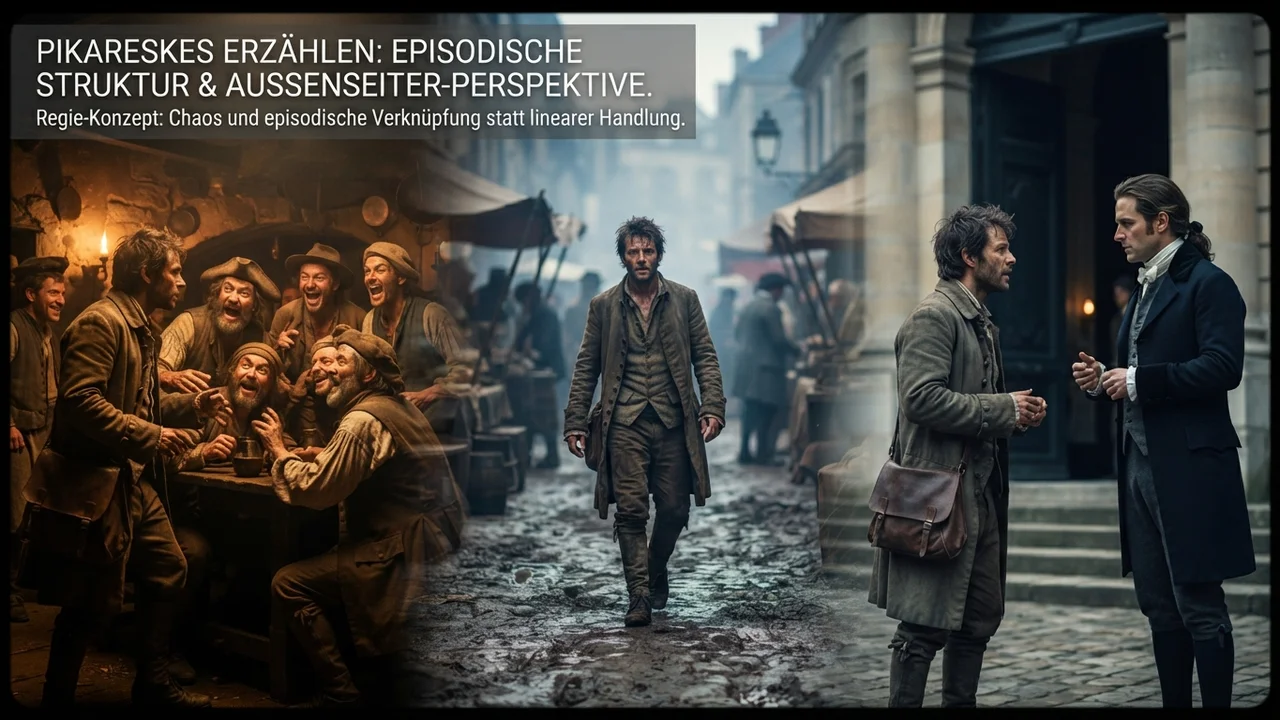
Episodic narrative structure following an outsider through society—loosely connected scenes over linear plot. Creates chaotic, naturalistic pacing; *Requiem for a Dream*, *Trainspotting*.
The protagonist traverses a world that doesn't want them — and we follow them in leaps, not in a straight line. Picaresque narrative functions through episodic sequences strung loosely together like pearls on a fragile thread. No classic three-act structure, no textbook-style dramatic arc. Instead: encounter, conflict, next stop. The hero — or rather, the character — is thrown from situation to situation, reacts, adapts, and stumbles onward. This creates a chaotic, authentic pace that submits to chance and the sequence of moments, not to dramatic necessity.
On set, this means for directing: you avoid artificial motivations between scenes. Trainspotting thrives on characters jumping from withdrawal to crime to pleasure — not because an overarching story forces them, but because their survival and addiction drive them. Requiem for a Dream cross-cuts four episodic descent curves that only brutally intertwine at the end. The scenes themselves are often highly condensed, visually concise — they must function without dramaturgical bridges. This demands focused, self-explanatory moments from the screenplay instead of long exposition passages.
Technically, picaresque narrative means freedom in visual language. Each scene can have a different tone because continuity doesn't depend on a classic narrator, but on the character themselves — their perception, their state. This allows you to experiment with color, editing rhythm, musical cues. No formal compulsion for coherence. A Clockwork Orange uses this freedom for radical stylistic breaks; Trainspotting for the documentary flicker of being addicted.
Beware: episodic doesn't mean arbitrary. Each stop must change the character — or our understanding of them. Chance is a tool, not an excuse for poorly constructed scenes. The inner logic of the character replaces the outer plot logic. This is more demanding, not easier.
Related terms
Quiz
1. Zu welchem Department gehört „Pikareskes Erzählen"?