Technical Details
Pergear lenses cover focal lengths from 10mm to 60mm, with the 35mm f/1.6 and 25mm f/1.8 being the most frequently used models. The lenses feature all-glass construction with 6-10 lens elements and achieve minimum focus distances between 0.15m (macro versions) and 0.35m. Typical aperture values range from f/1.6 to f/16, and filter threads are standard 52mm or 58mm. The housing is made of anodized aluminum with a precision-machined focus ring offering a 180° rotation angle. Optical coatings are multi-layered (Multi-Coating) to reduce stray light and chromatic aberration.
History & Development
Pergear emerged in 2019 as a sub-brand of the Chinese optics company Zonlai, which had been producing manual lenses since 2015. The first Pergear lens, a 25mm f/1.8, was launched in the autumn of 2019 and immediately established the brand's signature look: soft bokeh characteristics with sharp central rendering. In 2020, the brand expanded into macro lenses with the 60mm f/2.8, followed in 2021 by the ultra-wide 10mm f/8 fisheye. The brand consciously focuses on manual focus as a counter-movement to increasing automation.
Practical Use in Film
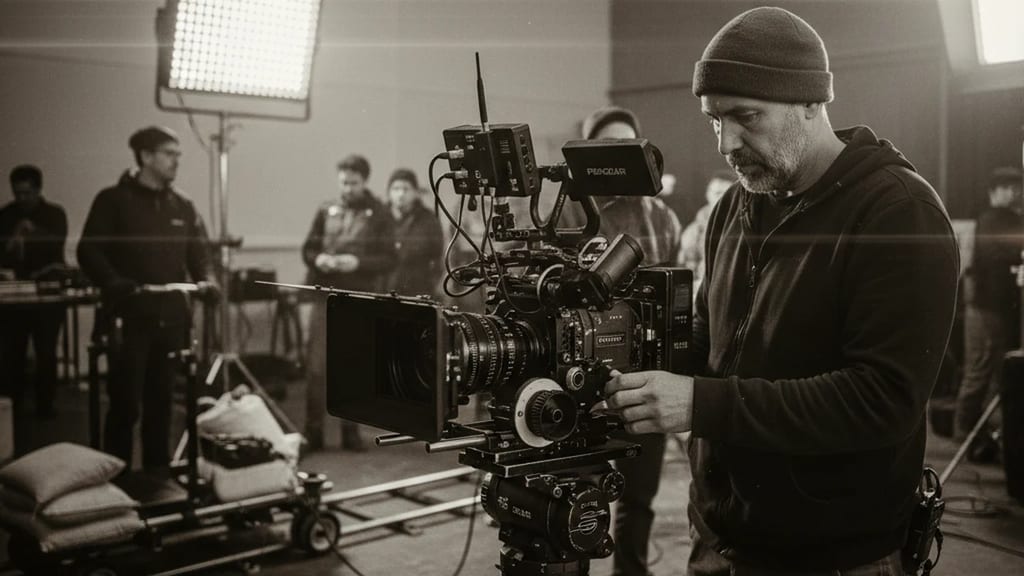
Pergear lenses are used in independent productions and documentaries where manual focusing is desired and budget constraints exist. The 35mm f/1.6 is particularly suitable for available light scenes due to its wide aperture, while the 25mm f/1.8 serves as a standard focal length for close-ups and interviews. The soft bokeh creates a cinematic look similar to more expensive cine lenses. Focus pulling requires precise technique, as the short focus throws leave little room for correction.
Comparison & Alternatives
Pergear positions itself between budget manufacturers like 7Artisans or TTArtisan and established brands like Sigma or Tamron. Unlike autofocus lenses, Pergear lenses allow precise manual control but lack electronic aperture communication. For run-and-gun productions, autofocus alternatives are more practical; for controlled sets, Pergear lenses offer the advantage of constant aperture values and reproducible focus markings.