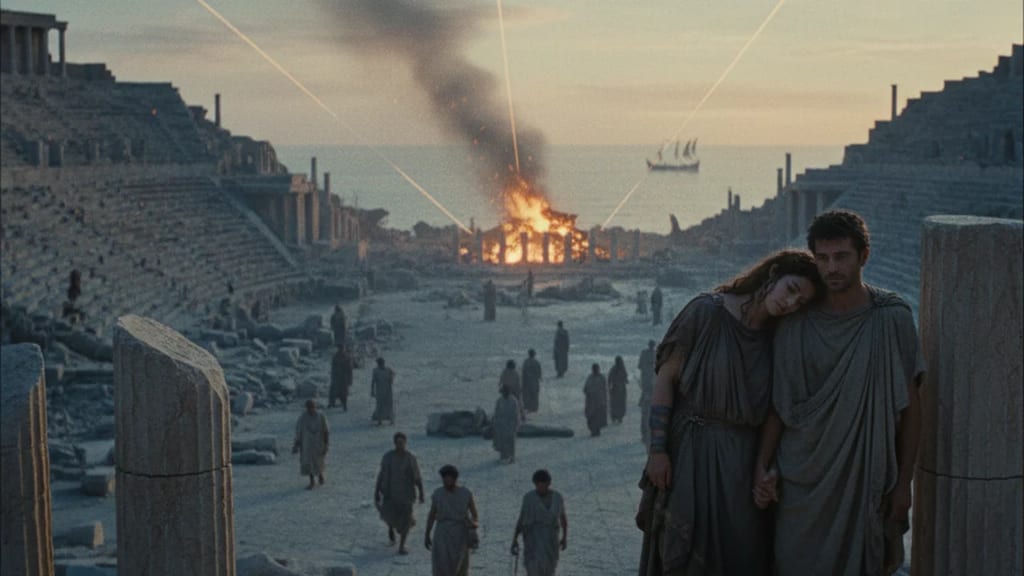
Classical dramatic term — the phase after climax where tension dissolves and conflict resolves toward ending. Opposite of exposition.
Lysis
After the climax — the lysis — begins the phase where you, as the director, consciously reduce tension and guide the conflict towards its resolution. Greek drama knew this moment precisely: not as a sluggish ebb, but as a deliberate dramaturgical movement that functions parallel to the exposition. While the exposition builds the world and raises questions, the lysis gradually resolves these questions — not through explanation, but through action and consequence.
In practical filmmaking, you notice the lysis by a decrease in editing pace, a change in music, and a calmer camera. An example: after a turning point that forces the protagonist to act, you don't immediately show the result of their action. Instead, you document the aftermath — a longer, calmer moment where they must deal with what they have done. This phase can sometimes last longer than expected; it must not feel rushed. The lysis is not a full stop, but a release of pressure — controlled, but necessary for credibility.
You often confuse lysis with the finale or the epilogue. This is a mistake. The lysis begins during the climax and extends to the final resolution; it is the process of resolution itself. In the editing flow, this means: you are no longer concerned with exposing new conflicts. All active questions must already have been posed. Now, only answers are given — not always satisfyingly, but consistently. A well-constructed lysis allows the audience to breathe; it doesn't suddenly remove the tension but gently lifts the burden.
The most common beginner's trap: you make the lysis too short. This leads to the feeling that the film ends abruptly or is incomplete. A generously designed lysis — two to five minutes depending on the total length — gives the audience time to recover from the emotional exertion and digest the story. This is not boredom; it is craftsmanship.
Related terms
Quiz
1. Zu welchem Department gehört „Lýsis"?