Technical Details
The Helios Anamorphic series includes focal lengths from 35mm to 250mm with a constant aperture of f/2.8. The characteristic cylindrical front lens element exclusively compresses the horizontal image axis, while vertical resolution remains unchanged. The lenses operate with the 35mm film format and produce a horizontal resolution of effectively 1.4 times the sharpness compared to spherical lenses of the same focal length. The minimum focusing distance is 1.2 meters, and the filter thread is M82x0.75.
Three main variants exist: Helios-44 Anamorphic (58mm), Helios-103 Anamorphic (100mm), and Helios-135 Anamorphic (135mm). All use the M42 screw mount and weigh between 680g (58mm) and 1,240g (135mm).
History & Development
Development began in 1958 in the Soviet Union as a response to the Western CinemaScope format. LOMO Leningrad developed the first prototypes, with series production starting in 1962 at Carl Zeiss Jena. By 1975, approximately 12,000 units of all focal lengths had been produced. After German reunification, production ended in 1991. Soviet films such as "War and Peace" (1966-67) established the system internationally.
The last batch from 1989-1991 received coated front lenses and more precise mounts, but is considered rarer due to low production numbers of under 500 units per focal length.
Practical Use in Film
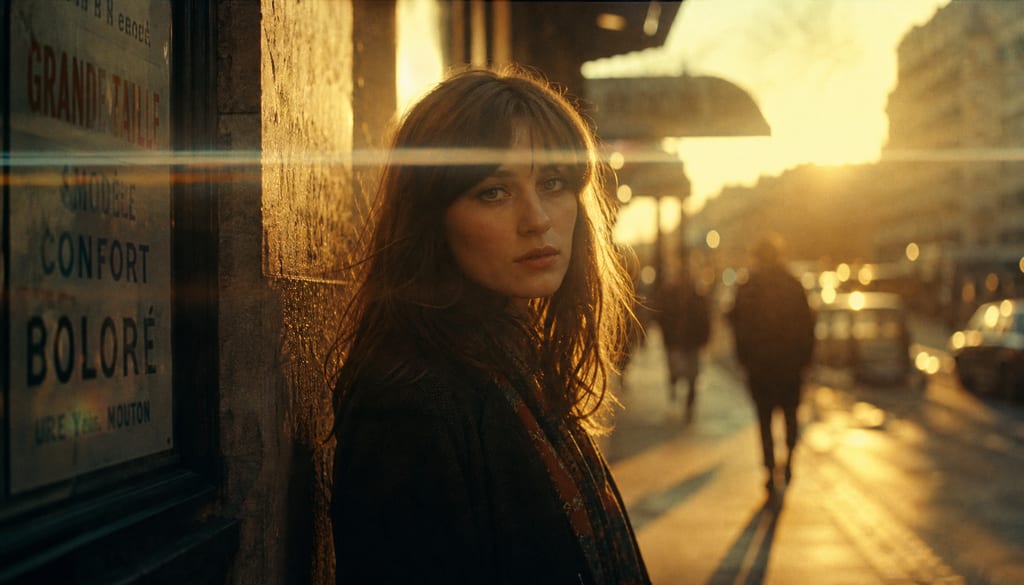
Sergei Bondarchuk's "War and Peace" was the first to systematically use Helios Anamorphic lenses for battle scenes and ball sequences. The characteristic horizontal lens flares and oval bokeh shaped the look of Soviet epic films of the 1960s and 70s.
Modern productions like "Mad Max: Fury Road" (2015) utilize restored Helios Anamorphic lenses for specific sequences to achieve a vintage, analog look. The workflow requires specially calibrated de-squeeze monitors on set and appropriate post-production software for 2:1 distortion correction.
Comparison & Alternatives
Helios Anamorphic lenses differ from modern anamorphic systems like Panavision or Zeiss Anamorphic through stronger optical aberrations and less corrected distortion. Compared to Isco-Anamorphot attachments, they offer better integration and more even sharpness distribution.
Today's alternatives include Cooke Anamorphic or Atlas Orion, which are technically superior but more character-neutral. Helios Anamorphic remains relevant for productions consciously aiming for the Soviet film aesthetic or facing budget constraints – used units cost 800-1,500 Euros compared to 15,000+ Euros for modern systems.