Filmlexikon.
Support
Full Apple
Lighting · Terms

Full Apple

Murnau AI illustration
color temperature flow roll take

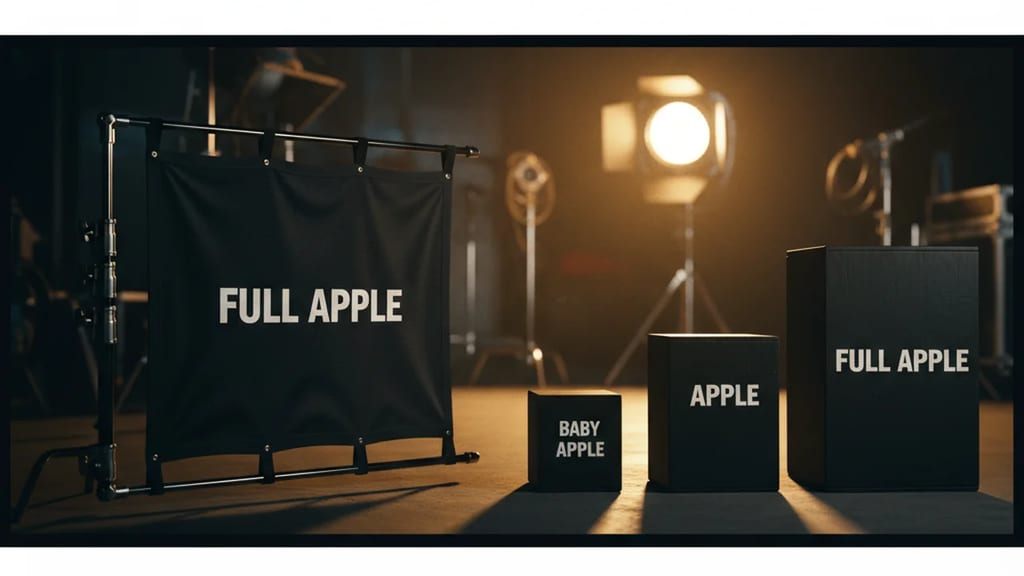
20" × 12" × 8" birch plywood box, load capacity 136 kg. Used for actor height adjustment, base for HMI lights up to 575W, or C-Stand stabilization.

Technical Details

The Full Apple has a maximum load capacity of 136 kg and is made of 12 mm thick birch plywood with reinforced corners. The construction uses finger joints and waterproof gluing. Variants include the Half Apple (20" x 12" x 4"), Quarter Apple (20" x 12" x 2"), and Pancake (20" x 12" x 1"). Modern versions feature non-slip rubber feet and optional integrated handles. The net weight is 4.5 kg with an internal volume of 20 liters.

History & Development

In 1920, Paramount Studios first introduced repurposed fruit crates as stage aids. Matthews Studio Equipment standardized the dimensions and construction of Apple Boxes for the film industry in 1947. In 1963, Grip Factory developed the first series with standardized stacking dimensions. Since 1985, Apple Boxes have been standard equipment for every professional film crew and are manufactured according to DIN standard 15996.

Practical Use in Film

In "The Grand Budapest Hotel" (2014), cinematographer Robert Yeoman used over 200 Apple Boxes for millimeter-precise framing in symmetrical shots. They are used to equalize actor heights, as a base for small HMI lights up to 575W, or for creating camera dolly tracks. Full Apples stabilize C-stands on uneven ground and create defined distances between the background and performers. A standard grip truck carries at least 50 Apple Boxes of various sizes.

Comparison & Alternatives

The Full Apple differs from Furniture Pads in its structural stability and from Sandbags in its stackable form. Modern alternatives like Pneumatic Risers offer stepless height adjustment but do not reach the 136 kg load capacity. Carbon fiber risers weigh 60% less but cost ten times as much. Apple Boxes remain unrivaled for rapid setup changes and universal usability on set.

From the crafts

Perspectives

Cinematographer

Ich stapele Full Apples millimetergenau für perfekte Augenhöhen zwischen unterschiedlich großen Darstellern - das spart mir zeit­aufwändige Kamerabewegungen. Besonders bei Steadicam-Shots schaffe ich damit präzise Referenzpunkte für wiederholbare Bewegungsabläufe. Die 20-cm-Höhe entspricht exakt zwei Standard-Kamerastufen, wodurch ich Brennweiten­wechsel durch einfaches Umpositionieren kompensiere.

Director

Ich nutze Apple Boxes gezielt für psychologische Bildwirkung - durch minimale Höhenunterschiede verstärke ich Machtgefälle zwischen Charakteren ohne aufwändige Kamerabewegungen. Bei Dialogszenen schaffe ich durch 4-cm-Adjustments subtile Dominanzverhältnisse, die dem Zuschauer unbewusst die Beziehungsdynamik vermitteln. Das spart mir komplizierte Kamerafahrten und hält den Fokus auf der schauspielerischen Leistung.

Producer

Full Apples kosten 85 Euro pro Stück, halten aber 15 Jahre bei täglichem Einsatz - das amortisiert sich bereits nach 50 Drehtagen gegenüber Mietkosten. Ein Standard-Set mit 30 Stück ersetzt teure Spezialequipment-Anmietungen und reduziert Setup-Zeiten um durchschnittlich 25 Minuten pro Einstellung. Bei 40 Setups täglich spare ich 16 Stunden Crew-Kosten, was 2.800 Euro pro Drehtag entspricht.

More in the lexikon

Related terms

Test your knowledge

Quiz

1. Zu welchem Department gehört „Full Apple"?

2. Wie viele verschiedene Fachperspektiven bietet dieser Eintrag?

Report an error
From the Filmfarm ecosystem

Understand visual language, budget productions, connect crew.

The Lexikon is part of the Filmfarm ecosystem — alongside budgeting (FilmBalance), an industry magazine (FilmCircus) and crew networking (FilmCall, CrewMesh). One shared vocabulary for the whole production.

FilmFarm FilmRadarComing soonFilmPulseComing soonFilmNumbersComing soonFilmCapitalComing soonFilmLabComing soonFilmBalanceComing soonFilmCircusComing soon