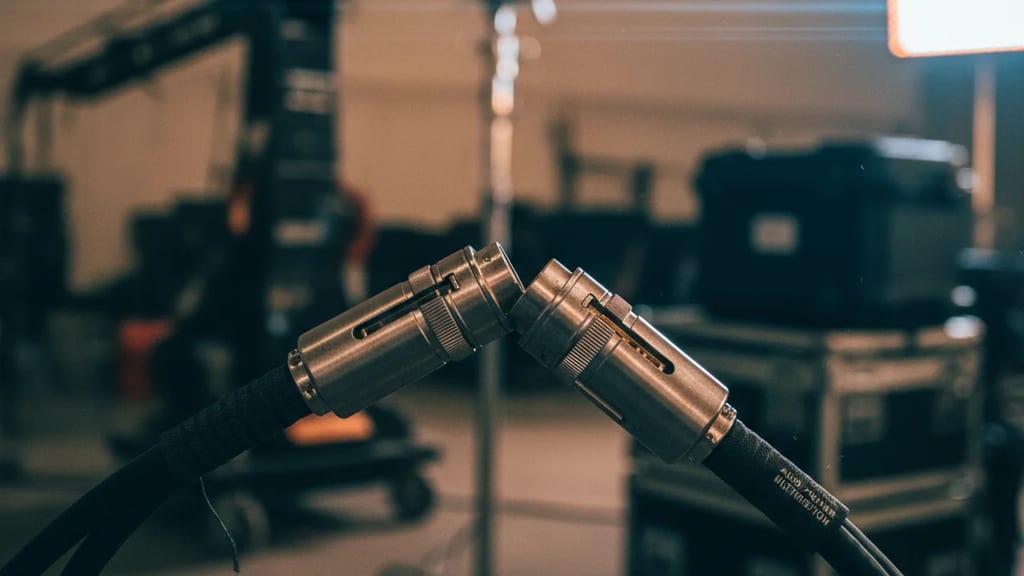
Technical Details
Fischer systems use hardened steel pins with a tolerance of ±0.05 mm for precise fitting. The 3/8-inch variant supports up to 25 kg, while the 5/8-inch version supports up to 150 kg payload. Standard Fischer pins consist of a sprung pin with ball bearing locking, released by a red safety button. Heavy-duty versions utilize thread locking with 1/4-20 or 3/8-16 UNC threads. Mitchell-Fischer combine the system with the Mitchell mount for tripod heads, while Baby Fischer pins with a reduced 1/4-inch diameter are used for lighter equipment.
History & Development
J.G. Fisher developed the first standardized pin system for his dollies in 1963 to enable quick camera setups. Chapman-Leonard adopted the system in 1971 and established it as an industry standard. In 1985, Panasonic introduced electronic Fischer pins with integrated signal lines. Modern Väli integrated hydraulic damping into Fischer systems in 1992. Today, all major manufacturers such as Arri, Chapman, and Matthews Studio Equipment use Fischer-compatible connections according to the original standard.
Practical Use in Film
Fischer pins allow for rapid camera transfers between tripods, dollies, and cranes without re-alignment. In "Goodfellas" (1990), Ballhaus utilized Fischer systems for seamless transitions between Steadicam and dolly shots. The technology is standard in multi-camera setups where identical framing needs to be reproduced between different positions. Fischer plates on lenses allow for quick focal length changes without image shift. Disadvantages include mechanical play of 0.1-0.2 mm and potential vibration transmission if improperly mounted.
Comparison & Alternatives
Fischer pins differ from dovetail systems through a point-based connection rather than a surface-based one, and from quick-release plates through permanent mounting on the equipment. Modern alternatives like Arri's LWS (Lightweight Support) system offer higher rigidity but require proprietary components. RED cameras use DSMC mounting with a 1/4-20 thread as standard, which requires Fischer adapters. For weights exceeding 150 kg, Mitchell mount systems with a 2-inch pin are preferred, while for weights under 5 kg, direct screw connections are often sufficient.