Cinematographer
Film grain is integral to the film aesthetic. Understanding grain characteristics helps cinematographers select appropriate stocks and embrace grain as a creative element.
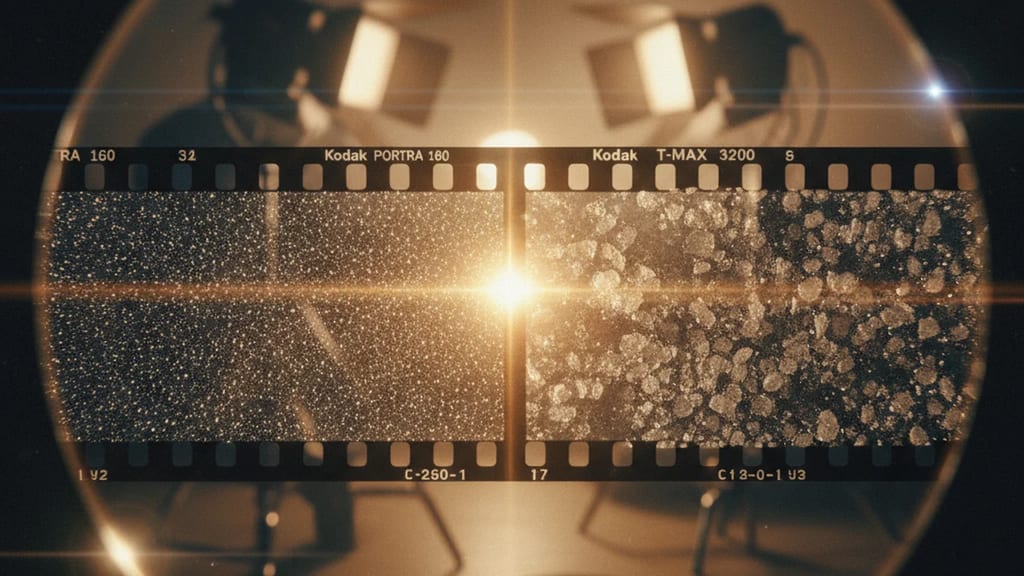
Film grain refers to the granular texture visible in motion picture film, caused by silver halide crystals in the emulsion. Grain structure varies by film stock speed—slower films have finer grain, faster films have coarser grain.
Film grain represents the visible granular texture in motion picture film, a fundamental characteristic of the analog medium. Grain results from silver halide crystals in the photographic emulsion, with grain size and prominence varying inversely with film speed.
Silver Halide Crystals:
Grain Formation:
Speed vs. Grain Trade-off:
Practical Reality:
Grain Properties:
Perception:
Contemporary Cinema:
Shift from Historical Standards:
Scanning Considerations:
Digital Grain Simulation:
Visibility Affected By:
Bright Scenes:
Low-Light Scenes:
Exposure Impact:
Stock-Specific Grain:
Grain Preservation:
Grain Enhancement:
Archival Approach:
Industry Perspective:
Viewer Perception:
Film Grain:
Digital Noise:
Cinematographer Choices:
Theatrical Exhibition:
Streaming/Digital Viewing:
Long-term Perspective:
Film grain represents an essential and increasingly appreciated aspect of motion picture cinematography.
Film grain is integral to the film aesthetic. Understanding grain characteristics helps cinematographers select appropriate stocks and embrace grain as a creative element.
1. Zu welchem Department gehört „Filmkorn"?
The Lexikon is part of the Filmfarm ecosystem — alongside budgeting (FilmBalance), an industry magazine (FilmCircus) and crew networking (FilmCall, CrewMesh). One shared vocabulary for the whole production.