Cinematographer
Dual Native ISO ist ein Game-Changer für meine Produktion. Mit zwei optimalen ISOs kann ich morgens bei hellem Licht (ISO 100) drehen und abends bei niedrigem Licht (ISO 3200) ohne Rausch-Kompromisse. Das ist extremer flexibel.
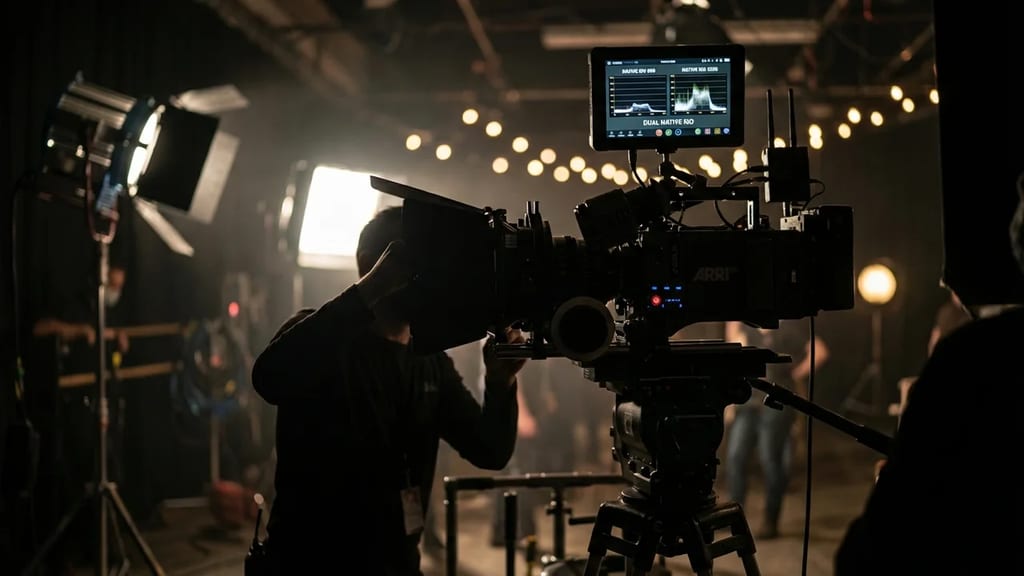
Dual Native ISO is a sensor technology in which a camera has two optimal ISO settings, each providing maximum signal-to-noise ratio, ideal for productions with varying lighting conditions.
Dual Native ISO is a modern sensor technology in which a camera sensor has two optimal ISO settings, each achieving maximum Signal-to-Noise Ratio (SNR). This enables optimal image quality in both bright and dark lighting situations without noise compromises.
The dual approach:
Instead of a single "Base ISO" like ISO 160, the camera now has two sweet spots.
Electronic Sensor Architecture:

Traditional Sensor (Single Native ISO):
┌──────────────────────────────┐
│ Photodiode Array │
├──────────────────────────────┤
│ Amplifier 1 (0dB) │ ← Base ISO Point
├──────────────────────────────┤
│ Analog-Digital Conversion │
├──────────────────────────────┤
│ Output: Linear Gain across all ISO
└──────────────────────────────┘

Dual Native ISO Sensor:
┌──────────────────────────────┐
│ Photodiode Array │
├──────────────────────────────┤
│ Amplifier 1 (optimized for low-gain) │ ← Native ISO 1
│ Amplifier 2 (optimized for high-gain) │ ← Native ISO 2
├──────────────────────────────┤
│ Intelligent Gain Selection │
├──────────────────────────────┤
│ Analog-Digital Conversion │
├──────────────────────────────┤
│ Output: Two optimal points
└──────────────────────────────┘

Result: Two separate electronic optimization pathsSignal-to-Noise Ratio across ISO Range:
Traditional Single Native ISO:
SNR
↑
25│ ╱╲ ← Broad Peak (but only optimal at Base ISO)
20│ ╱ ╲
15│ ╱ ╲
10│╱ ╲
│─────────────────────────
└─ ISO 50 100 200 400 800 1600 3200 →
Dual Native ISO:
SNR
↑
25│ ╱╲ ╱╲ ← Two Peaks at ISO 100 and 3200
20│ ╱ ╲ ╱ ╲
15│╱ ╲ ╱╲ ╱
10│ ╲──╱ ╲──
│─────────────────────────
└─ ISO 50 100 200 400 800 1600 3200 →
Between 100 and 3200: Higher noise floor (but acceptable)
At 100 or 3200: Optimal| Camera | Native ISO 1 | Native ISO 2 | Manufacturer |
|---|---|---|---|
| Sony FX30 | 100 | 3200 | Sony |
| Sony FX7 | 100 | 3200 | Sony |
| Sony Alpha 1 II | 100 | 3200 | Sony |
| Canon EOS R5C | 100 | 3200 | Canon |
| Panasonic S1H | 100 | 3200 | Panasonic |
| Nikon Z9 | 100 | 6400 | Nikon |
Sony FX30 Example:

ISO 100 (Native 1):
 SNR: 22.5 dB (Optimal)
 Noise Floor: Very low
 Use: Daytime, Well-lit Scenes

ISO 200:
 SNR: ~21.8 dB (Slightly degraded)
 Noise Floor: Minimal increase
 Use: Transition (if needed)

ISO 400:
 SNR: ~20.5 dB (Noticeably worse)
 Noise Floor: Clearly increased
 Use: Not recommended

ISO 1600:
 SNR: ~18.2 dB (Poor)
 Noise Floor: Very prominent
 Use: Avoid! Jump to ISO 3200 instead

ISO 3200 (Native 2):
 SNR: 22.1 dB (Near-optimal)
 Noise Floor: Very low
 Use: Low-Light, Night Scenes

ISO 6400:
 SNR: ~20.8 dB (Degraded)
 Noise Floor: Increased
 Use: Emergency only
Important: ISO 1600 (between the two natives) is poor!
Rule: Use ISO 100 or ISO 3200, skip 800-1600!
Classic Drama Setting:

Scenario: Wedding (Morning outdoors, Evening indoors)

Traditional Single Native ISO (ARRI Alexa Mini, ISO 160):

Morning (Sunlight):
 Available Light: ~10,000 Lux
 Optimal Exposure: ISO 160
 Problem: Overexposed, ND filter required

Evening (Indoor lighting):
 Available Light: ~500 Lux
 Optimal Exposure: Would need ISO 1280 (+3 Stops)
 Problem: ISO 1280 has noticeable noise
 Result: Evening material is noisy

────────────────────────────────

With Dual Native ISO (Sony FX30, ISO 100/3200):

Morning (Sunlight):
 Available Light: ~10,000 Lux
 Optimal Exposure: ISO 100 (Native 1)
 SNR: 22.5 dB (Optimal)
 Problem: None! Perfect exposure

Evening (Indoor lighting):
 Available Light: ~500 Lux
 Optimal Exposure: ISO 3200 (Native 2)
 SNR: 22.1 dB (Near-optimal!)
 Problem: None! Material is clean

Result: Optimal SNR throughout the day
 No noise compromises
Consistent grading across both timesPractical Rule of Thumb:
Morning/Daylight:
→ Use Native ISO 1 (ISO 100)
→ Only ND filter for overexposure
→ Maximum quality
Transition Time (Dusk, ~1-2 hours before sunset):
→ Make a decision:
Option A: Stay at ISO 100, increase light
Option B: Switch to ISO 3200 (if natural light desired)
Problem: Avoid ISO 800/1600!
Smart Strategy: Use ISO 3200 + less artificial light
= More naturalistic, cinematic look
Evening/Night-Light:
→ Use Native ISO 2 (ISO 3200)
→ Artificial light + available light
→ Clean material without noiseScene: 3-Location Shoot (various lighting situations)
Location 1: Sunny Outdoor Café (2:00 PM)
Available: ~8000 Lux
Setting: ISO 100 + ND Filter
Result: Crystal Clear, minimal noise
Location 2: Indoor Restaurant Daytime Light (12:00 PM)
Available: ~1000 Lux (window light)
Setting: ISO 100 + light boost
Result: Well exposed, no noise
Location 3: Dimly-lit Bar (Evening)
Available: ~100 Lux (mood lighting)
Setting: ISO 3200 + some additional lights
Result: Atmospheric AND clean (not noisy!)
Post-Production:
All three locations have similar noise profile
→ Grading is consistent
→ Less noise management needed
→ Budget savings for coloristDual Native ISO allows reduced lighting requirements:
Traditional Setup (Single Native ISO 160):

Low-Light Scene:
 Required Lux: ~1000+ (for optimal ISO 160)
 Equipment: Large lights (HMI 1.2K, Mole-Richardson)
 Power: 3-4 kW needed
 Transport: Large truck
 Cost: €5-10k/Day

────────────────────────

Dual Native ISO Setup (ISO 100/3200):

Low-Light Scene (Use ISO 3200):
 Required Lux: ~300-500 (for optimal ISO 3200)
 Equipment: Small lights (Fresnels 650W, LED Panels)
 Power: 1-1.5 kW needed
 Transport: Standard van
 Cost: €1-2k/Day

Savings: 50-70% lighting budget!Colorist Workflow with Dual Native ISO:
Traditional Single Native (Mixed ISOs):
Day Material (ISO 160): Clean shadows
Night Material (ISO 1280): Noisy shadows
Problem: Must use different denoise strategies
Problem: Noise profiles differ, hard to match
Result: +20-30% grading time
Cost: €3-5k additional colorist cost
────────────────────────
Dual Native (ISO 100 & 3200):
Day Material (ISO 100): Clean shadows
Night Material (ISO 3200): Clean shadows
Advantage: Identical noise behavior
Advantage: Unified denoise strategy
Result: -15-20% grading time
Cost: €1-2k colorist savings
ROI: Lighting savings + Grading savings = Large cost reductionImportant Distinction:
Dual Native ISO:
- Physical sensor technology
- Two optimal electronic paths
- No noise in source (RAW)
- Post-grading is clean
In-Camera Noise Reduction (NR):
- Software solution
- Applies algorithm to RAW
- Can destroy detail (softness)
- Post-grading loses detail
Result: Dual Native ISO is physically superior
(not just "in-camera NR in software")Dual Native ISO Trends (2024-2030):
Current (2024):
- Sony dominates dual native
- Canon/Panasonic following
- ARRI: Not yet implemented
Projected (2025-2026):
- More manufacturers adopt dual native
- Possibly triple native ISO (100/800/3200?)
- Standard for consumer becomes dual native
Future (2028-2030):
- Likely standard for professional
- Multi-native ISO could become possible
- AI-powered adaptive ISO switchingSpeculative Technology:
Hypothetical Setup:
Native ISO 1: 100 (Daytime)
Native ISO 2: 800 (Dusk)
Native ISO 3: 3200 (Night)
Advantages:
✓ Seamless across all lighting situations
✓ No noise compromises anytime
Challenges:
✗ 3x more complex electronics
✗ More heat generation
✗ Very expensive to develop
Status: Theoretically possible, practically not (yet) implementedWhen is Dual Native ISO Advantageous?
Highly advantageous if:
✓ Full-day production (morning + evening)
✓ Multiple locations with different lighting
✓ Low budget (lighting savings critical)
✓ Fast turnaround (little time for light adjustments)
Less critical if:
~ Single-location day shoot
~ Controlled studio lighting
~ Small crew (no time pressure)
Not necessary if:
✗ Only daytime or night (not both)
✗ RAW-based workflow (freely scalable)
✗ Unlimited budgetDual Native ISO ist ein Game-Changer für meine Produktion. Mit zwei optimalen ISOs kann ich morgens bei hellem Licht (ISO 100) drehen und abends bei niedrigem Licht (ISO 3200) ohne Rausch-Kompromisse. Das ist extremer flexibel.
Dual Native ISO ist ein Segen für Multi-Location Shoots. Material von verschiedenen Zeiten/Lichtsituationen hat optimales SNR bei beiden Zeiten. Das macht Grading consistent und einfach über den gesamten Tag.
Dual Native ISO bedeutet, dass ich mein Licht-Setup nicht bei beiden Zeiten perfekt haben muss. Morgens kann ich mit weniger Licht arbeiten, Abends brauche ich nicht massiv aufzulichren - der Kamera-ISOs handhaben das.
1. Zu welchem Department gehört „Dual Native ISO"?
2. Wie viele verschiedene Fachperspektiven bietet dieser Eintrag?
The Lexikon is part of the Filmfarm ecosystem — alongside budgeting (FilmBalance), an industry magazine (FilmCircus) and crew networking (FilmCall, CrewMesh). One shared vocabulary for the whole production.