Filmlexikon.
Support
Digital Imaging Technician (DIT)
Camera · Roles

Digital Imaging Technician (DIT)

Murnau AI illustration
digital imaging technician dit director of photography camera operator digital cinematography bildgestalterin ps technik

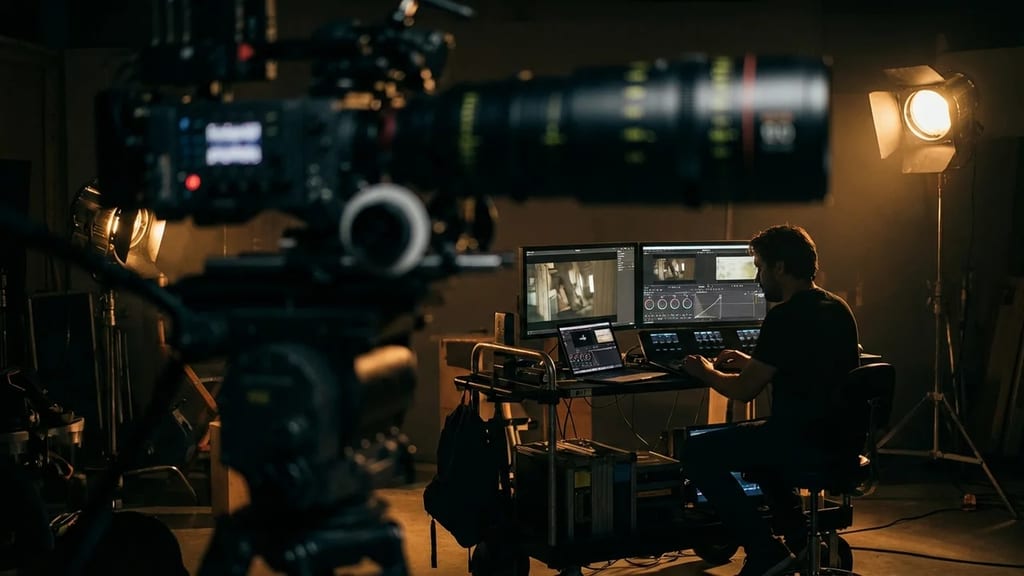
Set-based technician responsible for real-time color correction, dailies creation, and managing digital camera workflows using calibrated monitors and software such as DaVinci Resolve.

Technical Details

A DIT works with calibrated reference monitors (typically: 24-32 inches, 1000-4000 nits brightness, Rec.709/DCI-P3 color space) and specialized software like DaVinci Resolve, Pomfort LiveGrade, or Filmlight Prelight. Data rates range from 200 MB/s for 4K ProRes to 2.4 GB/s for uncompressed 8K RAW. Standard workstations feature 64-128 GB RAM, NVIDIA RTX graphics cards, and Thunderbolt 3 interfaces for real-time processing. Equipment also includes waveform monitors, vectorscopes, and calibrated LUT boxes for signal distribution to all monitors on set.

History & Development

The position emerged between 2003-2005 during the first digital cinema productions like "Collateral" (2004) and "Sin City" (2005). Previously, Data Wranglers or Video Assists handled these tasks without color correction expertise. The breakthrough came in 2009 with "Avatar," where DITs first realized live compositing for virtual sets. Since 2015, the scope of work has expanded through HDR (High Dynamic Range) workflows and remote collaboration tools, which became standard during COVID-19.

Practical Application in Film

On "Mad Max: Fury Road" (2015), DIT David Cole created over 40 different LUTs daily for various times of day and moods. For "1917" (2019), DITs developed special workflows for the seemingly continuous shots to ensure color continuity across different shooting days. Typical daily routines include camera setup (30 minutes), live monitoring during filming, dailies creation (2-3 hours), and data backup to at least two redundant systems. The DIT is usually located directly next to Video Village and communicates constantly with the cinematographer and colorist via remote desktop connections.

Comparison & Alternatives

Unlike the Data Wrangler, who primarily copies and organizes data, the DIT actively shapes the image. Video Assists focus on live transmission for the director and continuity, while DITs prepare the final image aesthetic. On low-budget productions, the 1st Assistant Camera often performs both roles. Cloud-based workflows like Frame.io Camera-to-Cloud reduce the need for a DIT on simpler projects but do not replace them for complex color workflows or HDR productions.
From the crafts

Perspectives

Cinematographer

Als DoP verlasse ich mich darauf, dass mein DIT die Kamera-LUTs präzise auf meine Vision abstimmt – wenn ich warme, entsättigte Töne für eine Wüstenszene will, muss ich das sofort am Set sehen, nicht erst in der Post. Die Live-Waveform-Analyse hilft mir, Überbelichtungen in kritischen Hauttönen zu vermeiden, besonders bei HDR-Aufnahmen wo der Dynamikumfang tückisch ist.

Director

Ich nutze meinen DIT als visuellen Übersetzer meiner Stimmungsvorstellungen – statt abstrakt über "kältere Schatten" zu sprechen, kann er mir drei verschiedene LUT-Varianten live zeigen und ich entscheide sofort. Bei emotional komplexen Szenen lasse ich mir oft mehrere Look-Optionen parallel auf verschiedenen Monitoren anzeigen, um die Nuancen der Farbdramaturgie zu vergleichen.

Producer

Ein erfahrener DIT kostet mich 800-1200€ pro Drehtag, spart aber Tausende in der Post durch optimierte Workflows und verhindert teure Reshoots durch Datenprobleme. Die Vorab-Farbkorrektur reduziert meine Postproduktionszeit um 20-30%, und die professionelle Datensicherung schützt vor Millionenverlusten durch Footage-Verlust – eine Investition, die sich bereits ab mittleren Budgets rechnet.

More in the lexikon

Related terms

Test your knowledge

Quiz

1. Was beschreibt „Digital Imaging Technician" am besten?

2. Zu welchem Department gehört „Digital Imaging Technician"?

3. Wie viele verschiedene Fachperspektiven bietet dieser Eintrag?

Report an error
From the Filmfarm ecosystem

Understand visual language, budget productions, connect crew.

The Lexikon is part of the Filmfarm ecosystem — alongside budgeting (FilmBalance), an industry magazine (FilmCircus) and crew networking (FilmCall, CrewMesh). One shared vocabulary for the whole production.

FilmFarm FilmRadarComing soonFilmPulseComing soonFilmNumbersComing soonFilmCapitalComing soonFilmLabComing soonFilmBalanceComing soonFilmCircusComing soon