Technical Details
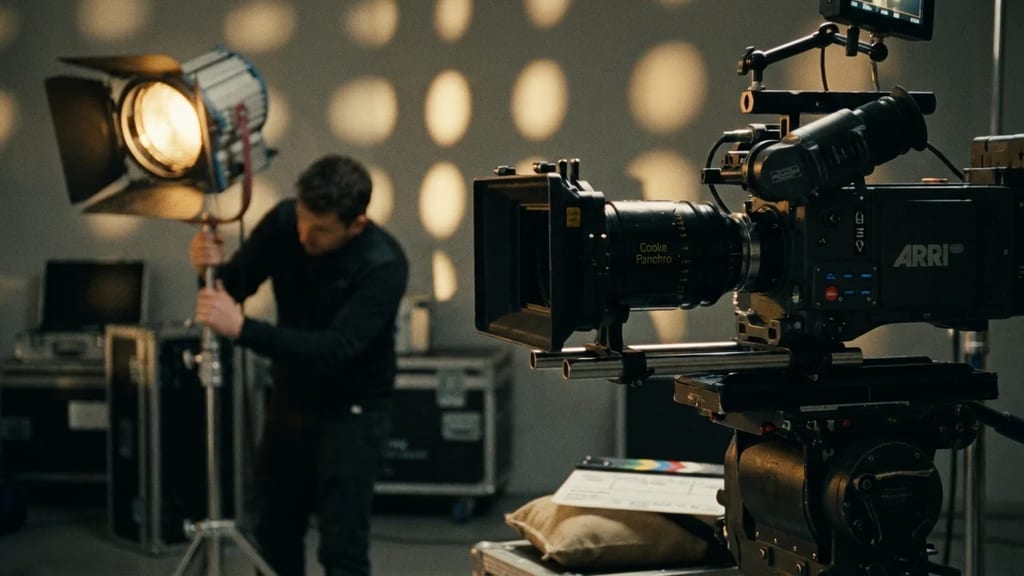
The original Cooke Panchro lenses encompassed focal lengths from 25mm to 152mm, all with a constant aperture of T2.3. The optical design was based on the Cooke triplet with additional correction elements for chromatic aberrations. The lenses featured 16 aperture blades for circular aperture openings and weighed between 0.8kg (25mm) and 2.1kg (152mm). The characteristic feature was the special coating, which produced a warm, soft look with subtle contrast reduction and organic bokeh characteristics. The mechanical dimensions already followed standardized sizes early on with a 104mm front diameter.
History & Development
In 1920, Taylor, Taylor & Hobson introduced the first Cooke Panchro lenses, developed under the direction of Dennis Taylor. These lenses revolutionized cinematography as they optimally supported panchromatic film emulsions for the first time. In 1929, a revision of the series was made with improved coating. The Speed Panchro variant from 1930 increased the aperture to T2.0. After the film division was sold to Rank Precision Industries in 1948, production continued until 1960 before modern zoom lenses displaced prime lenses.
Practical Use in Film
Cooke Panchro lenses shaped the visual aesthetic of Hollywood from the 1920s to the 1960s. Gregg Toland used them for "Citizen Kane" (1941) to achieve the characteristic depth of field with soft transitions. The lenses delivered the typical "Hollywood look" with warm skin tone rendering and gentle highlight roll-offs. Their low contrast often required additional lighting, which suited the studio system of the time. The soft, organic look made post-production practically unnecessary.
Comparison & Alternatives
In contrast to German Zeiss lenses of the era, Cooke Panchros offered less contrast but warmer tones and more pleasing bokeh. Modern Cooke S4/i and S7/i series consciously build on this aesthetic but achieve higher resolution and apertures up to T1.4. Vintage Cooke Panchros are used today for period pieces or as a look reference, while modern alternatives like Zeiss Supreme Primes are technically superior but more characteristically neutral. For an authentic vintage aesthetic, original Panchros remain unrivaled.