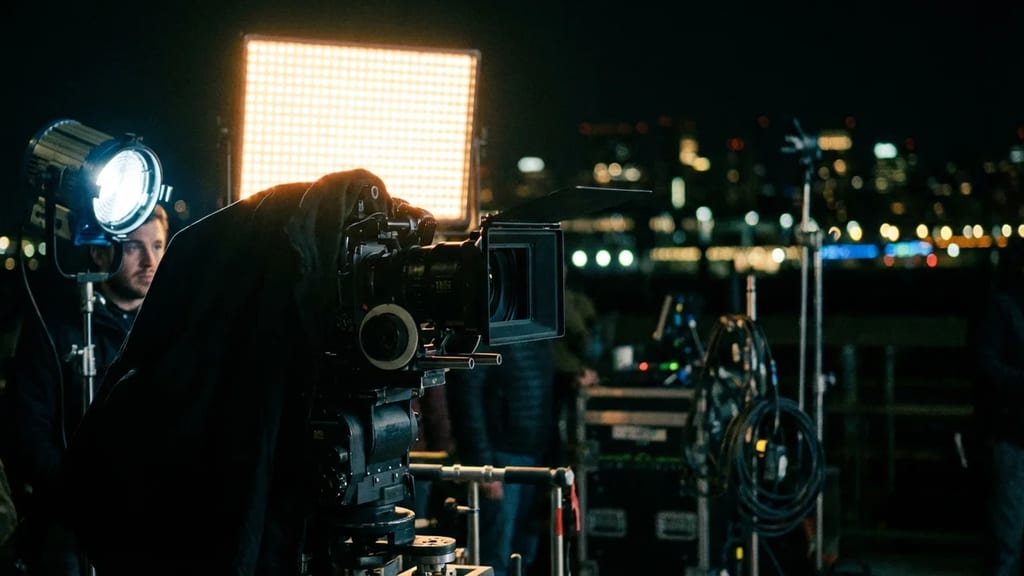
Overview
Contrast describes the ratio of brightness between the brightest and darkest areas of an image in camera technology. In film lighting, this contrast is deliberately controlled via the Lighting Ratio – that is, via the ratio of light intensity between the Key light and the Fill light on the subject. The greater the difference between Key and Fill, the higher the contrast and the more dramatic the image effect.
In practice, the term is used on two levels of meaning: as Scene Contrast (the actual brightness range of the subject, often also called contrast ratio) and as a creative element of Lighting Setup (the consciously chosen ratio of light sources).
Lighting Ratio and Stops
The Lighting Ratio is determined with a light meter and expressed in f-stops (Stops). Each stop corresponds to a doubling or halving of the amount of light. This results in the common contrast ratios:
| Difference Key to Fill | Lighting Ratio | Image Effect |
|---|
| 0 Stops | 1:1 | flat, shadowless (High-Key tendency) |
| 1 Stop | 2:1 | soft modeling |
| 2 Stops | 4:1 | clear modeling, classic look |
| 3 Stops | 8:1 | high contrast, dramatic (Low-Key tendency) |
For example, if the Key light is at f/8 and the Fill light is at f/4, the ratio is 4:1, as a difference of two stops corresponds to a fourfold increase in light intensity.
Relationship to Camera Dynamic Range
Creative contrast is always in relation to the camera's Dynamic Range – that is, the span between the brightest and darkest tonal values that the sensor or film material can record without loss of detail. If the scene contrast exceeds the dynamic range, highlights will clip or shadows will crush.
Modern digital cinema cameras achieve a dynamic range in the range of several f-stops, which historically corresponds roughly to that of analog film material. Backlit daylight situations can create a scene contrast that significantly exceeds the dynamic range of common cameras – here, the DoP must bring the contrast into the recordable range through fill light, shading, or filtering.
Usage on Set
On set, contrast is controlled by several tools:
- Light Intensity: Dimming or distance of the fill source relative to the key.
- Diffusion: Diffusion materials (e.g., Cinegel/LEE Diffusion) reduce the contrast ratio by softening the light and brightening shadows.
- Negative Fill and Flags: black fabrics or flags absorb spill light, thereby increasing contrast.
- Reflectors and Bounce: increase the fill component and lower the contrast.
Low contrast (High-Key) appears friendly, clean, and neutral and is often used in comedies, commercials, and talk shows. High contrast (Low-Key) selectively directs the viewer's eye, emphasizes textures, and creates a dramatic, often dark mood, typical of film noir, thrillers, and dramas.